
Corsano Health Blog & Industry Insights
Stay updated with expert articles, scientific publications, clinical study findings, and digital biomarker innovations in continuous patient monitoring.
China Best Clinical Trial Remote Data Collection Wearables
Table of Contents
- Definition and Role of Wearables in Remote Clinical Data Collection
- Key Sensor Types Used in Clinical Trial Wearable Devices
- How Wearables Capture, Transfer, and Validate Trial Data
- Clinical Applications and Benefits of Remote Wearable Monitoring
- Data Security, Regulatory Compliance, and Implementation Challenges
- FAQS
- Conclusion
- Related Posts
China Best Clinical Trial Remote Data Collection Wearables: Building Trust Beyond the Clinic
Clinical trials in China are moving closer to participants’ daily lives. A Clinical Trial Remote Data Collection Wearable can record heart rate, sleep patterns, movement, temperature, and other patient-reported signals. These measurements may reduce clinic visits and reveal changes that traditional appointments miss.
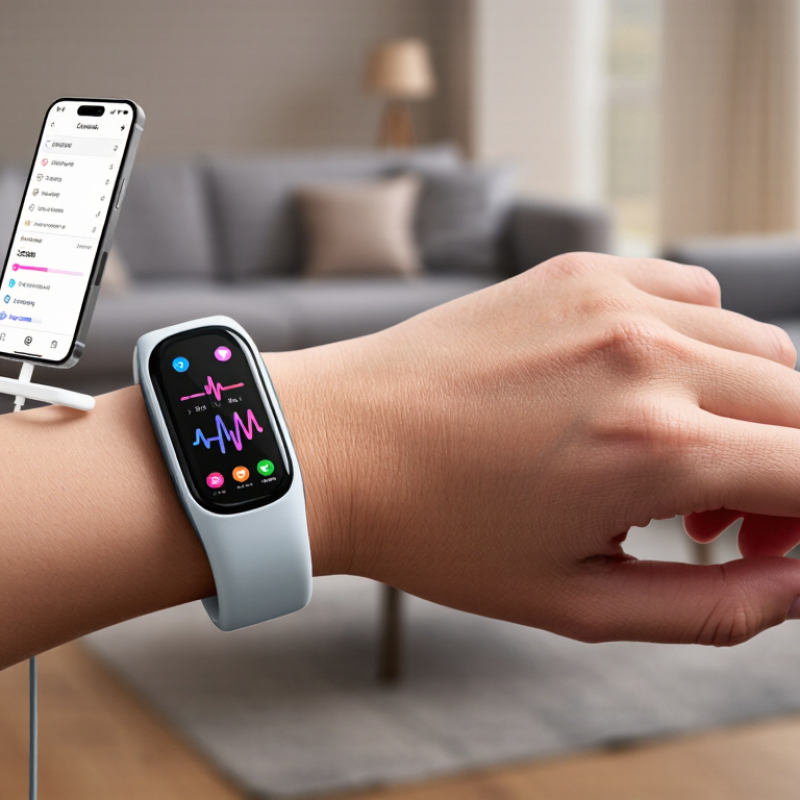
The device sits on a participant’s wrist. Data travels through a mobile application to a controlled research platform. Investigators can then review trends, identify missing entries, and contact participants when needed. Small details matter. A loose strap, a drained battery, or poor network coverage can create misleading gaps.
Jennifer Goldsack, CEO of the Digital Medicine Society, has stated, “Digital health technologies are not digital endpoints.” Her point remains important. A wearable is only a tool. Its clinical value depends on validated measurements, clear study protocols, trained teams, and reliable data interpretation.
China-based manufacturers increasingly emphasize sensor accuracy, comfortable designs, multilingual applications, and secure data management. Strong suppliers should also explain calibration methods, software updates, device replacement procedures, and technical support. Evidence matters more than attractive specifications.
The process is not flawless.
Skin contact can vary. Participants may forget charging. Algorithms can perform differently across age groups, climates, and activity levels. These weaknesses require testing, documentation, and honest reporting. A trustworthy Clinical Trial Remote Data Collection Wearable should support both scientific efficiency and participant confidence.
The best solutions do not simply collect more data. They collect usable data, protect participant dignity, and help researchers make defensible decisions. That standard should guide every comparison of China’s leading clinical trial wearable providers.
Definition and Role of Wearables in Remote Clinical Data Collection
China Best Clinical Trial Remote Data Collection Wearables
Definition and Role of Wearables in Remote Clinical Data Collection
Wearables are body-worn devices that capture health-related signals outside clinical sites. Common examples include wrist sensors, patches, rings, and connected monitors. They may record heart rate, movement, sleep patterns, temperature, or oxygen levels. In remote clinical trials, these measurements can show how participants respond during ordinary daily activities.
A participant might wear a sensor during a morning walk, at work, and while sleeping. The device can send time-stamped data to a secure study platform. Investigators may then examine trends between scheduled visits. This improves observation frequency and can reduce dependence on memory-based reports. It also supports faster identification of missing measurements or unusual changes. Small details matter.
Reliable use requires more than technical connectivity. Each device should have a clear measurement purpose, documented validation, and suitable instructions. Study teams must assess comfort, battery life, charging habits, skin sensitivity, and digital access. Data should be reviewed for gaps, motion errors, and inconsistent wearing time. A perfect dataset is unlikely. Human behavior remains unpredictable. One participant may remove the device during exercise, while another may forget it overnight. These limitations need transparent reporting, not silent correction. Ethical data governance, informed consent, secure transmission, and controlled access also protect participant trust. Wearables can strengthen remote evidence, but their value depends on careful design, practical support, and honest interpretation.
Key Sensor Types Used in Clinical Trial Wearable Devices
China Best Clinical Trial Remote Data Collection Wearables
Key Sensor Types Used in Clinical Trial Wearable Devices
Remote clinical trial wearables rely on several sensor types, each capturing a different biological signal. Optical sensors use green or infrared light to estimate heart rate and blood oxygen levels. Their readings can weaken during movement, cold weather, or loose wrist placement. Placement matters.
Electrodes can record electrocardiogram signals, helping researchers examine heart rhythm and selected cardiac intervals. Accelerometers and gyroscopes track steps, posture, tremors, and sleep-related movement. These sensors are useful, but activity labels may remain uncertain without patient diaries or clinical confirmation. Motion data can mislead.
Skin temperature sensors may reveal daily patterns, fever-related changes, or local inflammation. Electrodermal activity sensors measure changes in skin conductance linked with sweating and stress responses. They do not directly diagnose anxiety. That distinction requires careful interpretation.
Some studies add blood pressure estimation, respiratory sensors, or location functions, depending on the protocol and participant consent. Clinical teams should verify sensor calibration, sampling rates, battery duration, and data-transfer security before enrollment. Device testing should include different skin tones, body sizes, ages, and daily environments. Missing data happen. Batteries fail. Participants remove devices during bathing, work, or sleep.
Reliable evidence depends on combining sensor outputs with validated clinical measures, transparent quality checks, and documented handling of abnormal readings. A wearable may collect thousands of measurements, yet quantity does not guarantee clinical value. Researchers should record uncertainty, investigate gaps, and avoid treating every signal as a confirmed medical event.
| Sensor Type | Primary Measurements | Common Wearable Placement | Typical Configurable Sampling or Update Rate | Clinical Trial Applications | Key Data and Validation Considerations |
|---|---|---|---|---|---|
| Electrocardiography (ECG) | Electrical cardiac activity, heart rate, R-R intervals, rhythm characteristics, and selected heart-rate-variability metrics | Chest patch, chest strap, or wrist device with skin-contact electrodes | Approximately 125–1,000 Hz for waveform recording; lower rates may be used for derived heart-rate data | Arrhythmia assessment, cardiac safety monitoring, QT-related observations, heart-rate variability, and cardiovascular endpoint collection | Requires stable electrode contact and appropriate lead configuration. Motion artifact, electrode placement, skin preparation, and algorithm performance can materially affect results. |
| Photoplethysmography (PPG) | Changes in blood volume reflected by optical signals; heart rate, pulse rate, pulse-wave features, and other derived cardiovascular measures | Wrist, finger, ear, or forehead | Approximately 25–256 Hz for raw or semi-raw signals; displayed heart rate is commonly updated every few seconds | Continuous heart-rate monitoring, resting heart rate, pulse-rate trends, sleep studies, and support for oxygen-saturation estimation | Signal quality is influenced by skin contact, motion, ambient light, tissue perfusion, pigmentation, temperature, and device fit. Derived measures require algorithm-specific validation. |
| Pulse Oximetry | Peripheral oxygen saturation (SpO₂) and pulse rate, generally derived from red and infrared optical signals | Finger, wrist, ear, or forehead | Typically one updated value every 1–10 seconds; raw optical sampling is device-dependent | Respiratory disease studies, oxygenation monitoring, sleep and nocturnal desaturation assessment, and safety surveillance | Accuracy may be affected by motion, low perfusion, nail products, skin temperature, sensor placement, and skin pigmentation. Clinical interpretation should account for device-specific performance limits. |
| Accelerometer | Linear acceleration, movement intensity, posture transitions, step counts, activity duration, and sleep-wake movement patterns | Wrist, waist, hip, ankle, chest, or thigh | Commonly 10–100 Hz for activity monitoring; higher rates may be used for gait or movement analysis | Physical activity, mobility, gait, tremor, falls, rehabilitation progress, fatigue-related activity changes, and sleep assessment | Placement, device orientation, wear-time adherence, non-wear detection, and activity-classification algorithms should be prespecified and validated for the target population. |
| Gyroscope | Angular velocity, rotation, orientation changes, and movement dynamics | Wrist, waist, chest, thigh, or ankle | Approximately 25–200 Hz, depending on the movement endpoint and device configuration | Gait and balance analysis, tremor characterization, rehabilitation monitoring, posture evaluation, and fine-motor movement studies | Usually interpreted with accelerometer data. Sensor alignment, calibration, attachment stability, and algorithm drift can influence movement-derived endpoints. |
| Skin Temperature | Temperature at or near the skin surface and short- or long-term temperature trends | Wrist, upper arm, chest, patch, or finger | Typically one measurement every 1–60 seconds | Fever or inflammation trend monitoring, circadian rhythm studies, sleep research, thermoregulation, and treatment-response monitoring | Skin temperature is not equivalent to core body temperature. Ambient temperature, device contact, blood flow, clothing, exercise, and placement should be documented. |
| Electrodermal Activity (EDA) | Changes in skin conductance associated with sweat-gland activity and sympathetic arousal | Palm, fingers, wrist, or specialized skin-contact patches | Approximately 4–32 Hz in many wearable configurations | Stress and arousal research, autonomic response assessment, pain-related studies, sleep research, and behavioral or neurological investigations | Responses are sensitive to temperature, hydration, movement, electrode contact, and individual differences in sweating. EDA is not a direct measure of a specific emotion or disease state. |
| Bioimpedance | Electrical impedance or resistance of tissue; may support respiration, thoracic fluid, body-composition, or contact-related measures | Chest, torso patch, wrist, or multi-electrode garment | From intermittent spot measurements to several samples per second, depending on the intended application | Respiratory-rate estimation, thoracic impedance monitoring, fluid-status research, body-composition studies, and wearable electrode-contact assessment | Results depend on electrode geometry, tissue characteristics, posture, hydration, motion, and contact pressure. The physiological meaning of the derived metric must be validated for the specific device. |
| Barometric Pressure | Changes in atmospheric pressure used to estimate relative elevation and vertical movement | Wrist, waist, pocket, or body-worn monitor | Approximately 1–25 Hz | Stair-climbing, floor-transition, activity-intensity, mobility, and rehabilitation studies | Weather changes, indoor ventilation, elevators, and pressure differences can affect readings. Algorithms should distinguish genuine elevation changes from environmental variation. |
| Microphone or Acoustic Sensor | Sound pressure or selected acoustic features, such as cough, voice, breathing, or snoring patterns | Neck-worn device, chest patch, ear-worn device, or smartphone-linked wearable | Audio sampling may range from 8–48 kHz; privacy-preserving systems may store extracted features instead of raw audio | Cough-frequency monitoring, respiratory-symptom assessment, sleep-related breathing research, voice analysis, and adherence or environmental studies | Requires explicit privacy controls, informed consent, secure data handling, and careful separation of physiological signals from environmental noise. Performance varies with placement and acoustic conditions. |
| Force or Pressure Sensor | Contact force, plantar pressure, grip force, or load distribution | Foot insole, shoe insert, glove, finger interface, or rehabilitation device | Approximately 10–200 Hz, depending on gait, balance, or force-related endpoint requirements | Gait symmetry, balance, fall-risk research, orthopedic rehabilitation, motor-function assessment, and load-bearing studies | Sensor calibration, footwear, surface type, body weight, placement, and mechanical wear can influence measurements. Recalibration and protocol-standardized footwear may be necessary. |
| Sampling rates are representative configurable ranges rather than universal specifications. Final sensor selection, endpoint definitions, calibration procedures, data quality rules, and validation plans should be prespecified for the intended clinical population and study protocol. | |||||
How Wearables Capture, Transfer, and Validate Trial Data
China Best Clinical Trial Remote Data Collection Wearables
How Wearables Capture, Transfer, and Validate Trial Data
In a China-based clinical trial, a wearable can record heart rate, sleep patterns, movement, and temperature. A wrist sensor samples data at scheduled intervals, even when participants are at home. Each reading receives a timestamp and participant code. Small details matter. A loose strap, low battery, or missed charging period can create misleading gaps.
After collection, the device transfers encrypted data through a phone or approved gateway. The system checks connection status, upload time, and file completeness. Trained site staff should review failed transfers quickly, rather than waiting for a monthly report. Clear instructions help participants keep the device within connection range. However, real homes are noisy environments. Phones change settings, networks fail, and some participants forget daily routines.
Validation requires more than a smooth dashboard. Study teams compare wearable readings with protocol-defined reference methods, device logs, and participant diaries. They examine missing values, unusual spikes, duplicate records, and timing differences. A documented audit trail should show who reviewed each issue and why a value was retained or excluded. Experienced investigators also test battery performance and sensor placement before enrollment expands. Not every clean graph is reliable. Wearable data still needs clinical judgment, predefined quality rules, and honest reporting of uncertainty.
Clinical Applications and Benefits of Remote Wearable Monitoring
China Best Clinical Trial Remote Data Collection Wearables
Remote wearable monitoring is changing how clinical studies capture daily health signals. In China’s geographically dispersed trials, devices can record heart rate, activity, sleep, temperature, and oxygen saturation outside hospitals. This creates richer evidence than occasional clinic visits. The FDA’s 2023 guidance on digital health technologies recognizes these measurements as useful for remote data acquisition.
The clinical value is especially clear in cardiology, metabolic disease, rehabilitation, and sleep research. The World Health Organization’s 2023 hypertension report estimates that 1.28 billion adults aged 30–79 live with hypertension. Continuous readings may reveal morning spikes, missed medication effects, or unusual recovery patterns. Small signals can matter. Remote monitoring may also reduce travel, support decentralized follow-up, and improve participant retention.
However, wearable data is not automatically reliable. A 2024 review in npj Digital Medicine reported that data completeness and device adherence remain major challenges across remote studies. Sensors can be removed during bathing, lose contact during exercise, or produce inconsistent readings across skin types. Data can drift. Investigators need validated devices, clear wear-time rules, encryption, and prespecified quality checks. Patient training also matters, especially for older adults. My concern is simple: convenience may be overstated when technical support is weak. Missing data still reflects real behavior, but it can distort trial outcomes.
Data Security, Regulatory Compliance, and Implementation Challenges
China’s clinical trial teams are adopting remote wearables to capture heart rate, sleep, activity, and temperature outside hospitals. This improves participant convenience and reveals daily patterns. Yet, convenience can hide operational risks. A loose sensor may create missing data, while poor connectivity can distort timelines.
Data security needs clear ownership from collection to archival. The U.S. Department of Health and Human Services recorded 725 large healthcare data breaches in 2023, affecting more than 133 million individuals. That figure should concern every trial sponsor. Chinese studies must align wearable workflows with the Personal Information Protection Law, Data Security Law, and applicable clinical trial rules. The 2023 U.S. Food and Drug Administration guidance also places responsibility for digital data quality and security on sponsors. Consent forms should explain device permissions, data storage, retention, and withdrawal procedures in plain language.
Implementation is rarely plug-and-play. Sites need validated devices, calibration logs, encryption, role-based access, and documented backup procedures. China’s regional network conditions also require offline storage and controlled synchronization. The World Health Organization reported that 129 countries had national digital health strategies, but strategy does not guarantee execution. Field teams still need training. Participants need simple instructions. A small pilot can expose battery failures, skin irritation, and confusing alerts before enrollment expands. We often underestimate these details. That is the uncomfortable part.
China Clinical Trial Remote Data Collection Wearables: Security, Regulatory Compliance, and Implementation Challenges
Remote wearable programs require documented security controls, validated electronic records, continuous data-quality monitoring, and clearly defined incident-response procedures. The chart compares selected regulatory reporting windows that may affect trial data governance. These deadlines are jurisdiction-specific and should be confirmed against the applicable protocol, device classification, and local regulatory requirements.
Reference points: GDPR Article 33 breach notification within 72 hours; FDA requirements for serious and unexpected suspected adverse reactions within 7 or 15 calendar days; FDA medical device reporting within 30 calendar days; HIPAA breach notification without unreasonable delay and no later than 60 days. China’s PIPL requires timely notification and protective measures when personal information incidents occur, subject to applicable implementation rules.
FAQS
It can record heart rate, sleep patterns, movement, and temperature. A wrist sensor samples readings at scheduled intervals. Small gaps matter. Each reading should include a timestamp and participant code.
A loose strap can reduce sensor contact. Low battery levels may interrupt recording. Participants may forget to charge the device. Home routines are rarely perfect.
The device transfers encrypted data through a phone or approved gateway. The system checks connection status, upload time, and file completeness. Networks can fail. Staff should investigate failed transfers quickly.
Participants should wear the device correctly and keep it near the connected phone. They need simple charging and connection instructions. Daily reminders may help. Still, some routines will be missed.
Teams should compare readings with reference methods, device logs, and participant diaries. They should check missing values, unusual spikes, duplicates, and timing differences. A clean graph can still mislead.
It should show who reviewed each data issue and when. It should explain why a value was retained or excluded. The reason must be clear. Uncertainty should not disappear.
Study teams need encryption, role-based access, validated devices, and controlled backups. They should define data ownership from collection through archival. Consent documents should explain permissions, storage, retention, and withdrawal procedures.
A small pilot can reveal battery failures, skin irritation, confusing alerts, and synchronization problems. Teams can test sensor placement and battery performance early. This reduces avoidable disruption. We often underestimate these details.
Conclusion
A Clinical Trial Remote Data Collection Wearable is a connected device designed to measure and transmit participant health and activity information outside traditional research sites. By using sensors for heart rate, motion, sleep, body temperature, oxygen levels, or other study-specific signals, these devices can support continuous and objective data collection. Recorded information is typically processed on the device or through a secure mobile connection before being transferred to a controlled research platform. Data validation procedures, such as timestamp checks, signal-quality assessment, calibration, and participant adherence monitoring, help improve reliability.
Remote wearable monitoring can reduce the need for frequent clinic visits, capture real-world health patterns, and support more responsive clinical assessments. However, successful implementation requires careful attention to participant training, device comfort, battery life, connectivity, and data completeness. Strong encryption, access controls, privacy safeguards, documented procedures, and regulatory compliance are also essential. When these requirements are addressed, wearable technology can improve trial efficiency while maintaining data integrity and participant protection.

Blog Tags: