CE-MDR Certified FDA 510(k) Cleared ISO 13485 Manufacturing 128 Hz Raw Signal Access

Arrhythmia Continuous Detection Device: Comprehensive Global Procurement & Clinical Integration Guide

An enterprise specification guide for healthcare procurement managers, clinical trial sponsors, and chief medical officers. Evaluate how continuous multi-sensor PPG/ECG wearables transform arrhythmia detection, eliminate diagnostic blind spots in hospital wards, and support digital biomarker innovation.

Contact Us
  • Founded 2019 · Netherlands & Switzerland
  • 10,000+ medical devices produced
  • 35+ hospitals in clinical use
  • 200+ clinical trials supported
  • Raw signal access up to 128 Hz
Clinical Intent & Market Need

Beyond Episodic Spot-Checks: The Shift to Continuous Arrhythmia Detection

Undiagnosed cardiac arrhythmias—particularly paroxysmal Atrial Fibrillation (AFib), asymptomatic ventricular tachycardia, and transient bradycardia—represent a primary driver of cryptogenic stroke, unexpected cardiac arrest, and emergency re-admissions. Traditional diagnostic modalities like intermittent spot-checks or short-term 24-hour Holter monitoring fail to capture up to 74% of paroxysmal arrhythmic events due to their transient nature.

Why Global Procurement Teams Are Prioritizing Continuous Detection Wearables

Global healthcare systems, hospital groups, and pharmaceutical research organizations are undergoing a structural shift toward continuous physiological surveillance. By deploying a medical-grade Arrhythmia Continuous Detection Device across general wards and post-discharge pathways, clinical teams replace fragmented manual observations with unbroken, high-fidelity data streams. This proactive strategy allows for immediate early intervention, optimized anti-coagulation therapy, reduced ICU transfers, and substantial long-term cost savings across acute care environments.

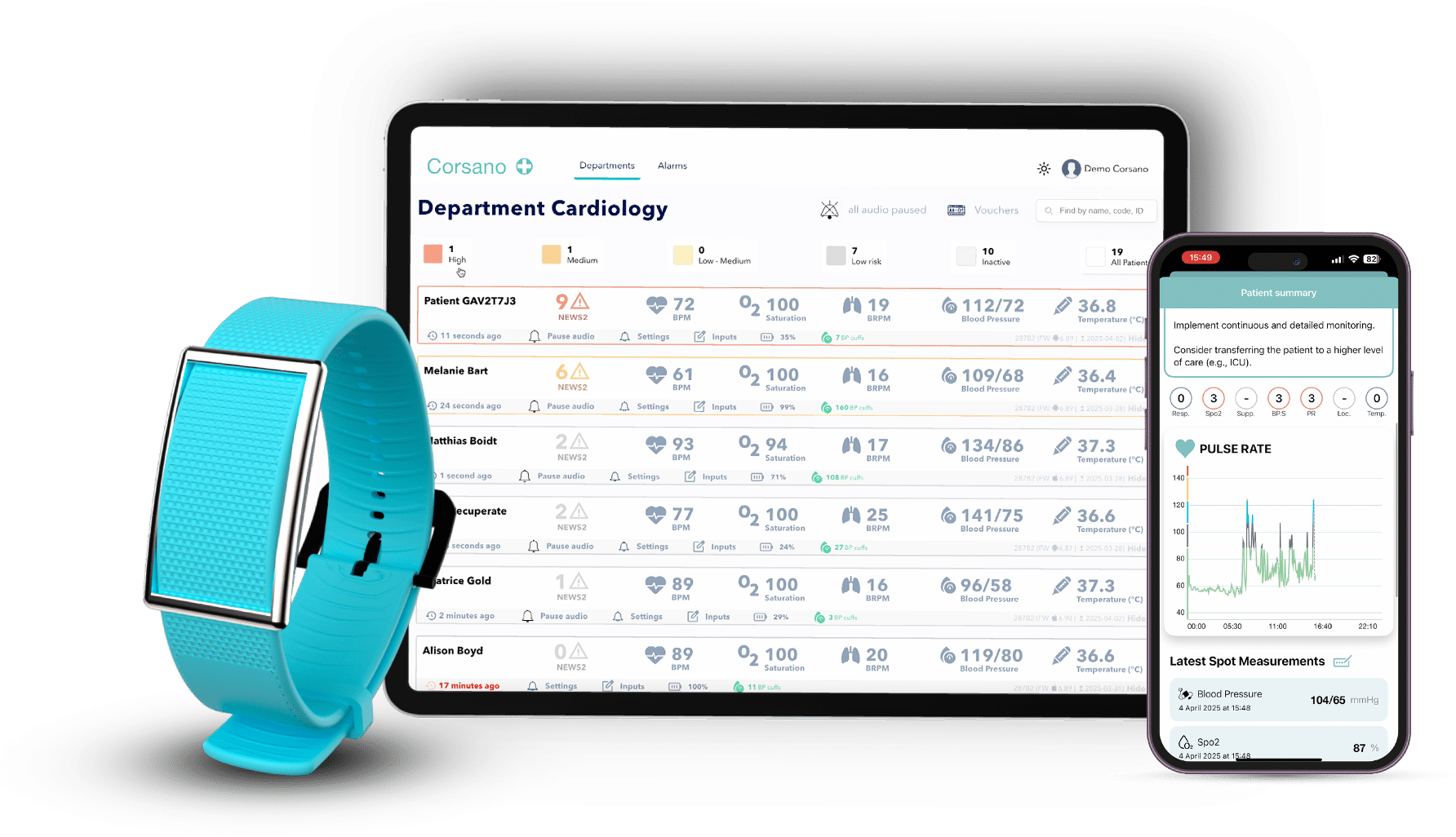
Corsano system: CardioWatch 287 continuous arrhythmia detection bracelet, mobile app, and clinical monitoring dashboard
Figure 1: Complete continuous arrhythmia monitoring system featuring the CardioWatch 287 bracelet, gateway connectivity, and clinician web portal.
  • Dual Optical & Electrical Rhythm Capture Combines multi-wavelength Photoplethysmography (PPG: Green, Red, Infrared) for continuous pulse wave detection with single-lead Electrocardiogram (ECG) rhythm strips for definitive arrhythmia validation.
  • Automated Clinical Escalation & Early Warning Feeds real-time pulse data into automated Early Warning Score (EWS) algorithms, notifying nursing stations prior to overt clinical collapse.
  • Unrestricted Data Ownership for Clinical AI Provides medical AI developers and pharmaceutical researchers raw 128 Hz sensor streams without proprietary black-box algorithm restrictions.
  • Validated Seamless Workflow Integration Enables frictionless hospital deployment via documented REST APIs, mobile SDKs, and native HL7/FHIR integration with major Electronic Medical Records (EMR).
Product Recommendation

Corsano CardioWatch 287: The Benchmark in Continuous Arrhythmia Monitoring

Engineered in Switzerland and manufactured under ISO 13485 quality standards, the Corsano CardioWatch 287-2B is the premier choice for hospital procurement teams and clinical trial sponsors seeking a certified, non-invasive wrist-worn arrhythmia detection device.

Corsano CardioWatch 287-2B medical smart bracelet for arrhythmia detection
Flagship Device Specification

Corsano CardioWatch 287-2B Medical Smart Bracelet

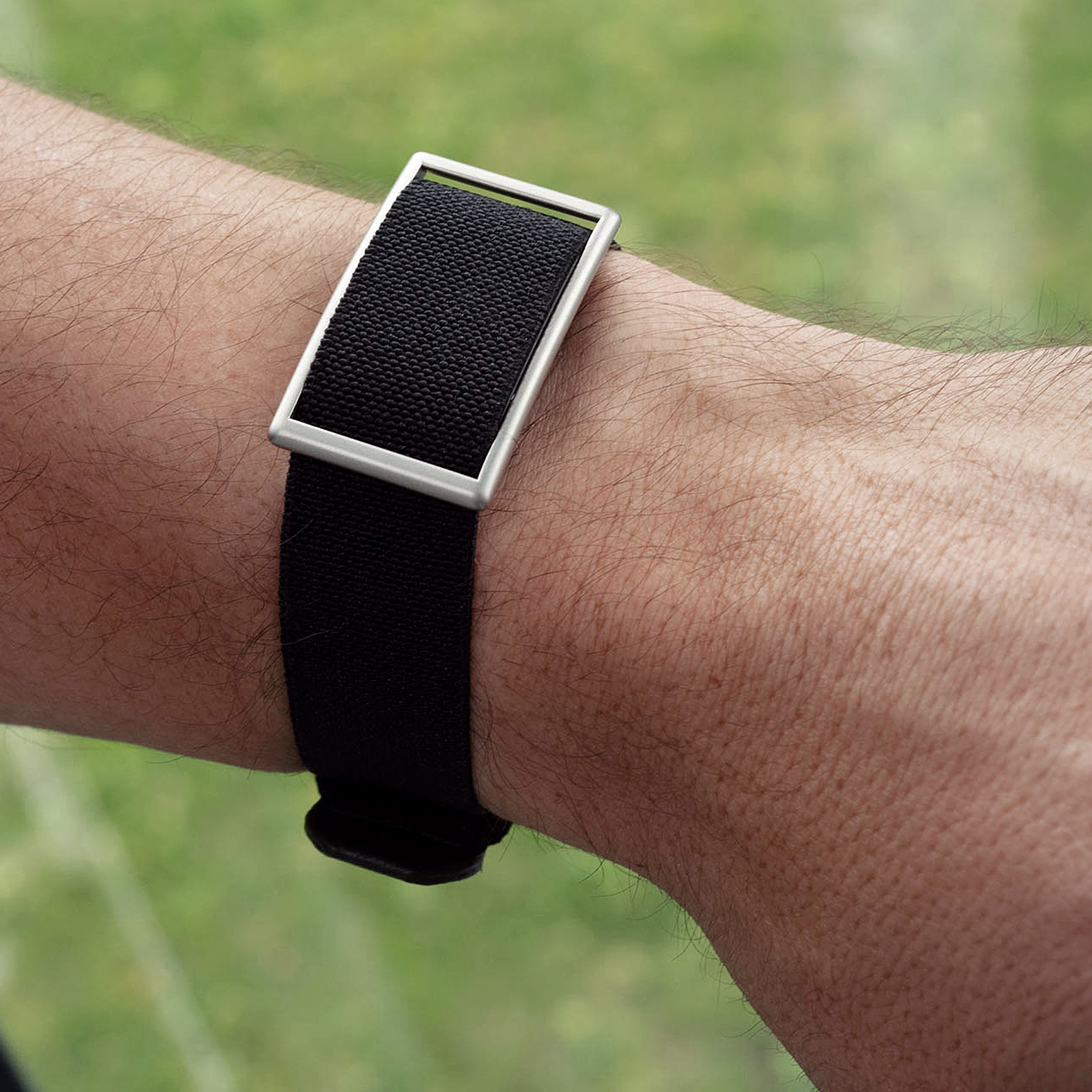
The CardioWatch 287 is a multi-sensor, medical-grade wearable platform designed specifically to maintain high patient compliance during extended monitoring periods. Weighing under 30 grams, it operates continuously for multi-day deployments without requiring daily battery recharging or adhesive patch replacements.

  • Sensors: PPG (G/R/iR), Single-lead ECG, 3-axis ACC, Temp, GSR
  • Regulatory: CE-MDR Certified, FDA 510(k) Cleared
  • Sampling Rate: Raw data export up to 128 Hz
  • Vital Signs Derived: Up to 19 physiological parameters
  • Patient Ergonomics: Hypoallergenic, water-resistant, ultra-light
  • Integration: Open APIs, SDKs, Gateway App & Cloud

0Data PointsCollected across global clinical deployments
0Devices ProducedManufactured under ISO 13485 compliance
0HospitalsActive general wards & cardiology departments
0Patients MonitoredFrom acute care to post-discharge programs
0Clinical TrialsPharma, biotech & academic studies
0Vital ParametersExtracted continuously from one device
Information Gain & Technical Superiority

Technical Evaluation: Continuous Wearables vs. Legacy Arrhythmia Monitors

Procurement officers must navigate distinct trade-offs between legacy telemetry, consumer smartwatches, single-use adhesive patches, and continuous medical-grade bracelets. The comparison below details why the CardioWatch 287 offers superior clinical utility and lower total cost of ownership (TCO).

Evaluation Metric Corsano CardioWatch 287 Adhesive Holter / ECG Patches Consumer Smartwatches Traditional Bedside Telemetry
Regulatory Class CE-MDR Certified / FDA 510(k) Cleared CE-MDR / FDA Cleared Consumer (Limited FDA Features) CE-MDR / FDA Cleared
Monitoring Continuity Continuous 24/7 PPG + On-Demand/Triggered ECG Continuous 3-14 Days (Adhesive dependent) Episodic / Intermittent Sampling Continuous (Bed-confined)
Raw Signal Access (128Hz) Full Raw PPG, ECG, ACC, GSR Export Raw ECG only (No optical/PPG signals) Locked / Closed Proprietary API Proprietary Formats / No Raw Signal API
Skin Integrity & Reusability Re-usable Wristband (Zero skin breakdown) Single-use adhesive (Risk of skin tears) Consumer wristband (Not sterilizable) Cables / Electrodes (High skin irritation)
Nurse Workflow Impact Automated zero-touch data sync to EMR Manual data download after patch removal Non-compliant for hospital EMR integration High false alarm rate & tethered leads
Total Cost of Ownership Low TCO (Reusable hardware, software tier) High recurring cost ($100-$300/patch) Variable (Consumer support burdens) Extremely High initial capital cost
Strategic Procurement Analysis

As healthcare delivery decentralizes and artificial intelligence matures, institutional buyers must align their purchasing strategies with emerging technological and regulatory shifts across the global market.

Hospital ward nursing dashboard tracking arrhythmia metrics continuously
Procurement Trend 1

Mandatory Interoperability & EMR Integration

Hospitals are eliminating standalone hardware silos. Modern procurement tenders mandate direct integration into Electronic Medical Records (Epic, Cerner, Allscripts) via HL7/FHIR protocols. Devices like CardioWatch 287 deliver vital parameters and EWS scores straight to nursing dashboards.

Raw PPG and ECG wave visualization for clinical trial AI analysis
Procurement Trend 2

Demand for IP-Free Raw Data in Research Tenders

Pharmaceutical sponsors and CROs are rejecting "black-box" consumer wearables. Future-proof clinical trial procurement requires IP-free raw data streams (up to 128 Hz) for PPG, ECG, acceleration, and temperature to validate novel digital biomarkers and predictive AI models.

Patient at home using continuous arrhythmia bracelet for remote monitoring
Procurement Trend 3

Unified Acute-to-Home Monitoring Continuum

Procurement departments are shifting away from separate internal ward monitors and post-discharge home devices. Acquiring a single medical bracelet that stays on the patient's wrist from emergency admission through home recovery slashes hardware overhead and onboarding friction.

Technology & Clinical Evolution

1. Multi-Modal Sensor Fusion (PPG + ECG + Thermistor + ACC)

Single-parameter arrhythmia monitors are rapidly becoming obsolete. The industry standard has evolved toward multi-modal sensor fusion. Combining optical PPG with single-lead ECG rhythm strips, skin temperature, and 3-axis accelerometry allows algorithms to differentiate true cardiac arrhythmias (such as AFib or Ventricular Extra-Systoles) from motion artifacts, systemic fever, or physical exertion.

2. AI-Driven Edge Computing & Automated Early Warning Scores (EWS)

Next-generation devices incorporate low-power neural network chips capable of executing arrhythmia classification directly on the edge. By running real-time signal quality indexes (SQI) and automated Early Warning Score computations on-device, latency is minimized and false-positive alarm fatigue—a major issue in acute ward settings—is significantly reduced.

3. Shift Toward Autonomous & Low-Power Wireless Telemetry

Energy-harvesting microchips, micro-power Narrow-Band IoT (NB-IoT), and low-energy Bluetooth (BLE 5.0+) integrations represent the cutting edge of wearable hardware design. Emerging consortia—such as the Eurostars LifeTime project partnered with Corsano—are pioneering self-sustaining, micro-light-harvesting medical monitors that remove charging burdens entirely in extended remote monitoring applications.

Corporate Authority & E-E-A-T

Corsano Health: Regulated Manufacturing & Proven Clinical Authority

Corsano Health B.V. is a recognized European medical device manufacturer specializing in continuous physiological monitoring systems. Headquartered in the Netherlands and Switzerland, our hardware, firmware, and cloud infrastructure adhere to the highest international quality and regulatory frameworks.

  • CE-MDR Certification: Formally certified under EU Medical Device Regulation (MDR) by notified body Kiwa (CE 1984), confirming compliance for acute clinical environments.
  • FDA 510(k) Clearance: Cleared for commercial medical distribution in the United States.
  • ISO 13485 Compliance: Complete Quality Management System covering medical software development, manufacturing, and post-market surveillance.
  • Clinical Validation & Consortium Leadership: Key technology partner in major European research initiatives including DETECT (cardiac arrest recognition with Radboud UMC and Erasmus MC) and Watch-It (Horizon 2020).
  • Global Tier-1 Commercial Partnerships: Strategic distribution and technology integration agreements with Medtronic (US & Europe) and Netcare Hospital Group.
Kiwa notified body CE-MDR medical device certification mark for Corsano CardioWatch
Enterprise & Clinical Ecosystem

Trusted by Leading Global Health Systems & MedTech Pioneers

From tier-1 hospital networks to global pharmaceutical leaders, enterprise organizations rely on Corsano's certified continuous arrhythmia detection hardware and open API data environment.

Netcare Hospital Group
Medtronic
Roche Diagnostics
Janssen Pharmaceuticals
Philips Healthcare
Charité Berlin
Radboud University Medical Center
Amsterdam UMC
Erasmus MC
Leiden University Medical Center
Procurement FAQ

Arrhythmia Continuous Detection Device: Buyer FAQ

Addressing essential technical, regulatory, and integration inquiries asked by institutional healthcare buyers and clinical AI engineers.

Clinical studies validate that multi-wavelength PPG (combining Green, Red, and Infrared spectrums) achieves over 95% sensitivity and specificity for screening Atrial Fibrillation during resting and low-motion states. To satisfy rigorous clinical diagnostic criteria, the CardioWatch 287 allows immediate single-lead ECG rhythm strip capture, enabling cardiologists to confirm rhythm irregularities flagged by the continuous PPG screening algorithm.

Hospital ward deployment requires medical-grade device certification. In the European Union, devices must be certified under the strict EU Medical Device Regulation (CE-MDR Class IIa/IIb). In the United States, FDA 510(k) clearance is mandatory for clinical vital-sign claims. Consumer wearables lacking these certifications cannot be lawfully used for diagnostic escalation or formal EMR documentation.

Yes. Unlike proprietary consumer devices that lock physiological data behind black-box summary scores, Corsano provides full, IP-free access to raw 128 Hz accelerometer, multi-wavelength PPG, single-lead ECG, skin temperature, and Galvanic Skin Response (GSR) signals via cloud APIs and mobile SDKs. This transparency allows pharmaceutical companies and research institutions to build custom digital biomarkers and machine learning algorithms.

Paroxysmal AFib and post-surgical arrhythmias often develop silently following patient discharge. Continuous remote monitoring alerts care management teams to subclinical heart rate variability (HRV) degradation and rhythm disturbances days before acute symptoms emerge. Early pharmaceutical adjustment or intervention prevents emergency room visits and reduces 30-day readmissions by up to 35%.

The CardioWatch 287 features an optimized low-power architecture that supports continuous multi-day monitoring on a single charge. Its lightweight, skin-friendly watch form factor achieves compliance rates exceeding 90% in long-term clinical trials—far outperforming invasive chest straps, wired Holter monitors, or irritating adhesive patch sensors.

Data transmitted between the CardioWatch bracelet, gateway application, and cloud infrastructure is protected using end-to-end AES-256 encryption. The Corsano cloud platform is fully compliant with EU GDPR and US HIPAA standards, incorporating role-based access control (RBAC), secure token authentication, and rigorous data segregation to safeguard Protected Health Information (PHI).

Corsano provides documented RESTful APIs and mobile SDKs (iOS/Android) supporting HL7 and FHIR data standards. Vital signs, Early Warning Scores (EWS), and validated arrhythmia events can be ingested directly into hospital EMR systems (such as Epic or Cerner) or third-party central nursing telemetry dashboards without altering established clinical workflows.

Accelerate Your Arrhythmia Monitoring Capabilities Today

Connect with our senior clinical engineering team to request evaluation units, API access documentation, or custom enterprise quotation tailored to your hospital ward or clinical research study.

Contact Us

Regulatory statement: Feature availability, specific clinical claims, and regulatory clearance status may vary by geographic region depending on local medical device registration requirements. Contact Corsano Health for region-specific documentation.