

LifeTime Project
Development of an autonomous monitoring platform featuring micro-solar energy harvesting and integrated Narrow-Band IoT (NB-IoT) cellular connectivity for uninterrupted long-term subject monitoring without battery charging friction.
A comprehensive technical analysis for Pharmaceutical Sponsors, Clinical Research Organizations (CROs), and Principal Investigators evaluating medical-grade, continuous wrist-worn multi-sensor technology for Phase I-IV decentralized and hybrid clinical studies.
In modern drug development and medical device validation, global pharmaceutical sponsors and CROs face unprecedented pressure to increase protocol efficiency, reduce patient burden, and capture ecologically valid, real-world data (RWD). Traditional clinical trial models rely on episodic site visits and sparse vital sign spot-checks, which systematically miss dynamic physiological fluctuations, transient arrhythmias, nocturnal respiratory anomalies, and early adverse drug reactions (ADRs).
Transitioning toward Decentralized Clinical Trials (DCT) and hybrid clinical protocols requires a specialized category of biosensors: the Clinical Trial Remote Data Collection Wearable. Unlike consumer fitness bands or unvalidated smartwatches—which utilize proprietary, undisclosed filtering algorithms that alter raw waveforms—a true clinical-grade trial wearable must offer verified measurement accuracy, continuous multi-parametric capture, zero patient setup complexity, and unrestricted raw signal export (such as photoplethysmography [PPG] and single-lead electrocardiography [ECG]).
Engineered specifically to solve the data fidelity and compliance challenges of decentralized trial operations, the CardioWatch 287-2B is the benchmark wrist-worn wearable for global clinical research.
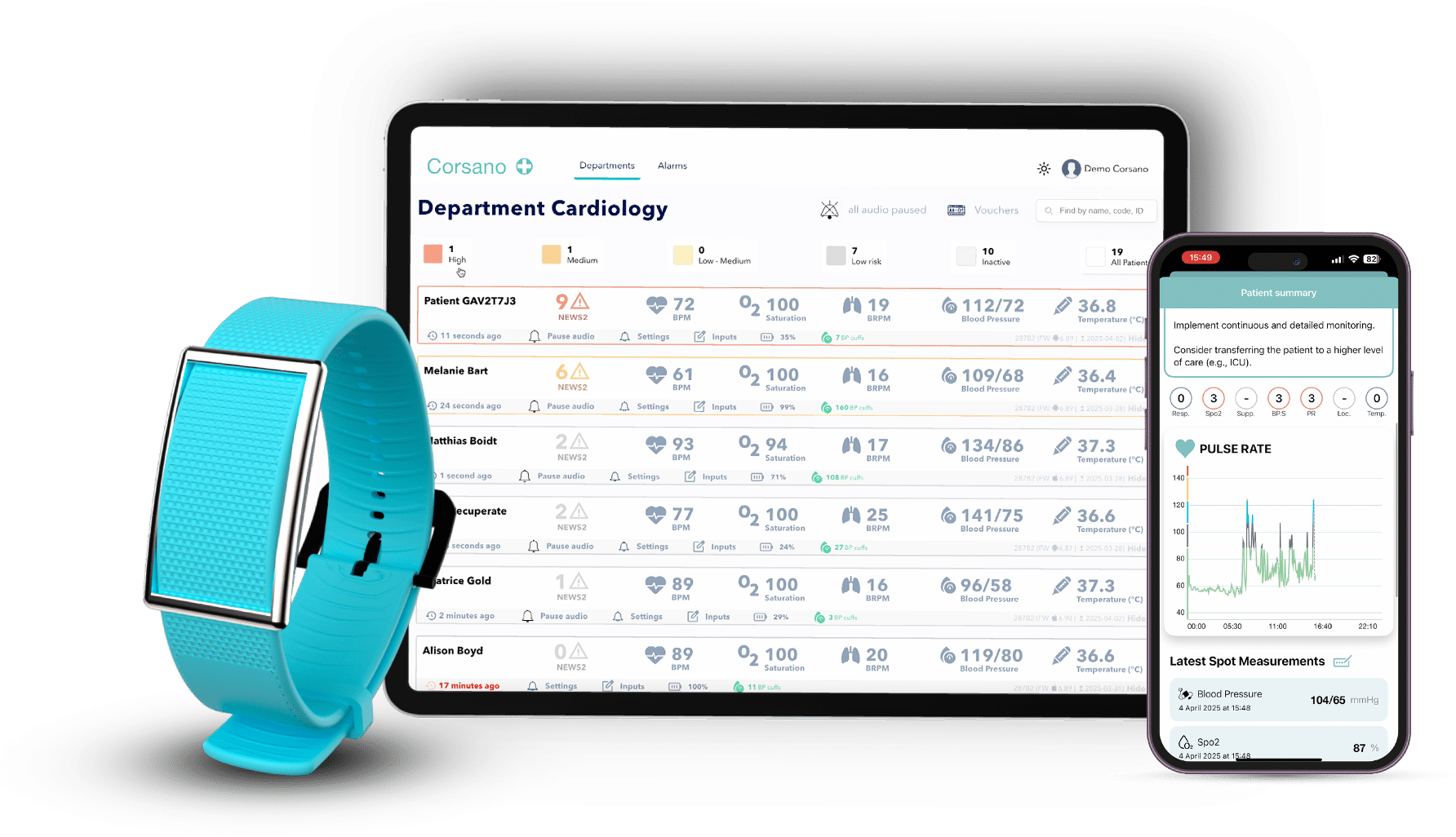
When procurement officers and clinical data leads evaluate remote monitoring technology, distinguishing between commercial fitness trackers and certified clinical wearables is critical for regulatory submission approval.
| Evaluation Metric | Consumer Smartwatches | Corsano CardioWatch 287-2B |
|---|---|---|
| Regulatory Clearance | General Wellness / Unregulated | CE-MDR Certified & FDA 510(k) Cleared |
| Quality Management System | ISO 9001 / Commercial | ISO 13485 Medical Device Standard |
| Raw Sensor Signal Access | No (Closed / Proprietary Black Box) | Yes (Unrestricted PPG/ECG/ACC up to 128 Hz) |
| Data Transmission Protocol | Consumer Cloud / App Locked | Open APIs, Mobile SDKs, Direct eCRF / EMR Sync |
| Vital Parameters Captured | Episodic Spot Checks (1-3 metrics) | Up to 19 Continuous Physiological Variables |
| Compliance & Data Integrity | Consumer Privacy Terms | 21 CFR Part 11, EU-GDPR, HIPAA Compliant |
Built upon a foundation of rigorous European engineering and clinical validation, Corsano Health serves as a trusted partner for world-class pharmaceutical enterprises, hospital networks, and research institutes.
Corsano Health B.V. operates under full ISO 13485 accreditation. Our continuous monitoring architecture is subjected to continuous post-market surveillance, rigorous bench testing, and clinical comparative trials against gold-standard bedside patient monitors.
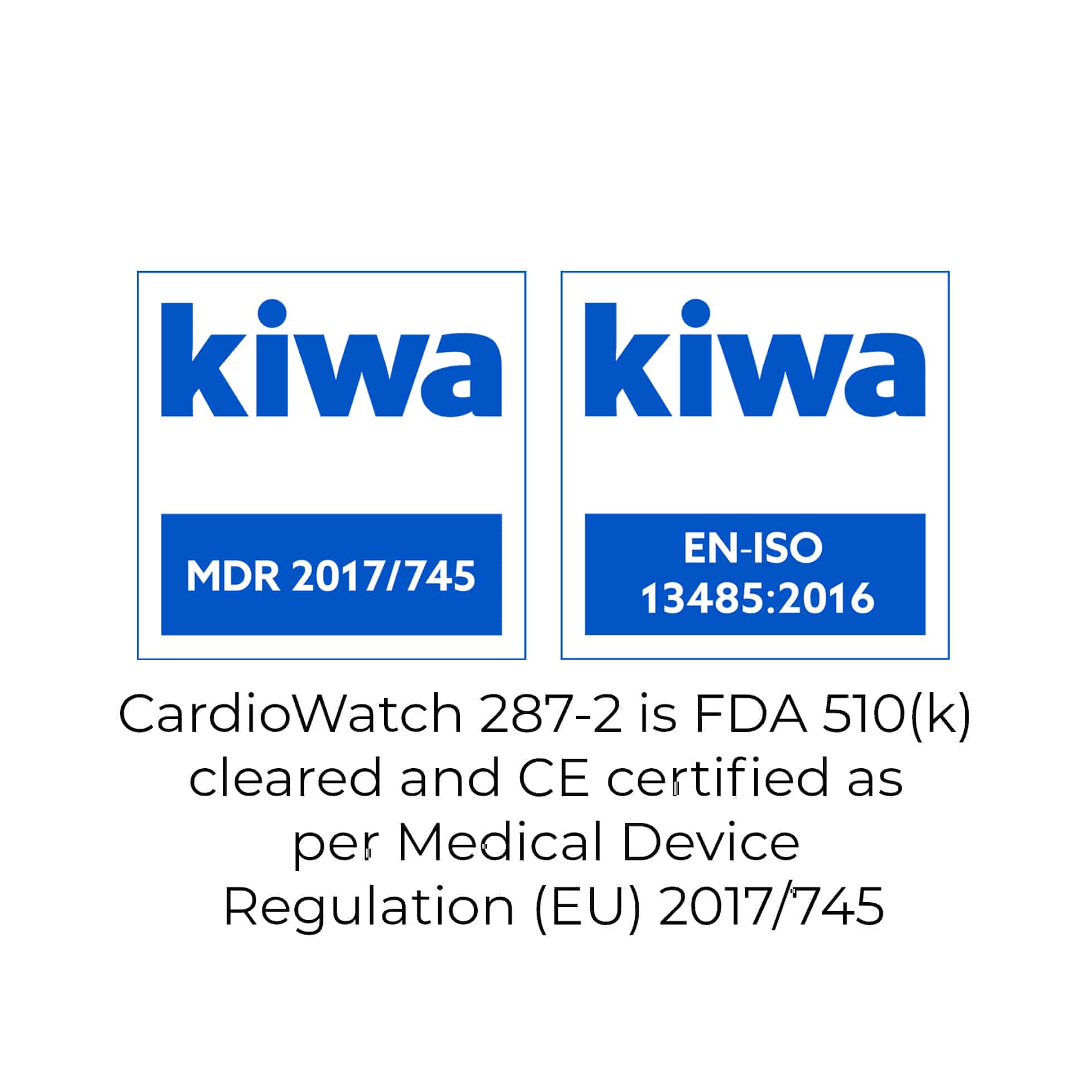
Corsano Health collaborates with pioneer pharmaceutical corporations, international distribution leaders like Medtronic, and top-tier university hospitals to push the boundaries of clinical monitoring.









Corsano actively participates in flagship European framework research programs, providing validated multi-sensor hardware and data architecture for breakthrough clinical investigations.
From energy-harvesting wear technology to real-time sudden cardiac death prevention algorithms, our platform serves as the hardware foundation for multi-center international trials.
Development of an autonomous monitoring platform featuring micro-solar energy harvesting and integrated Narrow-Band IoT (NB-IoT) cellular connectivity for uninterrupted long-term subject monitoring without battery charging friction.
Multi-center clinical validation of continuous 24/7 cardio-respiratory risk scoring in high-risk post-cardiac surgery subjects, conducted in collaboration with Oslo University Hospital and University of Gothenburg.

A multi-institutional trial with Radboud UMC, Erasmus MC, and Amsterdam UMC evaluating CardioWatch 287 ECG and PPG streams for AI-driven detection of out-of-hospital cardiac arrest and automated emergency dispatch triggering.
As the clinical research landscape transitions from trial site-centric observations to fully decentralized and hybrid models, trial sponsors and procurement leads must align their technology acquisition strategies with four critical industry transformations:
Historically, trial sponsors relied on commercial off-the-shelf wearables that output pre-calculated daily step counts or single heart rate averages. However, regulatory authorities (such as the FDA’s Digital Health Center of Excellence and the European Medicines Agency) increasingly require complete transparency into the algorithm pipeline. Modern procurement mandates access to raw, uncompressed sensor waveforms (PPG, ECG, Accelerometry). Owning raw data isolates trial sponsors from vendor software updates that might alter metric calculations mid-study, thereby preserving statistical data integrity throughout multi-year longitudinal trials.
Subjective electronic Clinical Outcome Assessments (eCOA) and Patient-Reported Outcomes (ePRO) capture essential qualitative symptom data. However, recall bias remains a major limitation. The future of trial data collection lies in the timestamped fusion of subjective patient inputs with objective continuous physiological biometrics. For example, linking a patient-reported fatigue event directly with concurrent 24-hour heart rate variability (HRV), skin temperature shift, and sleep disruption metrics yields superior biomarker sensitivity and therapeutic efficacy insights.
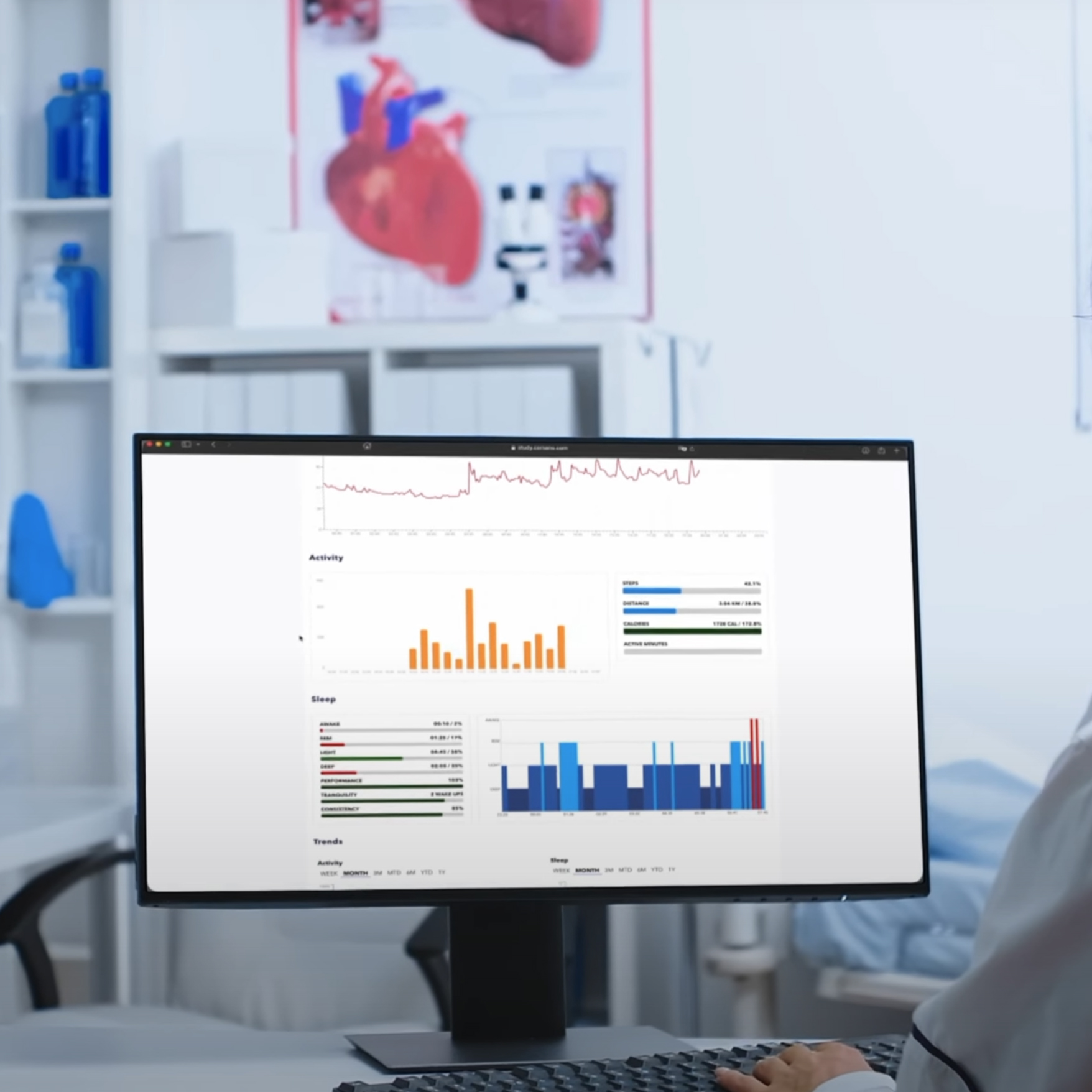
Track real-time subject wear-time compliance, battery levels, and data synchronization status across global trial sites via a unified web platform.

Export raw 128 Hz optical PPG, single-lead ECG rhythm strips, and accelerometry for custom AI algorithm training and digital biomarker discovery.

Seamlessly feed structured patient biometrics into Medidata Rave, Veeva Vault, or proprietary EDC systems via RESTful APIs and native SDKs.
Patient non-compliance is the primary driver of missing data points in decentralised clinical trials. Future procurement standards heavily prioritize "passive" collection systems. Devices that require complex daily manual pairing, touch-screen interactions, or frequent recharging suffer dramatic drop-offs in wear compliance after week two. The CardioWatch 287-2B addresses this through extended multi-day battery autonomy, water-resistant continuous wear design, and automatic background cellular relay synchronization.
Integrating artificial intelligence (AI) and machine learning (ML) models directly into trial monitoring infrastructure enables real-time detection of safety signals and adverse events. Continuous monitoring of composite vitals (e.g., sudden changes in skin temperature coupled with subtle elevated resting heart rate and altered respiration) allows clinical operations teams to detect early signs of cytokine release syndrome (CRS), sepsis, or drug-induced cardiotoxicity long before clinical presentation at a scheduled site visit.
Detailed technical, regulatory, and operational answers addressing core evaluation criteria for clinical trial wearable deployment.
Consumer wearables are classified as general wellness products and are explicitly not intended for medical diagnostic or clinical efficacy determinations. They employ proprietary, undisclosed algorithm modifications that can change overnight through over-the-air (OTA) software updates, rendering longitudinal trial data inconsistent and unverified.
In contrast, a medically certified wearable like the Corsano CardioWatch 287-2B is governed by ISO 13485 quality systems, CE-MDR, and FDA 510(k) clearances. Algorithms are clinically validated against gold-standard reference devices, locked against unannounced changes, and supported by auditable data provenance mandatory under Good Clinical Practice (GCP) and 21 CFR Part 11 regulations.
Corsano offers unrestricted, IP-free export of uncompressed raw signal files. Trial sponsors receive access to raw 128 Hz photoplethysmography (PPG across green, red, and infrared optical wavelengths), single-lead ECG rhythm strips, 3-axis accelerometry, galvanic skin response (GSR), and surface skin temperature.
Data can be streamed directly to sponsor cloud environments or research pipelines via documented REST APIs or mobile SDKs, empowering bio-statisticians and data science teams to train custom predictive ML models without vendor lock-in.
The CardioWatch 287 platform derives up to 19 validated continuous physiological parameters: Pulse Rate, Pulse Rate Variability (PRV/HRV), Respiration Rate, Blood Oxygen Saturation (SpO2), Continuous Skin Temperature, Galvanic Skin Response, Single-lead ECG, Movement & Step Counts, Posture, Gait Metrics, Sleep Staging, and automated Early Warning Scores (EWS).
The CardioWatch bracelet features a single-purpose, screen-free ergonomic design requiring zero subject configuration. Data is buffered in onboard flash memory during offline periods and automatically synced whenever the bracelet is in BLE range of the trial mobile application or cellular gateway relay. Clinical Research Coordinators (CRCs) receive automated compliance alerts on the trial portal if a subject stops wearing the device or neglects charging.
Yes. The platform is architected specifically to satisfy 21 CFR Part 11, EU Annex 11, EU-GDPR, and US HIPAA security frameworks. All data in transit is protected via TLS 1.3 encryption, while stored cloud data uses AES-256 encryption. Patient identities are pseudonymized at the site level, ensuring zero Protected Health Information (PHI) is commingled with physiological signal data.
Yes. Corsano provides standardized RESTful APIs, Webhooks, and export formats (e.g., CSV, JSON, Parquet) compatible with major Electronic Data Capture (EDC) suites including Medidata Rave, Veeva Vault EDC, and Oracle Clinical, as well as hospital EMRs via HL7 FHIR interfaces.
Depending on protocol configuration and continuous raw signal streaming requirements, the CardioWatch 287 battery operates continuously for several days on a single charge. Fast inductive charging allows the device to reach full capacity in approximately one hour, minimizing subject off-wrist time.
Consult with our clinical trial hardware specialists and data engineering team to evaluate parameter selection, request trial hardware samples, or design a custom protocol integration pilot.
Feature availability and specific regulatory claim parameters may vary by country or region and are subject to local medical device regulatory approvals, clearances, and study protocol configurations.