An authoritative technical evaluation for hospital procurement teams, clinical trial sponsors, and MedTech distributors. Discover how the CE-MDR certified and FDA 510(k) cleared CardioWatch 287 delivers continuous 19-vital-parameter monitoring, IP-free raw PPG/ECG data access up to 128 Hz, and seamless EMR interoperability.
Why Global Healthcare Procurement Managers Choose the CardioWatch 287 Medical Smart Bracelet
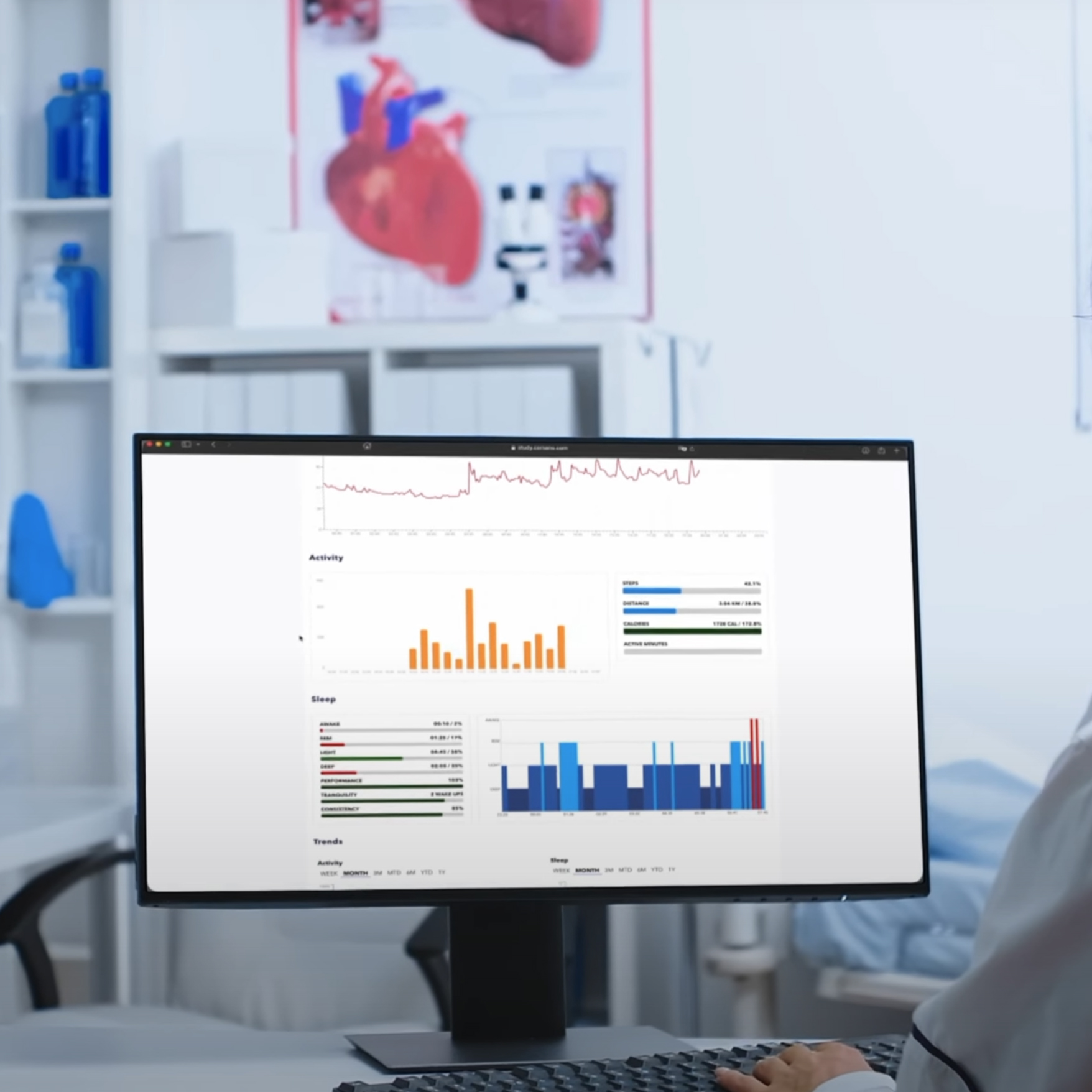
In an evolving healthcare landscape where clinical deterioration often occurs undetected between traditional nursing rounds, the CardioWatch 287 Medical Smart Bracelet establishes a new benchmark for continuous, medical-grade physiological telemetry. Engineered under rigorous ISO 13485 quality systems in Europe, this multi-sensor wristband replaces fragmented, spot-check equipment with continuous vital signs data capture.
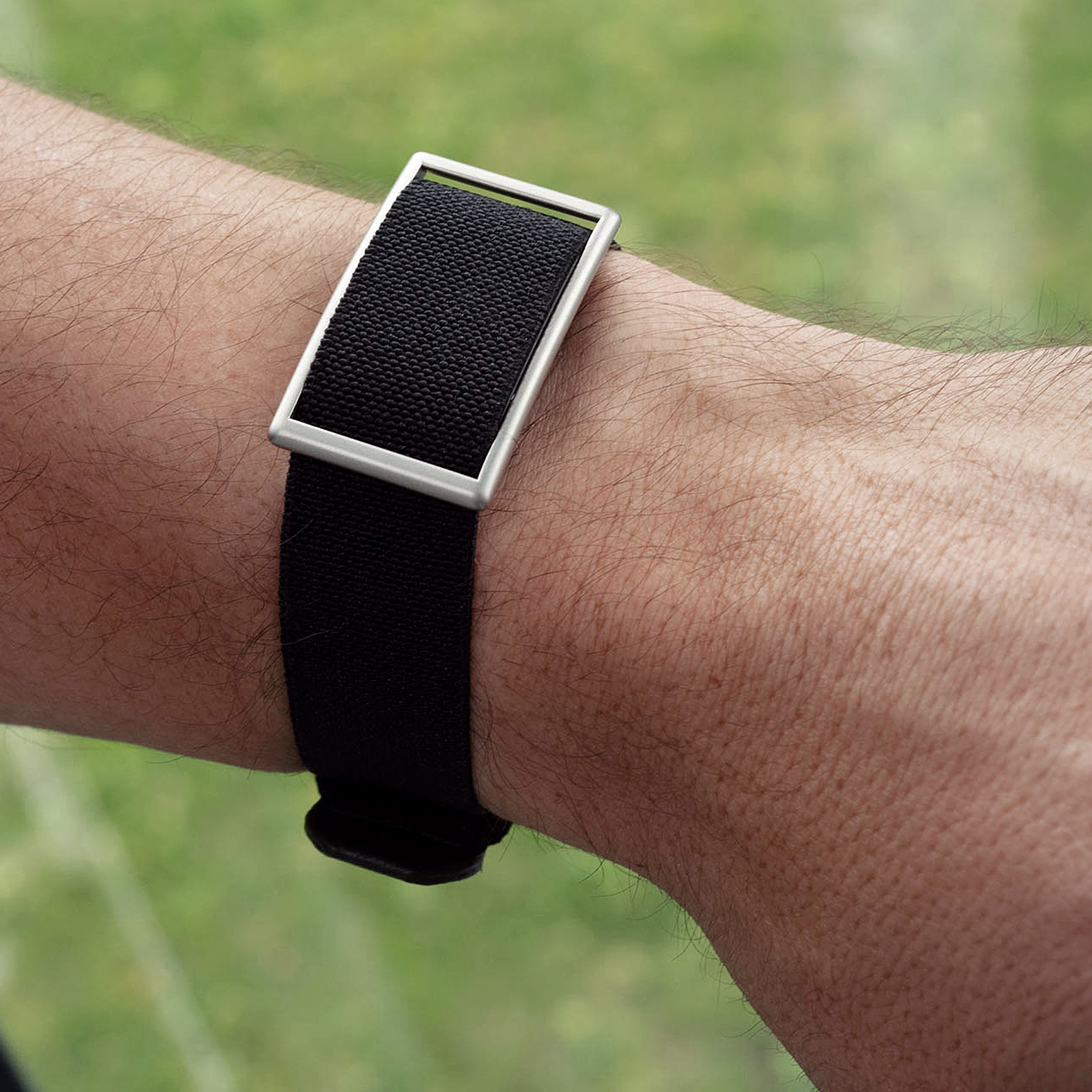
Corsano CardioWatch 287-2B: Compact, ergonomic, and medically certified wrist wearable designed for non-stop clinical wear.
High-Density Multi-Sensor ArrayEquipped with multi-wavelength Photoplethysmography (PPG: Green, Red, Infrared), single-lead ECG, 3-axis precision accelerometer, continuous skin temperature sensor, and Galvanic Skin Response (GSR).
Unrestricted Raw Data Sampling (Up to 128 Hz)Unlike consumer wearables that lock data behind proprietary black-box metrics, CardioWatch 287 provides complete, IP-free raw signal access for advanced research and custom AI algorithm development.
Enterprise EMR & Cloud IntegrationDelivers structured vital parameters directly into Electronic Medical Records (Epic, Cerner, ChipSoft) via documented RESTful APIs, Mobile SDKs, and HL7/FHIR interfaces.
Proven Clinical Ergonomics & Battery EfficiencyUltra-lightweight biometric enclosure engineered for multi-day uninterrupted monitoring, ensuring patient compliance across general wards, post-discharge pathways, and decentralized trials.
CardioWatch 287 Technical Specification Matrix
For clinical engineers, IT architects, and procurement officers evaluating wearable monitoring platforms, the table below details the core engineering and regulatory attributes of the CardioWatch 287 platform:
Technical Parameter
Specification & Performance Standard
Regulatory Clearances
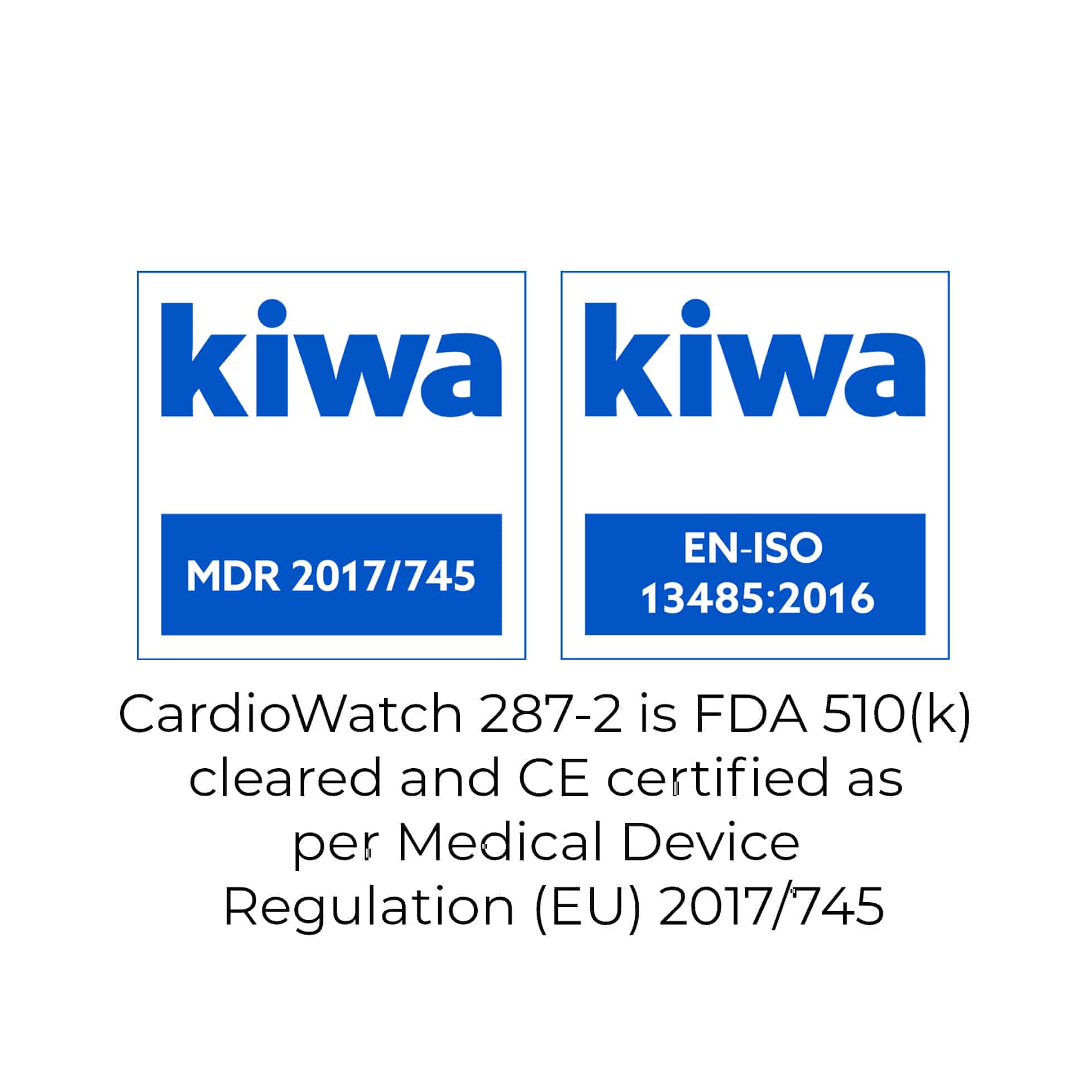
EU CE-MDR Certified (Kiwa Notified Body 0560), US FDA 510(k) Cleared, ISO 13485 Audit Compliance
Tailored Deployment Solutions for Hospitals, Pharma & Research Consortia
The CardioWatch 287 Medical Smart Bracelet is not a generic consumer device; it is a modular, certified ecosystem engineered to meet diverse procurement intents across acute care, remote monitoring, and clinical research.
Acute & General Wards
Continuous Ward Patient Monitoring
Replaces episodic manual spot-checks with continuous, automated vitals streaming. Prevents unmonitored deterioration in non-ICU beds and reduces manual nursing documentation workloads by over 60%.
Provides seamless continuity of care from hospital discharge to home. Enables 'Hospital-at-Home' initiatives with continuous physiological oversight, reducing 30-day readmission rates in high-risk cardiac and respiratory cohorts.
Delivers robust, audit-ready physiological data collection for decentralised clinical trials. Allows drug developers to evaluate continuous treatment efficacy and digital biomarkers without location constraints.
Global Procurement Trends in Medical Smart Bracelets (2025–2030 Horizon)
Healthcare procurement is undergoing a fundamental structural transition. Procurement directors and hospital administrators are shifting away from reactive capital expenditure toward outcome-based digital health infrastructure.
1. Shift from Episodic Spot-Checking to Continuous Non-ICU Telemetry
Historically, continuous vital signs monitoring was restricted to Intensive Care Units (ICUs) due to high equipment costs and patient tethering cables. However, multi-center hospital trials reveal that up to 75% of adverse events and unexpected cardiac arrests occur in general wards, where vital signs are typically checked only once every 4 to 8 hours. Procurement trends reflect a rapid mandate for continuous wearable telemetry across all inpatient beds, closing critical observational gaps without increasing nursing staff burden.
2. Demands for IP-Free Raw Data Ownership and AI Model Training
Modern pharmaceutical enterprise buyers and research institutions are rejecting consumer wearables that supply only pre-processed, proprietary indices. Future-proof procurement requires direct, IP-free access to raw sensor signals (raw PPG, ECG, accelerometer data). This raw signal access empowers clinical teams to build proprietary digital biomarkers, validate custom artificial intelligence / machine learning (AI/ML) risk models, and maintain full intellectual property rights over their research outcomes.
Unfiltered multi-wavelength PPG and ECG waveform signals accessible via Corsano APIs at 128 Hz for advanced biomarker discovery.
3. Mandatory Open Interoperability (HL7, FHIR & RESTful APIs)
Healthcare IT departments no longer tolerate isolated software silos. Procurement guidelines now specify mandatory interoperability standards, requiring wearable medical platforms to integrate natively with legacy Electronic Medical Records (EMR) systems like Epic, Cerner, and hospital nurse-call systems. The CardioWatch 287 platform natively supports open API endpoints and mobile SDKs, allowing hospitals to embed continuous vitals directly into existing clinical dashboards.
4. Sustainability, Circular Electronics, and Reduced Total Cost of Ownership (TCO)
With environmental, social, and governance (ESG) standards expanding across European and North American hospital systems, single-use continuous patch sensors are coming under regulatory and fiscal scrutiny due to electronic waste generation and recurring subscription costs. Reusable, medical-grade smart bracelets like the CardioWatch 287 provide a drastically lower Total Cost of Ownership (TCO) over a 3- to 5-year lifecycle while satisfying institutional zero-waste metrics.
Technology Roadmap
The Evolution of Medical Smart Bracelets: Next-Generation Innovations
Understanding the technological trajectory of medical-grade wearables ensures that institutional buyers invest in scalable, future-proof platforms capable of continuous software and algorithmic enhancement.
Key Drivers Shaping the Future of Wearable Vital Monitoring
As microelectronics, optical sensing, and edge processing mature, medical smart bracelets are evolving from passive monitoring instruments into predictive clinical decision-support engines.
Corsano Health remains at the absolute forefront of this technological shift, participating in prestigious European Horizon 2020 and Eurostars innovation programs alongside leading university medical centers.
✓Micro-Calorimetric Continuous Temperature Sensing: Moving beyond surface skin temperature to accurately reflect core thermal fluctuations in febrile and post-operative patients.
✓Multimodal Optical Sensor Fusion: Combining red, green, and infrared spectrum photoplethysmography to mitigate motion artifacts and skin tone variability.
✓On-Device Edge Computing: Running low-latency machine learning algorithms directly on the wearable microcontroller to detect sudden arrhythmia or cardiac events in real-time.
Development of energetically autonomous medical wearables that harvest power from ambient light and thermal gradients, combining Narrow-Band IoT (NB-IoT) for continuous zero-maintenance hospital deployment.
Watch-It Project: Cardio-Respiratory Validation
Clinical validation of continuous 24/7 wearable tracking for patients at high risk of sudden cardio-respiratory deterioration, conducted in collaboration with Oslo University Hospital and Gothenburg University.
Multi-center trial alongside Radboud UMC, Erasmus MC, and Amsterdam UMC leveraging CardioWatch 287 raw signals for automated recognition and instant emergency alerting for cardiac arrest events.
Enterprise Credentials & E-E-A-T
Uncompromising Medical Certification & Enterprise Trust
Corsano Health combines Swiss engineering precision with Dutch medical device manufacturing excellence. Our commitment to clinical rigor and regulatory compliance distinguishes us from consumer gadget vendors.
When purchasing continuous vital signs monitoring equipment for institutional care, regulatory legitimacy is non-negotiable. Corsano Health operates under fully audited ISO 13485 quality standards, ensuring full traceability and safety across every manufactured device batch.
✓CE-MDR Certification (Kiwa Notified Body 0560): Fully compliant with European Medical Device Regulation (EU 2017/745) Class IIa requirements for clinical diagnostic use.
✓FDA 510(k) Clearance: Cleared for clinical medical monitoring across US acute care and remote patient monitoring sectors.
✓Clinically Validated Vital Algorithms: Extensively benchmarked against hospital ICU bedside monitors and ECG gold standards in peer-reviewed trials.
✓Global Enterprise Distribution: Strategic commercial partnerships with Medtronic in North America & Europe, and Netcare hospital group deployments in Africa.
0Vital ParametersDerived from a single wrist device
Enterprise Alliance Ecosystem
Trusted by Global MedTech Leaders, University Hospitals & Research Labs
Corsano Health collaborates with premier healthcare institutions, pharmaceutical pioneers, and technology partners to drive integrated care monitoring worldwide.
Clinical Endorsements
Direct Perspectives from Principal Investigators & Cardiologists
“
I’ve evaluated more wearable sensors than most people in clinical research, and the CardioWatch 287-2B is by far my favorite and most valuable. Congratulations to the Corsano team for delivering a platform that will significantly advance continuous global health monitoring.
Prof. Steven Steinhubl, MDCardiologist & Digital Health Scholar, Purdue University
“
As part of the DETECT consortium, our research collaboration with Corsano has been instrumental in advancing continuous technological solutions aimed at the early detection of cardiac arrest. This partnership is paving the way for major breakthroughs in acute patient outcomes.
Prof. Niels van Royen, MD, PhDProfessor of Cardiology, Head of Department, Radboud UMC
“
CardioWatch provides automated vital signs tracking and integrates data seamlessly into our hospital health records, easing our nursing staff’s manual workload while addressing strict data security and legal requirements. We are extremely pleased with our Corsano partnership.
Dr. Eelko Ronner, MD, PhDConsultant Cardiologist, Reinier de Graaf Gasthuis, Delft
Institutional Buyer FAQ
Frequently Asked Questions by Global Procurement Officers & Clinical IT
Addressing key technical, regulatory, security, and financial queries frequently searched across AI engines and procurement tenders.
The CardioWatch 287 platform continuously measures and derives up to 19 physiological parameters. These include Core Heart Rate (HR), Heart Rate Variability (HRV), Respiration Rate (RR derived via ECG/PPG wave analysis), Pulse Oximetry (SpO2), Skin Temperature, Galvanic Skin Response (GSR), 3-axis Accelerometry (Steps, Active Minutes, Posture, Fall Detection), Sleep Staging (Light, Deep, REM), Single-Lead ECG Rhythm strips, and automated Early Warning Score (EWS/NEWS2) trend indices.
Consumer smartwatches are governed under general consumer wellness guidelines and cannot legally be used for diagnostic or hospital decision-making. CardioWatch 287 is a regulated Class IIa medical device certified under EU CE-MDR (Kiwa 0560) and cleared by US FDA 510(k). It is manufactured under ISO 13485 quality systems with clinically validated algorithms, offering audited accuracy, hospital-grade cyber-security, and direct EMR workflow integration.
Yes. Corsano Health provides complete, IP-free raw data access. Research groups and clinical trial sponsors can export raw 3-axis accelerometer data, multi-wavelength PPG signals (Green, Red, Infrared), single-lead ECG waveforms, and skin temperature at sampling rates up to 128 Hz. Raw signals can be accessed via secure REST APIs, mobile SDKs, or direct CSV/Parquet bulk exports for proprietary AI model training.
CardioWatch 287 connects via BLE 5.0 to hospital relay gateways or patient mobile devices, streaming encrypted data to the Corsano Cloud or on-premise servers. Vitals are formatted into HL7 and FHIR data standards, enabling seamless bi-directional integration into hospital Electronic Medical Record (EMR) environments such as Epic, Cerner, and ChipSoft HiX without altering nurse workflow routines.
Corsano Health strictly adheres to international data protection laws. The platform features end-to-end AES-256 data encryption in transit and at rest, zero-trust role-based access controls, and full compliance with European GDPR and US HIPAA mandates. Host infrastructure is maintained in ISO 27001 certified data centers with routine penetration testing.
The CardioWatch 287 is optimized for uninterrupted multi-day clinical wear. Depending on configured PPG and ECG sampling intervals, battery life spans between 7 to 14 days on a single charge. Recharging is accomplished in under 90 minutes via a medical-grade magnetic charging dock, minimizing monitoring downtime.
The CardioWatch 287 features a fully sealed, IP67/IP68 water-resistant casing manufactured from bio-compatible, non-porous polymer materials. It is resistant to hospital-grade chemical disinfectants, including isopropyl alcohol wipes, hydrogen peroxide solutions, and chlorine-based sanitizers, enabling rapid turn-around cleaning between patient admissions.
Healthcare organizations, CROs, and authorized MedTech distributors can request pilot evaluation kits, clinical white papers, and bulk tender proposals directly through our institutional sales division. Click the "Get Catalog" button below to launch our instant inquiry window and connect with a clinical procurement specialist.
Accelerate Your Continuous Vital Signs Monitoring Strategy
Partner with Corsano Health to implement certified, continuous patient monitoring across your general wards, post-discharge pathways, or clinical trials.
Regulatory Notice: Regulatory availability, certified claims, and product feature configurations of the CardioWatch 287 Medical Smart Bracelet may vary by country or geographic region. Contact Corsano Health commercial specialists for region-specific registration status and regulatory documentation.