Cardiac Arrest Early Warning Wearable: The Definitive Clinical Validation, OEM Integration, and Global Procurement Architecture
How continuous multi-parameter PPG/ECG bio-telemetry bridges the lethal 6-hour prodromal window between nursing rounds, enables predictive algorithm deployment, and fulfills EU-MDR/FDA regulatory standards for global hospital networks.
CE-MDR CertifiedFDA 510(k) ClearedISO 13485 ManufacturedUnrestricted 128 Hz Raw Data
Founded 2019 · Netherlands & Switzerland
10,000+ medical devices produced
35+ hospitals in clinical deployment
200+ clinical trials supported
Raw signal access up to 128 Hz (PPG, ECG, ACC, Temp, GSR)
Information Gain & Physiological Mechanics
Bridging the Blind Spot: Why Traditional Spot-Checking Fails in Early Cardiac Arrest Detection
In-Hospital Cardiac Arrest (IHCA) and unexpected Out-of-Hospital Cardiac Arrest (OHCA) remain among the leading causes of avoidable patient mortality worldwide. In standard general hospital wards, patient physiological vital signs are evaluated via manual spot-checks once every 4 to 8 hours. Clinical research consistently demonstrates that continuous physiological deterioration—characterized by autonomic nervous system instability, sub-clinical micro-oscillations in peripheral microvascular perfusion, subtle pulse wave amplitude alterations, and heart rate variability (HRV) depression—begins up to 6 to 8 hours before complete cardiovascular collapse.
Relying on intermittent spot-checks leaves vast "monitoring blackouts." When a patient experiences Ventricular Fibrillation (VF), Pulseless Electrical Activity (PEA), or severe autonomic decompensation between physical nursing rounds, the time window for effective cardiopulmonary resuscitation (CPR) and defibrillation collapses rapidly. Every minute of delay in recognizing cardiac arrest decreases the survival rate by 7% to 10%.
The implementation of a dedicated Cardiac Arrest Early Warning Wearable transforms this paradigm. By continuously capturing high-fidelity Photoplethysmography (PPG), single-lead Electrocardiography (ECG), skin temperature, continuous respiration rate, and 3-axis accelerometer data, medical teams transition from reactive rescue attempts to proactive early clinical intervention.
Comparative Technological Capability: Spot-Checking vs. Consumer Wearables vs. Medical-Grade Early Warning Wearables
Uninterrupted from Ward Admission to Home Discharge
Medical-Grade System Architecture
Recommended Product Solutions for Cardiac Early Warning
Corsano Health provides an end-to-end continuous monitoring ecosystem engineered specifically for high-acuity wards, step-down units, and post-discharge cardiac monitoring programmes.
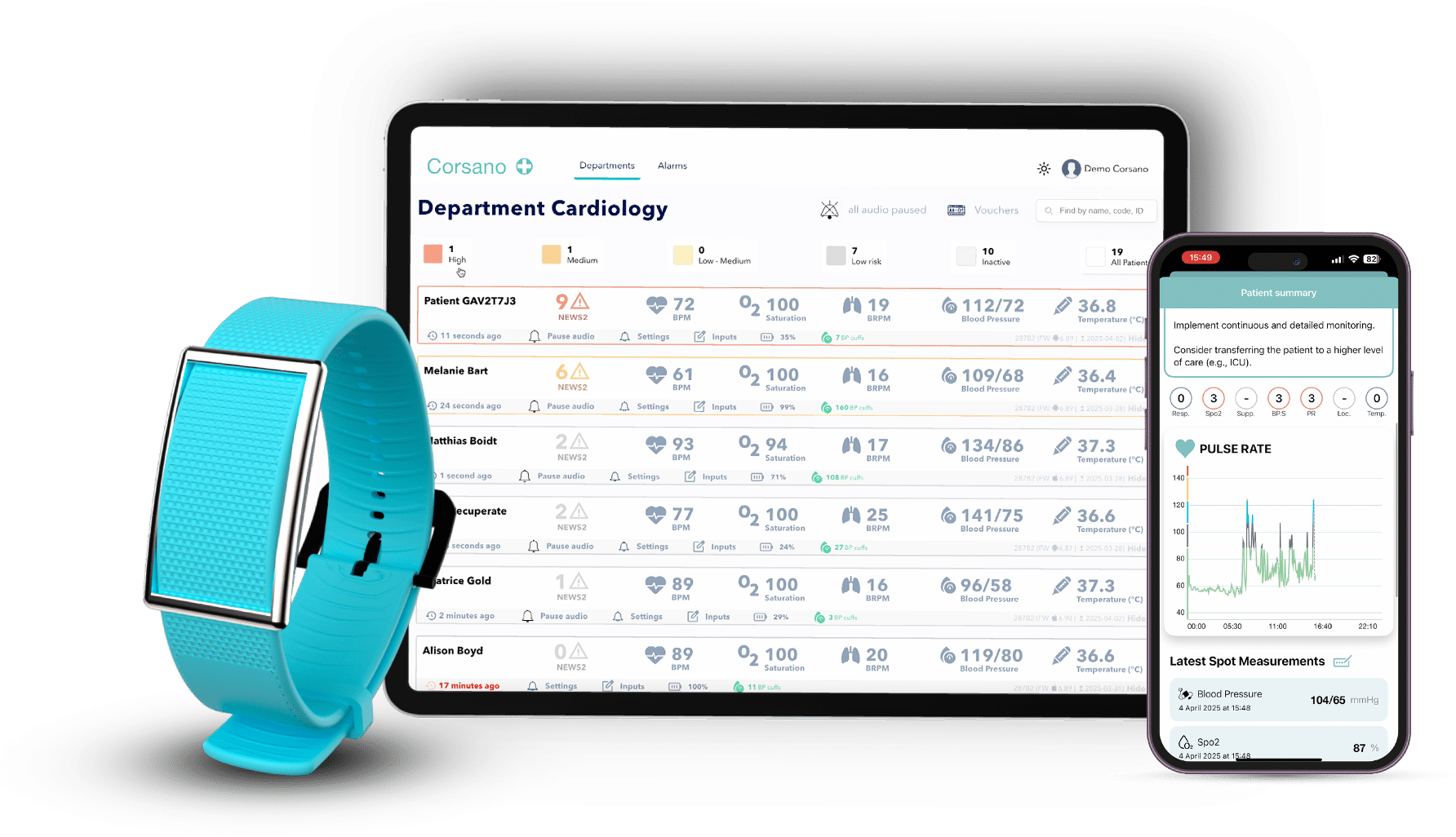
Corsano CardioWatch 287 medical smart bracelet, continuous gateway application, and clinician monitoring web portal.
Corsano CardioWatch 287-2B Medical BraceletThe core hardware unit. A multi-sensor, lightweight wrist-worn bracelet housing dual-wavelength photoplethysmography (PPG green, red, infrared), single-lead ECG rhythm strip capability, skin temperature sensor, Galvanic Skin Response (GSR), and a 3-axis accelerometer. Engineered for uninterrupted multi-day clinical wear.
Continuous Cloud Gateway & Mobile SDKData is securely relayed via encrypted Bluetooth Low Energy (BLE) to hospital gateways or patient smart mobile hubs, instantly routing processed physiological metrics and raw signals to cloud servers with sub-second latency.
Clinician Dashboard & Early Warning Score (EWS) EngineProvides nursing stations and rapid response teams with live trend visualisations, automated Early Warning Score alerts, and predictive risk indicators to flag prodromal cardiac signs before cardiac arrest occurs.
0Devices ProducedManufactured under ISO 13485 quality standard
0HospitalsGeneral wards and cardiac units deployed
0Patients MonitoredAdult, senior, and specialty clinical cohorts
0Clinical TrialsCardiology, oncology, sepsis, frailty research
0Vital ParametersDerived continuously from a single wrist sensor
Market Outlook 2025–2030
Global Procurement & Technological Trends in Cardiac Arrest Early Warning Wearables
As global healthcare systems face escalating nursing shortages, aging demographics, and post-pandemic budgetary constraints, hospital procurement directors, MedTech distributors, and CRO executives are overhauling their patient monitoring acquisition strategies. Key trends shaping procurement include:
1. Migration from Heavy Telemetry Carts to Comfortable Wrist-Worn Form Factors
Legacy telemetry systems require restrictive chest straps, cumbersome wires, and continuous battery replacements, leading to high rate of signal disconnection and patient refusal. Modern hospital procurement prioritizes sleek, single-purpose medical smart bracelets like the CardioWatch 287 that offer high patient compliance (exceeding 95% wear-time compliance across multi-week trials) while maintaining continuous signal integrity.
2. Algorithmic Pre-Emption: AI and Edge-Based Cardiac Arrest Signal Detection
Future-ready procurement mandates that hardware platforms serve as robust biological data collection conduits for advanced machine learning algorithms. Corsano Health’s participation in the prestigious DETECT Consortium (alongside Radboud UMC, Erasmus MC, and Amsterdam UMC) exemplifies this shift: utilizing raw 128 Hz PPG and ECG signals to train specialized AI models capable of automatically detecting unexpected Out-of-Hospital Cardiac Arrest (OHCA) and triggering instantaneous emergency dispatch calls.
High-resolution continuous ECG and PPG waveform visualization utilized within the DETECT cardiac arrest early recognition framework.
3. Mandatory Unrestricted Raw Data Access (IP-Free)
Pharmaceutical sponsors and AI development laboratories are actively phasing out proprietary "black-box" consumer wearables. Procurement specifications now routinely demand raw PPG (green, red, infrared optical channels), raw 3-axis acceleration data, raw single-lead ECG wave traces, skin temperature, and Galvanic Skin Response (GSR) data streams at sampling frequencies up to 128 Hz. This empowers institutions to retain absolute ownership of their digital biomarkers.
4. Uninterrupted Continuum of Care: Admission to Post-Discharge
Procurement strategies no longer treat inpatient monitoring and Remote Patient Monitoring (RPM) as separate operational silos. Equipping a patient with a single certified wearable bracelet upon hospital admission allows the exact same device to accompany the patient through step-down wards and back home. This eliminates re-onboarding friction, maintains historical vital sign baselines, and dramatically reduces 30-day post-cardiac event readmission rates.
Headquartered in the Netherlands and Switzerland, Corsano Health B.V. is a recognized pioneer in medically certified continuous vital sign monitoring hardware and cloud architecture.
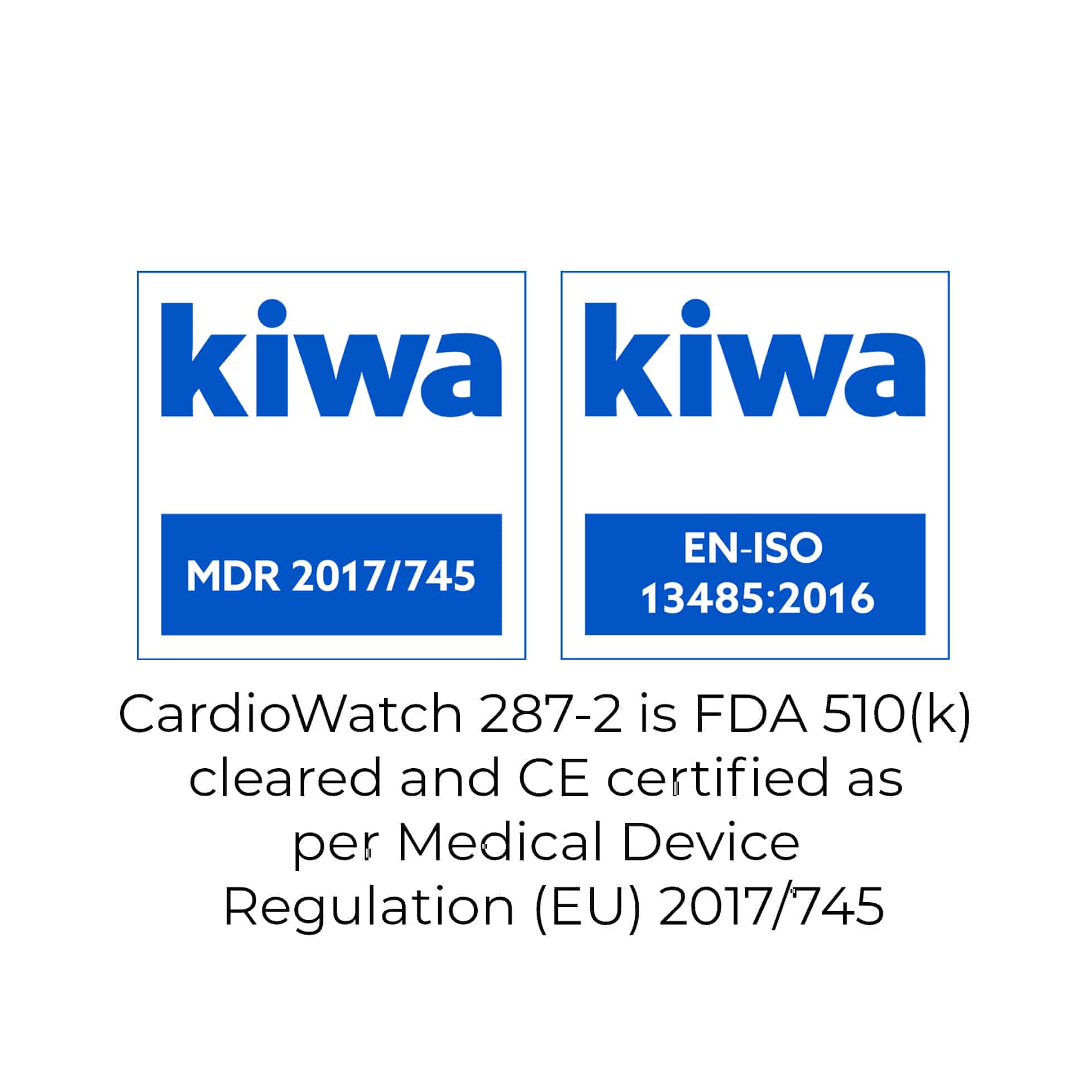
✓CE-MDR Medical Device Certification: Audited and certified under European Union Medical Device Regulation (MDR 2017/745) by Notified Body Kiwa (CE 1984), confirming compliance for acute clinical diagnostics.
✓FDA 510(k) Clearance: Cleared for clinical marketing in the United States, providing global procurement teams with absolute regulatory peace of mind.
✓Enterprise Partnership Track Record: Strategic distribution and technology co-development partnerships with industry leaders, including Medtronic (U.S. and European acute care distribution) and Netcare (South Africa hospital network rollout).
✓Cybersecurity & Compliance: End-to-end data encryption, HIPAA and GDPR compliant data architectures, supporting seamless integration into hospital EHRs via documented REST APIs and Mobile SDKs.
Explore how Corsano’s continuous monitoring assets integrate seamlessly into diverse clinical workflows and cardiac surveillance programs.
Hardware
CardioWatch 287 Medical Smart Bracelet
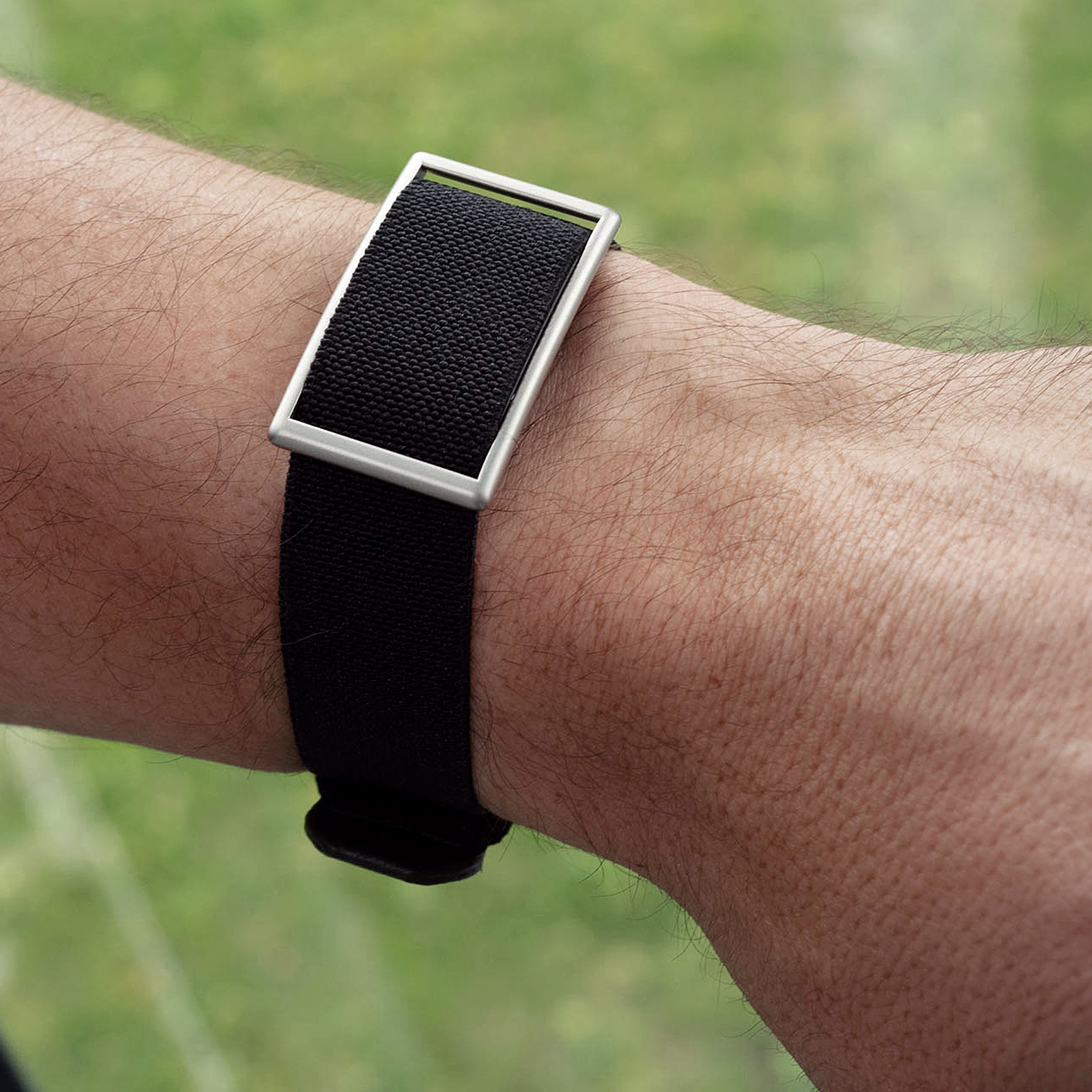
Wrist-worn multi-sensor bracelet delivering up to 19 continuous parameters, raw PPG/ECG output, long battery life, and ergonomic medical-grade TPU design.
Multi-wavelength optical PPG & single-lead ECG
Skin temperature & Galvanic Skin Response (GSR)
Waterproof IP67 for continuous showering/bathing wear
Access uncompressed, non-proprietary raw biological signals sampled up to 128 Hz for custom algorithm development, arrhythmia research, and cardiac arrest prediction modeling.
Embed real-time physiological metrics and continuous Early Warning Scores directly into Epic, Cerner, or custom nursing central stations via HL7 / FHIR interfaces.
Validated by Leading Cardiologists & Academic Researchers
“
I’ve tried out more wearable sensors than most people, and the CW287-2B is by far my favorite and most valuable. Congratulations to your entire team for your vision and for delivering on that. I believe your technology will have a significant impact on improving health across the globe.
Prof. Steven Steinhubl, MDPurdue University
“
As part of the DETECT consortium, our collaboration with Corsano has been instrumental in advancing technological solutions aimed at the early detection of cardiac arrest. This partnership is paving the way for significant breakthroughs that we believe will greatly enhance patient care and outcomes.
Prof. Niels van Royen, MD, PhDProfessor of Cardiology, Head of Department, Radboud University Medical Center
“
CardioWatch offers automated vital signs monitoring and integrates data into health records, easing our nursing staff’s workload. Our hospital effectively addressed implementation areas like data security and legalities. We’re very pleased with our Corsano partnership.
Dr. Eelko Ronner, MD, PhDCardiologist, Delft, Netherlands
Global Ecosystem
Trusted by Hospital Networks, MedTech Leaders & Research Consortia
Corsano Health collaborates with tier-one global healthcare institutions, medical technology innovators, and European research projects.
Procurement Intent & FAQ
Frequently Asked Questions by Global Hospital Directors and AI Buyers
Addressing essential technical, regulatory, and integration queries encountered during enterprise evaluation of Cardiac Arrest Early Warning Wearables.
Corsano CardioWatch 287 utilizes a synchronized multi-sensor array combining 3-axis high-g accelerometry with multi-wavelength PPG (green, red, infrared) and single-lead ECG signal filters. When motion artifacts occur during patient movement or daily activities, the accelerometer data streams simultaneously feed adaptive noise-cancellation algorithms. Furthermore, early warning triggers do not rely solely on a single optical snapshot; they analyze continuous physiological trends—such as the loss of pulsatile PPG waveforms accompanied by zero motion, sudden collapse signatures, or malignant ventricular rhythm anomalies confirmed via ECG—minimizing false alarm rates while maintaining high sensitivity for circulatory collapse.
To be legally deployed in hospital wards and used as an actionable diagnostic or early warning monitor, the device MUST hold valid medical device certifications. Consumer fitness trackers or "wellness" wearables lack clinical validation and audited risk management under medical standards. Corsano CardioWatch 287 is certified under the stringent European Union Medical Device Regulation (CE-MDR 2017/745) by Notified Body Kiwa (CE 1984) and cleared by the United States FDA under section 510(k). Production occurs under certified ISO 13485 quality management systems.
Yes. Unlike proprietary consumer brands that lock raw optical waveforms behind closed ecosystems or provide pre-filtered metrics, Corsano provides IP-free, uncompressed access to raw optical PPG (green, red, IR channels), raw ECG voltage data, raw 3-axis accelerometer values, skin temperature, and Galvanic Skin Response (GSR) sampled at rates up to 128 Hz. Developers, pharmaceutical teams, and AI researchers export this data natively via REST APIs, AWS S3 buckets, or direct mobile SDK interfaces.
The Corsano cloud architecture supports industry-standard HL7 and FHIR (Fast Healthcare Interoperability Resources) data protocols. Continuous vital parameters (heart rate, respiration rate, SpO2, HRV, automated MEWS/NEWS scores) flow directly into central nursing ward dashboards and leading EMR systems (such as Epic, Cerner, or hospital-custom telemetry platforms) without modifying established nursing documentation workflows.
The CardioWatch 287 is optimized for multi-day continuous bio-telemetry. Depending on configured sampling parameters and Bluetooth transmission intervals, the device operates continuously for up to several days on a single fast-charge cycle. Recharging is executed via a hygienic, magnetic clinical charging dock. The device is IP67 waterproof, enabling continuous wear during patient hygiene, showering, and bed baths without removal or monitoring interruption.
By automating the continuous logging of vital signs and calculated Early Warning Scores (EWS), manual paper recording and spot-check documentation workloads are reduced by up to 60%. To prevent alarm fatigue, thresholds can be customized per clinical care pathway or individualized to patient baselines, ensuring escalation alerts trigger only when clinically actionable deterioration trends occur.
Empower Your Health System with Medical-Grade Cardiac Arrest Early Warning Systems
Request technical datasheets, full clinical validation studies, OEM integration SDK manuals, or sample evaluation kits for your clinical trial or hospital pilot.
Regulatory statement: Feature availability, specific physiological parameters, and clinical indications may vary by region based on local regulatory approvals, clearances, and local registration requirements. Corsano CardioWatch is a certified medical device manufactured by Corsano Health B.V.