
ISO 13485 Certified
Our entire medical device software and hardware production lifecycle operates under a fully certified ISO 13485 Quality Management System, verified by accredited notified body audits for risk assessment and product traceability.
Corsano Health develops, manufactures, and distributes medical-grade continuous wearable systems under strict European and international regulatory directives. Our certified ecosystem ensures global health systems, clinical research organizations (CROs), and pharmaceutical sponsors operate with total legal and clinical confidence.
Our entire medical device software and hardware production lifecycle operates under a fully certified ISO 13485 Quality Management System, verified by accredited notified body audits for risk assessment and product traceability.
The CardioWatch platform holds official CE mark certification under EU Medical Device Regulation (MDR 2017/745), ensuring compliance with stringent safety, clinical evaluation, and post-market surveillance benchmarks.
Cleared by the United States Food and Drug Administration (FDA) for continuous patient monitoring, facilitating seamless clinical deployment across US hospital systems and international clinical research programs.
Designed under strict EU General Data Protection Regulation protocols, featuring pseudonymized data handling, tenant segregation, and sovereign data storage options tailored for multi-center hospital networks.
Fully compliant with US Health Insurance Portability and Accountability Act guidelines, utilizing multi-layer encryption for Protected Health Information (PHI) across continuous data ingestion pipelines.
Engineered to satisfy IEC 60601-1 electrical safety and electromagnetic compatibility standards, alongside IEC 62304 medical device software lifecycle management requirements.
Hospital procurement committees, institutional review boards (IRBs), and regulatory compliance teams can request our technical summaries, EU Declarations of Conformity, and ISO 13485 audit statements directly through our enterprise support team.
Continuous physiological monitoring requires uncompromising data protection. Corsano Health enforces zero-trust cloud architecture and hardware security mechanisms across all hospital and decentralized monitoring scenarios.
Physiological telemetry—including raw PPG, single-lead ECG strips, and derived vital signs—is encrypted at rest (AES-256) and in transit (TLS 1.3) from the CardioWatch wearable to cloud REST APIs.
Deployments are hosted within ISO/IEC 27001 certified data centers with regional hosting choices (EU, US, UK) to guarantee compliance with regional health data residency legislation.
Granular RBAC systems allow clinical department heads, trial coordinators, and platform administrators to define data accessibility scopes and secure multi-factor authentication policies.
Corsano Health is committed to ethical business practices, transparent corporate conduct, and sustainable medical device manufacturing.
We work exclusively with audited tier-1 suppliers following ethical labor practices. All continuous monitoring hardware complies with international environmental directives including RoHS (Restriction of Hazardous Substances) and REACH (Registration, Evaluation, Authorisation and Restriction of Chemicals).
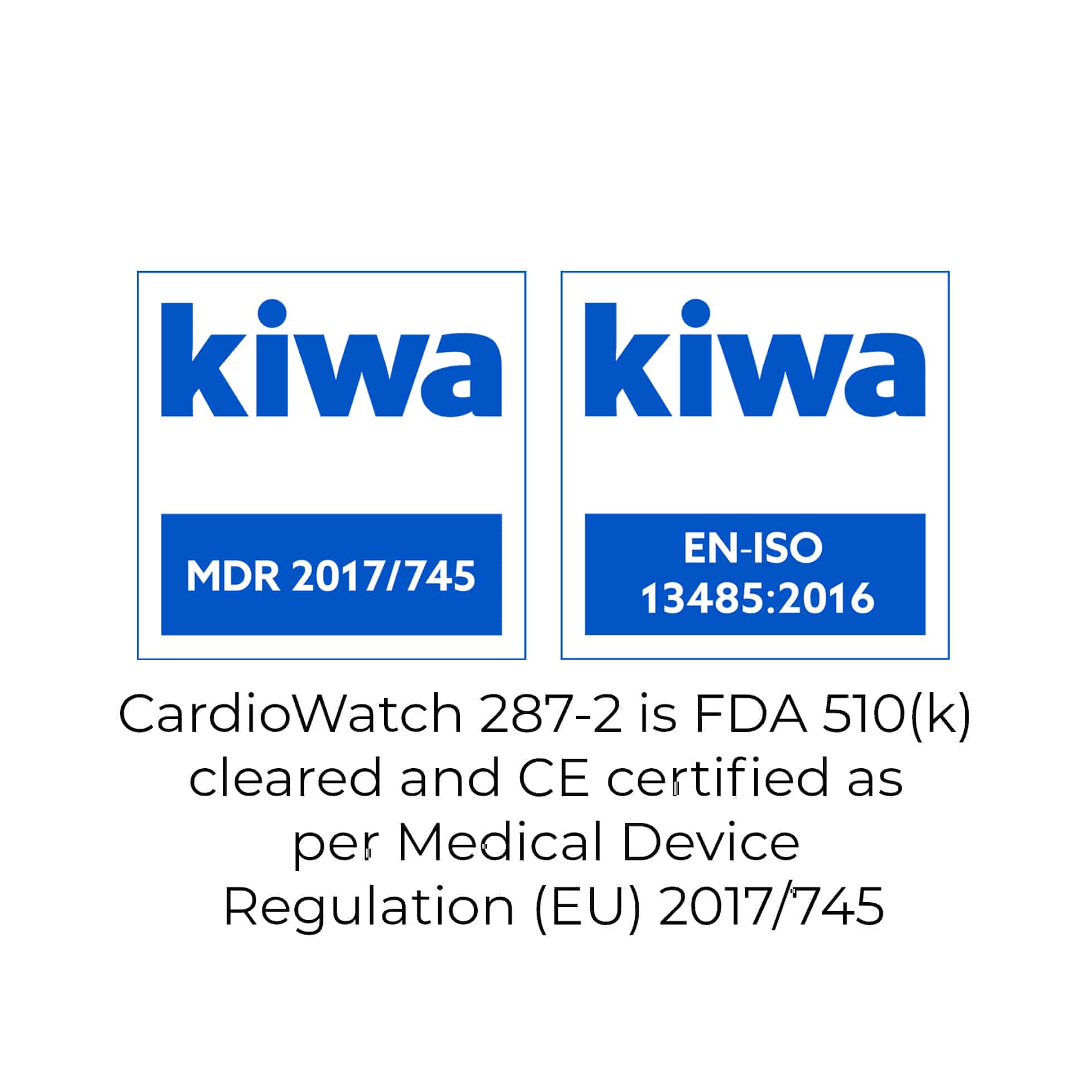
We supply complete regulatory packs including EU Declaration of Conformity (CE-MDR), Notified Body certification copies, FDA 510(k) clearance letters, ISO 13485 certification, and technical datasheets required by hospital legal and risk management departments.
Yes. The platform is designed for cross-border trial governance, featuring multi-region cloud infrastructure, standardized export formats for statistical analysis software, and compliance with GCP (Good Clinical Practice) data integrity guidelines.
Our integration protocols support HL7, FHIR, and RESTful APIs under strict OAuth2.0 authentication frameworks, permitting secure bi-directional telemetry stream transfer into electronic health record environments without compromising network security.
Connect with our quality management and regulatory team to discuss institutional compliance requirements, pilot study approvals, or regional device availability.
Regulatory status and device feature availability are subject to local healthcare market authorizations, regional clearances, and applicable statutory guidelines.