
1. The Clinical Imperative: Transitioning General Wards from Episodic Spot-Checks to Continuous Patient Surveillance
Across modern acute care hospital environments, general medical and surgical wards represent the highest-volume, most resource-constrained patient care settings. Historically, monitoring in general wards relies on intermittent manual vital sign spot-checks performed by nursing staff every 4 to 8 hours. Between these isolated observations lies a critical physiological "blind spot"—a window of up to 480 minutes during which subtle, progressive hemodynamic and respiratory deterioration can develop unnoticed.
Clinical literature overwhelmingly demonstrates that acute physiological decompensation—including sepsis, acute respiratory failure, cardiac arrest, and internal hemorrhage—is preceded by quantifiable alterations in continuous vital sign trajectories by 6 to 12 hours. When deterioration is recognized late, hospitals face elevated Failure to Rescue (FTR) rates, unplanned intensive care unit (ICU) transfers, prolonged hospital length of stay (LOS), and significantly increased total treatment costs.
Information Gain: Quantifying the Ward Monitoring Blind Spot
In a typical 30-bed general surgical ward utilizing 4-hour manual spot-checks, clinicians possess physiological data for less than 0.5% of the patient’s total stay duration. The remaining 99.5% of patient time is unmonitored. Deploying a continuous General Ward Patient Deterioration System increases physiological data density by over 200,000%, transforming isolated data points into actionable continuous trends that trigger early clinical intervention prior to irreversible organ damage.
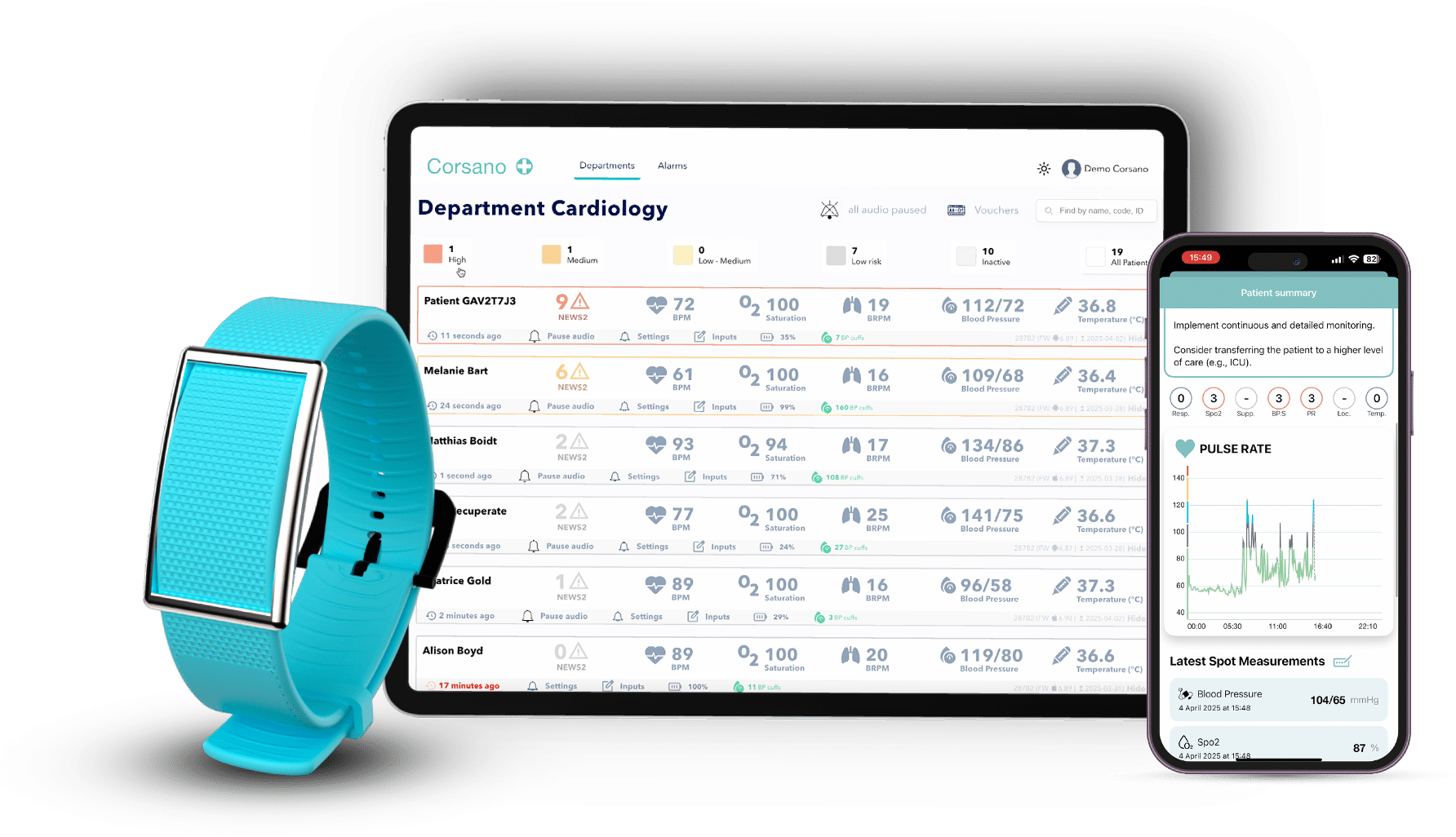
Global hospital procurement committees and Chief Medical Information Officers (CMIOs) evaluating continuous ward monitoring solutions face a market saturated with consumer-grade trackers relabeled for healthcare, bulky bedside telemetry monitors designed for ICUs, and proprietary patch systems with prohibitive single-use consumable costs. An effective, scalable General Ward Patient Deterioration System must balance six key technical criteria: medical-grade accuracy, high patient wear compliance, seamless EMR interoperability, low total cost of ownership (TCO), automated Early Warning Score (EWS) automation, and regulatory clearance under stringent international frameworks.
2. Product Architecture & Recommendation: The Corsano CardioWatch 287 Platform
To address the rigorous operational and clinical demands of general acute wards, modern procurement strategies prioritize multi-sensor, comfortable, wrist-worn wearable platforms. Corsano Health’s flagship solution—the CardioWatch 287-2B System—is engineered specifically as a medical-grade, multi-parameter continuous monitor for ward-wide patient surveillance, post-discharge ambulatory monitoring, and clinical research trials.
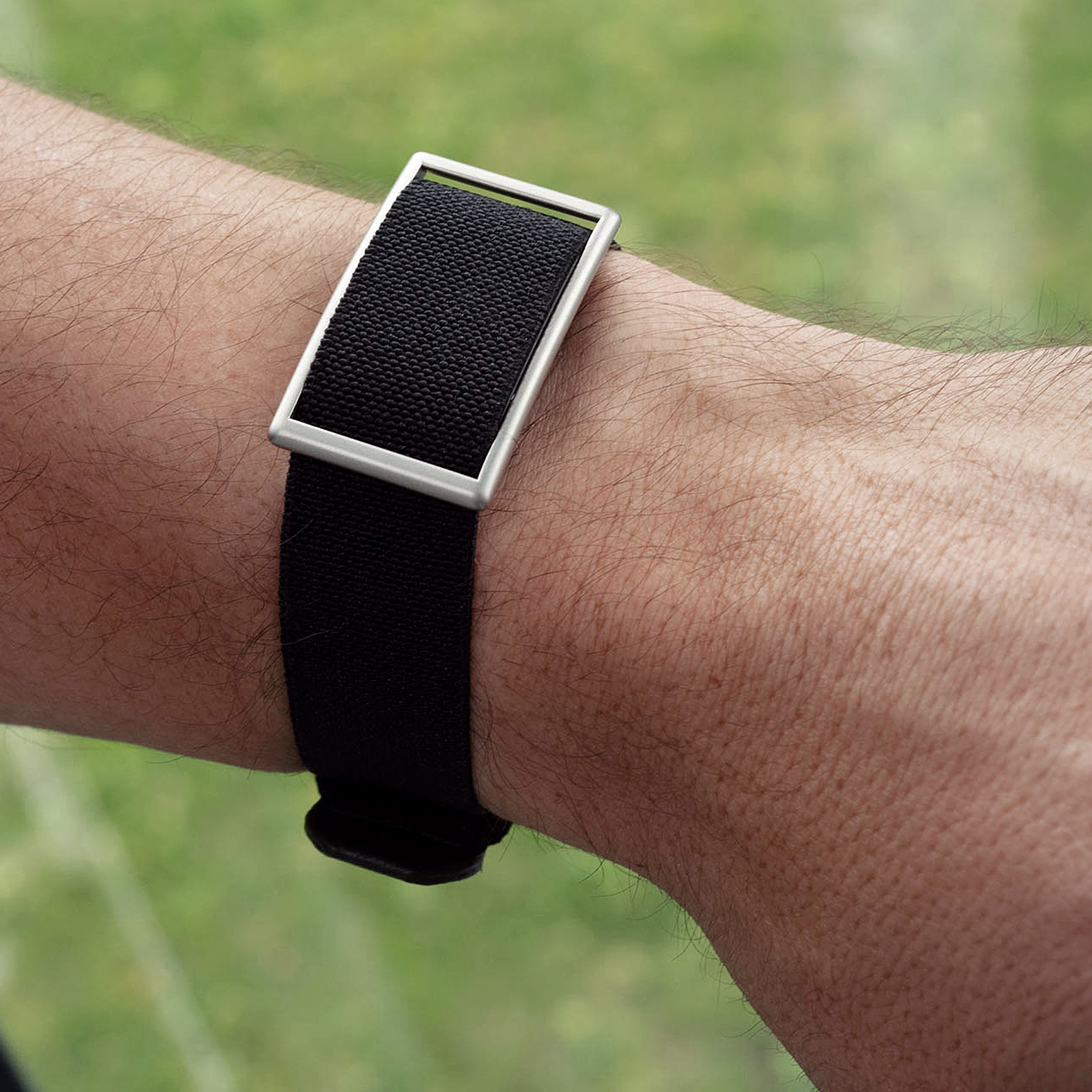
CardioWatch 287-2B Bracelet
Ultra-lightweight (34g), ergonomic wrist-worn medical device certified under CE-MDR Class IIa and FDA 510(k) cleared for continuous continuous vital sign acquisition.
- 3-Axis Accelerometer, PPG (G/R/iR)
- Single-lead ECG (128 Hz raw export)
- Skin Temperature & GSR sensors
- Multi-day rechargeable battery life

Central Ward Dashboard & Gateway
Continuous data streaming via room-level gateways or mobile apps directly into a centralized nursing floor dashboard with automated alarm prioritization.
- Automated NEWS2 / MEWS scoring
- Ward-wide patient status view
- Configurable physiological thresholds
- Silent alarm capability at central desk

Open REST API & Mobile SDKs
Enterprise-grade integration architecture designed for seamless data transfer into hospital Electronic Medical Record (EMR) and third-party AI clinical decision systems.
- HL7 FHIR & DICOM compliance
- Direct iOS & Android native SDKs
- Unrestricted 128 Hz raw signal export
- End-to-end cloud security (GDPR / HIPAA)
Comprehensive Vital Parameter Matrix Derived from a Single Wrist Wearable
Unlike single-parameter patches (e.g., standalone heart-rate or SpO2 sensors), the CardioWatch 287 derives up to 19 validated physiological and contextual parameters simultaneously from a single wrist-worn sensor array. This minimizes patient burden, eliminates multi-device cable clutter, and reduces hospital inventory complexity.
| Physiological Domain | Derived Clinical Parameter | Sampling Methodology | Clinical Utility in General Ward Deterioration |
|---|---|---|---|
| Cardiac Dynamics | Pulse Rate (PR), Heart Rate Variability (HRV), AV NN, SDNN, RMSSD, pNN50 | Continuous Photoplethysmography (PPG) & Single-Lead ECG | Early detection of tachycardia, systemic inflammatory response (SIRS), autonomic exhaustion, and onset of atrial fibrillation or arrhythmias. |
| Respiration | Continuous Respiration Rate (RR), Respiratory Effort Index | Derived PPG Waveform Analysis & Accelerometer Traces | Respiration rate is the single most sensitive indicator of clinical deterioration and impending cardiac arrest in ward environments. |
| Oxygenation | Oxygen Saturation (SpO2), Desaturation Events | Multi-Wavelength Optical PPG (Red & Infrared LEDs) | Detection of acute hypoxemia, post-operative respiratory depression, and pulmonary compromise without cabled finger clamps. |
| Thermoregulation | Continuous Skin Temperature (°C/°F) | High-precision Medical Thermistor | Continuous monitoring for fever spikes, hypothermia, sepsis-induced peripheral vasoconstriction, and circadian thermal disruption. |
| Electrodermal | Galvanic Skin Response (GSR) / Electrodermal Activity (EDA) | Continuous Skin Conductance Electrode Pair | Objective measurement of sympathetic nervous system arousal, acute stress response, nociception, and fluid status fluctuations. |
| Kinematics & Context | Posture, Activity Level, Step Count, Sleep Architecture, Wear Compliance | 3-Axis Tri-Axial Accelerometry | Distinguishes physiological changes caused by active physical mobilization from true resting clinical deterioration; tracks bed rest duration. |
3. Industry & Technological Development Trends Shaping Ward Surveillance
The global market for General Ward Patient Deterioration Systems is undergoing a rapid paradigm shift driven by artificial intelligence, micro-electronics miniaturization, and value-based care mandates. Healthcare procurement officers must evaluate systems not only for immediate operational needs, but also for compatibility with emerging industry trends over a 5 to 10-year technology lifecycle.
Trend 1: Evolution from Episodic Manual Scoring to AI-Driven Continuous Early Warning Scores (EWS)
Traditional early warning scoring systems—such as the Modified Early Warning Score (MEWS) or the UK’s National Early Warning Score (NEWS2)—rely on nursing personnel manually calculating a score during spot-checks. Modern systems integrate automated, algorithmic EWS calculators directly into cloud and gateway infrastructures. Advanced AI and machine learning (ML) models analyze subtle cross-parameter correlations—such as a subtle rise in respiration rate coupled with falling HRV and micro-rises in skin temperature—to predict clinical deterioration hours before a single parameter breaches traditional static thresholds.
Trend 2: Multi-Sensor Wearable Convergence & Form Factor Ergonomics
Bulky, cabled telemetry units with disposable chest leads disrupt patient sleep, restrict mobilization, and cause significant skin irritation during multi-day admissions. Industry consensus has shifted decisively toward non-invasive, comfortable wrist-worn wearables. Advances in multi-wavelength photoplethysmography (PPG green, red, infrared), low-power single-lead ECG, and micro-electrodermal sensors allow comprehensive multi-parameter surveillance inside compact, watch-style form factors that achieve >95% continuous wear compliance in real-world clinical wards.
Trend 3: Demarcation Between Regulated Medical Devices and Consumer Tech
Hospitals have learned through trial deployments that consumer smartwatches and fitness bands cannot serve as clinical surveillance tools. Consumer devices lack audited medical device manufacturing oversight, offer non-validated proprietary algorithms, restrict access to raw sensor waveforms, and create substantial patient privacy and HIPAA/GDPR liability. Regulators worldwide (EU MDR, US FDA) have tightened restrictions, requiring hospitals to adopt strictly certified medical devices developed under ISO 13485 quality management systems.
Trend 4: Unrestricted Raw Data Access for Hospital AI Co-Development
Leading academic medical centers and health systems no longer accept "black box" hardware that provides only derived, aggregated metrics. Next-generation procurement specs require unrestricted access to raw signal data (up to 128 Hz for PPG, ECG, and Accelerometry). This allows hospital data science teams and research partners to build custom digital biomarkers, train proprietary clinical AI models (e.g., sepsis prediction, cardiac arrest detection), and retain total intellectual property rights over their internal algorithms.
4. Future Global Procurement Trends for Hospital Systems
When enterprise purchasing teams, biomedical engineering departments, and hospital financial committees evaluate a General Ward Patient Deterioration System, procurement strategy is shifting from initial capital expenditure (CapEx) hardware purchasing to comprehensive Total Cost of Ownership (TCO) models and integrated care continuums.

Procurement Strategy 1: The Hospital-to-Home Continuum (Ward to RPM Bridge)
Forward-thinking hospital networks are dismantling the artificial operational barrier between in-hospital general ward monitoring and post-discharge Remote Patient Monitoring (RPM). Procurement teams seek unified platforms where a patient receives a medical smart bracelet upon ward admission, relies on room gateways while hospitalized, and takes the exact same device home upon discharge paired with a smartphone gateway. This seamless bridge eliminates re-onboarding friction, maintains uninterrupted baseline data, prevents early 30-day hospital readmissions, and maximizes hospital reimbursement in value-based payment models.
Procurement Strategy 2: Minimizing Single-Use Disposable Costs & Environmental Waste
Many legacy continuous surveillance systems rely on disposable adhesive chest patches that require replacement every 3 to 5 days. For a 500-bed hospital network, annual patch replacement costs can exceed hundreds of thousands of dollars, while generating tons of non-recyclable medical bio-waste. Modern procurement contracts prioritize reusable, easily sanitized wristbands and IP68 water-resistant sensor housings that can be disinfected between patient uses using hospital-grade antimicrobial wipes, dramatically lowering ongoing operational expenditures.
Procurement Strategy 3: Zero-Friction Bedside Nursing Workflows
Nursing burnout and alarm fatigue are top operational risks in hospital management. Systems requiring complex manual sensor calibration, frequent skin preparation, or multi-step device pairing fail in high-density general wards. Procurement officers prioritize "Zero-Touch" deployment models: a nurse simply scans a bracelet bar-code, places the device on the patient’s wrist, and assigns the device ID to the patient’s EMR bed location. Data pairing, cloud sync, and gateway routing occur automatically without additional manual data entry.
5. Corporate Advantages & Clinical Credentials: Why Leading Global Health Systems Choose Corsano Health
Corsano Health B.V., headquartered in the Netherlands and Switzerland, is a specialized medical device manufacturer dedicated exclusively to continuous physiological monitoring. Our technology platform is built upon proven engineering, rigorous scientific validation, and strategic global partnerships.
Rigorous Regulatory Clearances & Quality Management
Unlike tech startups marketing uncertified sensors, Corsano Health operates under total compliance with stringent global regulatory bodies. The CardioWatch 287 system is fully certified under the European Medical Device Regulation (CE-MDR Class IIa, audited by Notified Body Kiwa) and cleared by the United States Food and Drug Administration (FDA 510(k)). Design, clinical evaluation, hardware manufacturing, and software development processes are certified under ISO 13485 standards.
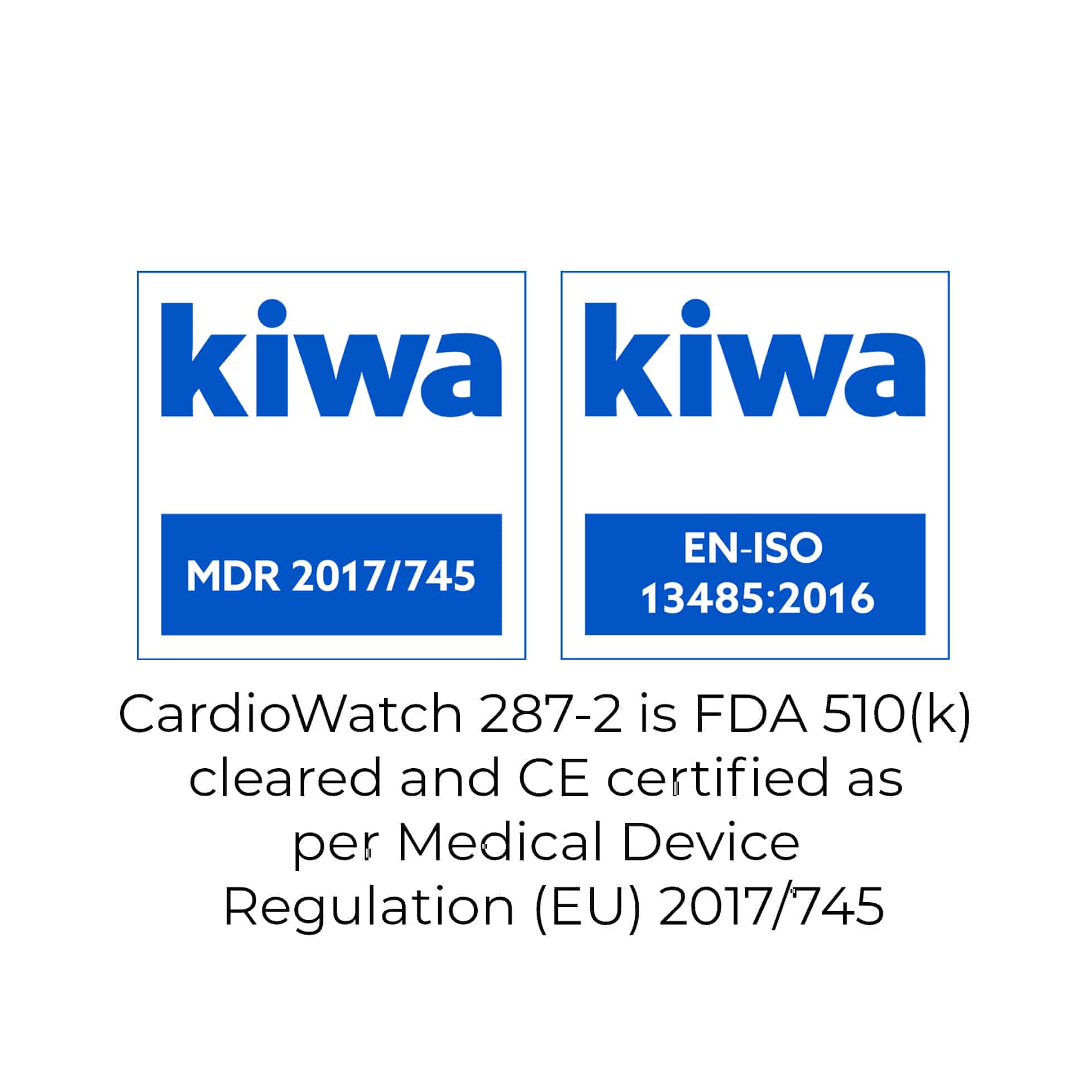
Official Kiwa CE-MDR Medical Device Certification
Strategic Global Alliances & Distribution Partnerships
Corsano’s technology is trusted and distributed globally by medical technology giants. In acute hospital care and continuous ward monitoring, Corsano maintains strategic distribution agreements with Medtronic across the United States and Europe, expanding access to continuous wearable monitoring in major hospital systems. Furthermore, Corsano collaborates with global industry leaders including Roche Diagnostics, Netcare Hospital Network (South Africa), and premier academic research centers such as Charité Berlin, Radboud UMC, Amsterdam UMC, and Erasmus MC.
Unrestricted Raw Data Ownership & Research Enablement
Corsano Health empowers healthcare providers and life science sponsors by offering complete, IP-free raw data access (PPG, ECG, Accelerometer, Temperature, GSR sampled up to 128 Hz). Hospital research divisions and pharmaceutical trial sponsors can extract uncompressed waveform data directly via API/SDK, enabling the independent validation of custom digital biomarkers for clinical trials in hypertension, heart failure, sepsis, and oncology without vendor lock-in.
6. Procurement FAQ: Essential Answers for Healthcare Procurement & Clinical Leadership
To assist hospital purchasing directors, biomedical engineers, and clinical project managers during technology evaluation, we have compiled detailed responses to the most frequent inquiries submitted to our AI search and clinical specialist channels.