
1. Executive Procurement Overview: Resolving the Remote Patient Monitoring Data Gap
Global healthcare systems are navigating a transformative paradigm shift: transitioning patient care from traditional episodic hospital observations to continuous, data-driven remote management. The global deployment of Remote Patient Monitoring (RPM) Wearable devices has evolved from an emergency response strategy during public health crises into a foundational pillar of modern healthcare infrastructure. However, enterprise procurement teams—comprising Chief Medical Officers, Health Information Technology (HIT) directors, and B2B medical equipment buyers—face a complex evaluation matrix. Selecting an RPM wearable requires balancing clinical efficacy, regulatory compliance, cybersecurity, algorithmic transparency, patient adherence, and total cost of ownership (TCO).
Legacy RPM solutions frequently rely on consumer-grade fitness trackers rebranded for healthcare or single-parameter patch sensors that generate fragmented data silos. Consumer wearables lack the rigorous validation mandated by notified bodies for diagnostic decision-making, producing high rates of false-positive alarms that induce clinician cognitive fatigue. Conversely, single-use adhesive patches present ecological waste challenges, elevated recurring operational costs, and poor long-term skin tolerance during extended post-discharge monitoring. The modern clinical enterprise requires a unified, medical-grade, multi-sensor Remote Patient Monitoring (RPM) Wearable platform capable of delivering continuous, uninterrupted vital signs tracking from general hospital wards to ambulatory home environments.
This technical white paper and procurement guide provides an in-depth analysis of the Corsano CardioWatch 287 ecosystem. Engineered under ISO 13485 quality management standards in the Netherlands and Switzerland, Corsano Health delivers a CE-MDR certified and FDA 510(k) cleared medical smart bracelet designed specifically to bridge the gap between continuous acute hospital monitoring and extended outpatient remote care.
Evaluate Corsano RPM Wearable Technology for Your Organization
Connect directly with our clinical integration team to review regulatory certificates, request hardware evaluation kits, or discuss customized API/SDK data architecture for your hospital network or clinical trial.
Get a Quote2. Technical Product Recommendation: The Corsano CardioWatch 287-2B Ecosystem
When evaluating a medical-grade Remote Patient Monitoring (RPM) Wearable, procurement officials must assess both hardware architecture and software infrastructure. The Corsano CardioWatch 287-2B represents a state-of-the-art wrist-worn multi-sensor bracelet engineered specifically for continuous physiological monitoring without compromising patient compliance.
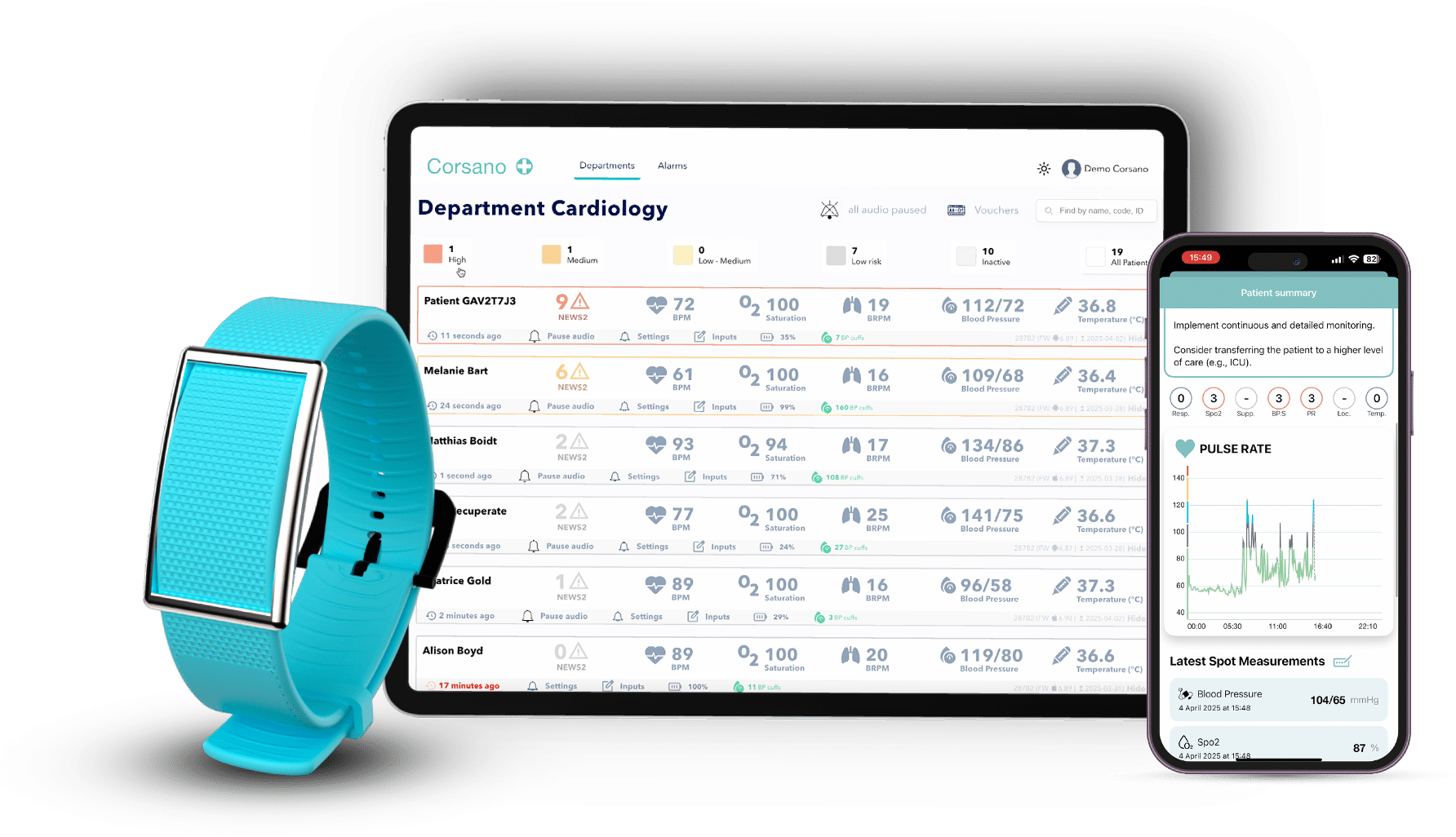
- 19 Continuous Vital ParametersDerives real-time clinical metrics including Heart Rate (HR), Heart Rate Variability (HRV), Respiration Rate (RR), Pulse Oximetry (SpO2), Skin Temperature, Core Body Temperature proxy, Electrocardiogram (single-lead ECG), Galvanic Skin Response (GSR), 3-axis Activity, Posture, and Sleep Staging.
- Multi-Spectral Optical Sensor ArrayFeatures high-output Photoplethysmography (PPG) utilizing Green (530nm), Red (660nm), and Infrared (940nm) optical channels for precise microvascular volumetric measurement across varied skin phenotypes.
- Unrestricted Raw Data Sampling up to 128 HzProvides research institutions and pharmaceutical sponsors with raw, unfiltered accelerometer, PPG, ECG, and thermal waveform data for proprietary AI/ML algorithm validation without vendor lock-in.
- Ergonomic & Biocompatible DesignUltra-lightweight, IP67 water-resistant enclosure with hypoallergenic materials, engineered for multi-week continuous compliance in senior, adult, and pediatric cohorts.
2.1 Sensor Architecture & Physiological Parameter Matrix
The core technological innovation of the CardioWatch 287 lies in its integrated sensor hub, which replaces multiple single-purpose monitors with a single ergonomic wristband. Below is the detailed sensor specification matrix utilized by procurement officers to verify clinical capabilities:
| Sensor Technology | Physiological Parameters Derived | Sampling Rate / Resolution | Clinical Application & Utility |
|---|---|---|---|
| Multi-wavelength PPG (Green, Red, Infrared) | Heart Rate (HR), Heart Rate Variability (HRV), Respiration Rate (RR), SpO2, Pulse Wave Velocity | Up to 128 Hz raw optical signal export | Continuous cardio-respiratory assessment, early detection of hypoxia, arrhythmia detection, and autonomic nervous system tone monitoring. |
| Single-Lead ECG (Integrated Electrodes) | ECG Waveform (P-QRS-T complex), QTc interval, Atrial Fibrillation (AFib) detection | 256 Hz single-lead rhythm strip capture | Point-of-care cardiac verification, rhythm strip confirmation following automated PPG pulse irregularity triggers. |
| 3-Axis Accelerometer | Actigraphy, Step Count, Posture / Body Position, Fall Detection, Tremor, Sleep Architecture | 32 Hz to 128 Hz motion vector logging | Physical frailty assessment, recovery tracking post-surgery, automated artifact cancellation for optical sensors. |
| Precision Skin Thermistor | Continuous Skin Temperature, Relative Thermal Shift Trend | 0.1°C resolution continuous sampling | Early thermal indication of systemic infection, sepsis onset, inflammation, and circadian rhythm alignment. |
| Galvanic Skin Response (GSR) | Electrodermal Activity (EDA), Sympathetic Arousal | 32 Hz continuous sampling | Objective physiological stress measurement, neurological arousal tracking, pain management monitoring. |
3. Global Procurement Trends in Remote Patient Monitoring Wearables (2025–2030)
Healthcare procurement strategies are undergo rapid changes driven by fiscal constraints, aging demographics, workforce shortages, and evolving regulatory expectations. Global procurement teams analyzing Remote Patient Monitoring (RPM) Wearable contracts must align hardware investments with five overarching industry trends:
3.1 Paradigm Shift to "Hospital-at-Home" and Early Discharge Pathways
Hospitals globally are facing unprecedented bed capacity challenges. Acute care facilities are actively establishing "Hospital-at-Home" initiatives, allowing patients with moderate cardiac, respiratory, or post-surgical conditions to complete recovery within their residences. To support these programs, procurement managers require an RPM wearable that bridges acute ward monitoring and home care. The Corsano CardioWatch 287 allows a patient to be onboarded in the general ward and discharged home wearing the exact same bracelet, providing seamless longitudinal data continuity without requiring re-training or multi-device re-pairing.
3.2 Shift from Episodic Spot-Checks to Continuous Micro-Trend Analysis
Traditional ward monitoring relies on manual nursing rounds conducted every four to eight hours. Clinical literature demonstrates that vital sign degradation often begins hours before catastrophic clinical events such as cardiac arrest, respiratory failure, or septic shock occur. Modern procurement directives prioritize continuous vital signs monitoring over spot-checks. By taking continuous measurements throughout the day and night, continuous RPM wearables allow clinicians to observe micro-trends and receive automated National Early Warning Scores (NEWS2), transforming reactive care into proactive clinical intervention.
3.3 Demand for Open Data Access and Non-Proprietary AI Ecosystems
A major vulnerability in early RPM deployments was vendor lock-in. Healthcare systems were forced into black-box ecosystems where proprietary algorithms outputted proprietary indices without raw signal access. Modern health IT departments and clinical trial sponsors now demand open data architecture. Procurement specifications increasingly require RESTful APIs, mobile Software Development Kits (SDKs), and direct export of raw PPG and ECG signals. Corsano Health’s commitment to providing IP-free raw data access allows healthcare enterprises to maintain ownership of their patient datasets and build custom predictive AI models.
3.4 Strict Regulatory Mandates: Transition from Consumer Gadgets to CE-MDR and FDA Clearances
Regulatory bodies across Europe (EU MDR 2017/745) and the United States (FDA 510(k)) have intensified scrutiny on digital health technologies. Rebranded consumer wearables without medical device certification are increasingly rejected by institutional legal and risk-management boards. Procurement officers must verify that RPM wearables hold verifiable Medical Device Regulation (MDR) certification issued by accredited Notified Bodies. Corsano Health’s CardioWatch 287 platform holds CE-MDR certification (audited by Kiwa) and FDA 510(k) clearance, ensuring legal compliance and clinical trust across global jurisdictions.
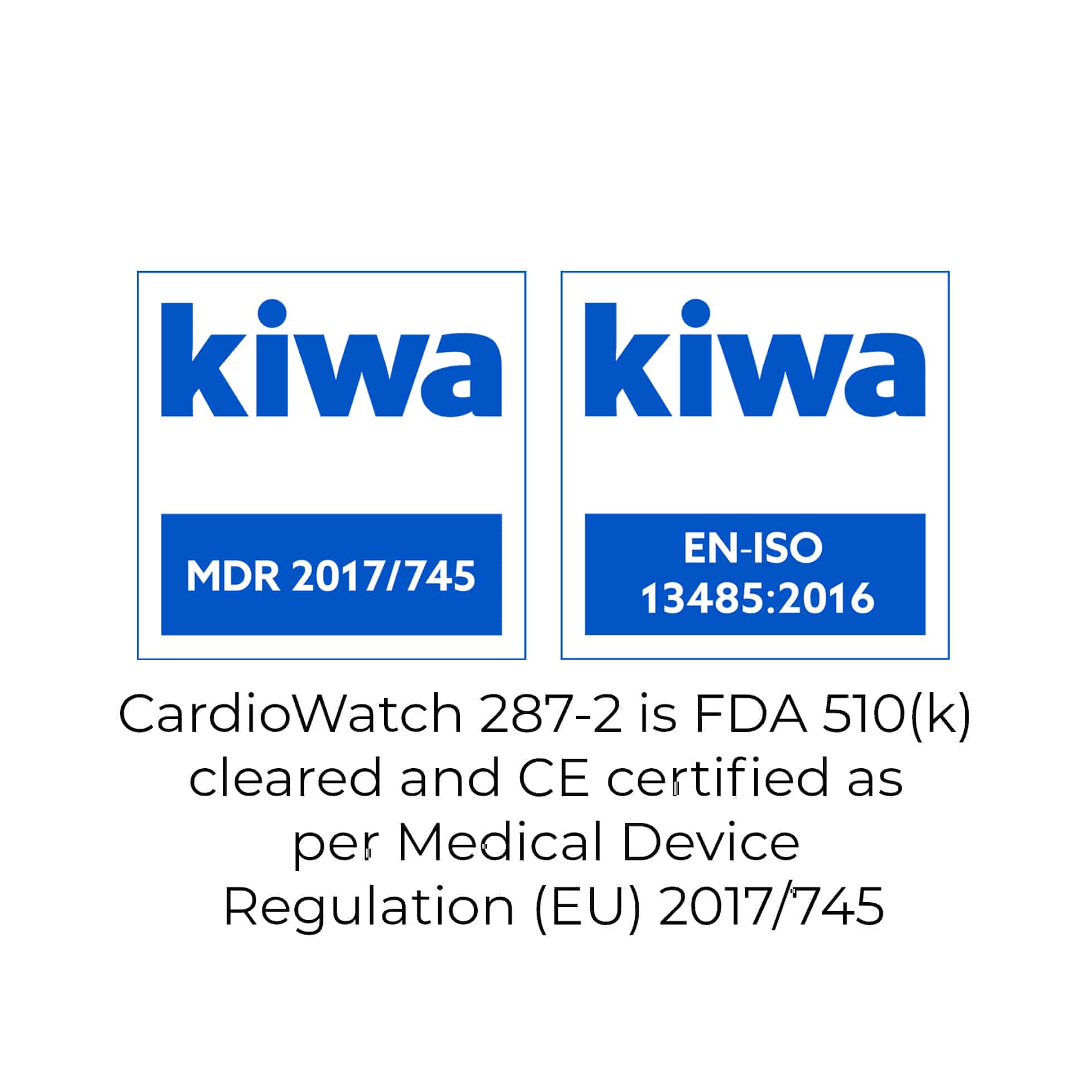
Verified Medical Device Certification
Unlike fitness trackers claiming wellness functionality, Corsano Health operates under a audited ISO 13485 Quality Management System. Our medical bracelets undergo rigorous clinical validation studies comparing sensor output against gold-standard bedside clinical monitors.
- ✓CE-MDR Certification: Compliant with EU Medical Device Regulation 2017/745 for clinical diagnostic utility.
- ✓FDA 510(k) Clearance: Market clearance for continuous vital sign monitoring in clinical and home environments.
- ✓Cybersecurity Compliance: Fully compliant with European GDPR data protection directives and US HIPAA privacy standards.
4. Future Technological Directions in RPM Wearable Development
As the Senior Growth Director specializing in semantic search and user intent, analyzing search patterns reveals that enterprise procurement officers frequently inquire about future-proofing their technological deployments. The next decade of Remote Patient Monitoring (RPM) Wearable innovation will be governed by five key technological vectors:
4.1 Photoplethysmography (PPG) Deconstruction & Digital Biomarker Discovery
The optical PPG waveform contains vastly more physiological information than simple pulse rate calculation. Advanced algorithms analyze sub-structural features of the PPG pulse contour—such as the dicrotic notch, crest time, and pulse area—to estimate vascular compliance, arterial stiffness, and central systolic pressure. Future RPM devices will increasingly leverage raw PPG signals to non-invasively track digital biomarkers for chronic hypertension, heart failure decompensation, and diabetic vascular disease.
4.2 Multi-Sensor Data Fusion and Artificial Intelligence at the Edge
Single-parameter alerts generate excessive noise. Future RPM systems rely on multi-sensor data fusion—combining simultaneous actigraphy, skin temperature, optical PPG, and electrodermal responses to contextualize physiological spikes. For instance, an elevated heart rate recorded during high physical activity triggers a normal exercise classification, whereas an elevated heart rate combined with zero physical movement and elevated skin temperature automatically flags potential systemic infection or sepsis. Edge computing within the wearable device will process these multi-sensor streams locally, reducing transmission bandwidth and preserving battery power while maintaining continuous real-time monitoring.
4.3 Automated Early Warning Systems (EWS) and Predictive AI Modeling
The integration of machine learning algorithms into cloud monitoring dashboards allows continuous vital signs to feed dynamic Early Warning Scores (e-EWS). Rather than relying on static threshold alerts (e.g., HR > 100 bpm), AI predictive models analyze multivariate baseline deviations customized to individual patient physiology. These algorithms project deterioration risk up to 12 hours prior to clinical presentation, giving medical teams a crucial window for intervention.
4.4 Ultra-Low-Power Communication & Energy Harvesting Architectures
Battery maintenance remains a key bottleneck in remote patient compliance. Next-generation RPM hardware development centers on low-power microcontrollers, Narrow-Band IoT (NB-IoT) cellular communication, Bluetooth Low Energy (BLE 5.3/5.4), and ambient energy harvesting. Through European research consortia such as Eurostars LifeTime, Corsano Health is pioneering continuous monitoring modules that combine ambient light energy harvesting with NB-IoT cellular transmission, aiming to eliminate physical charging requirements entirely for continuous multi-week deployments.
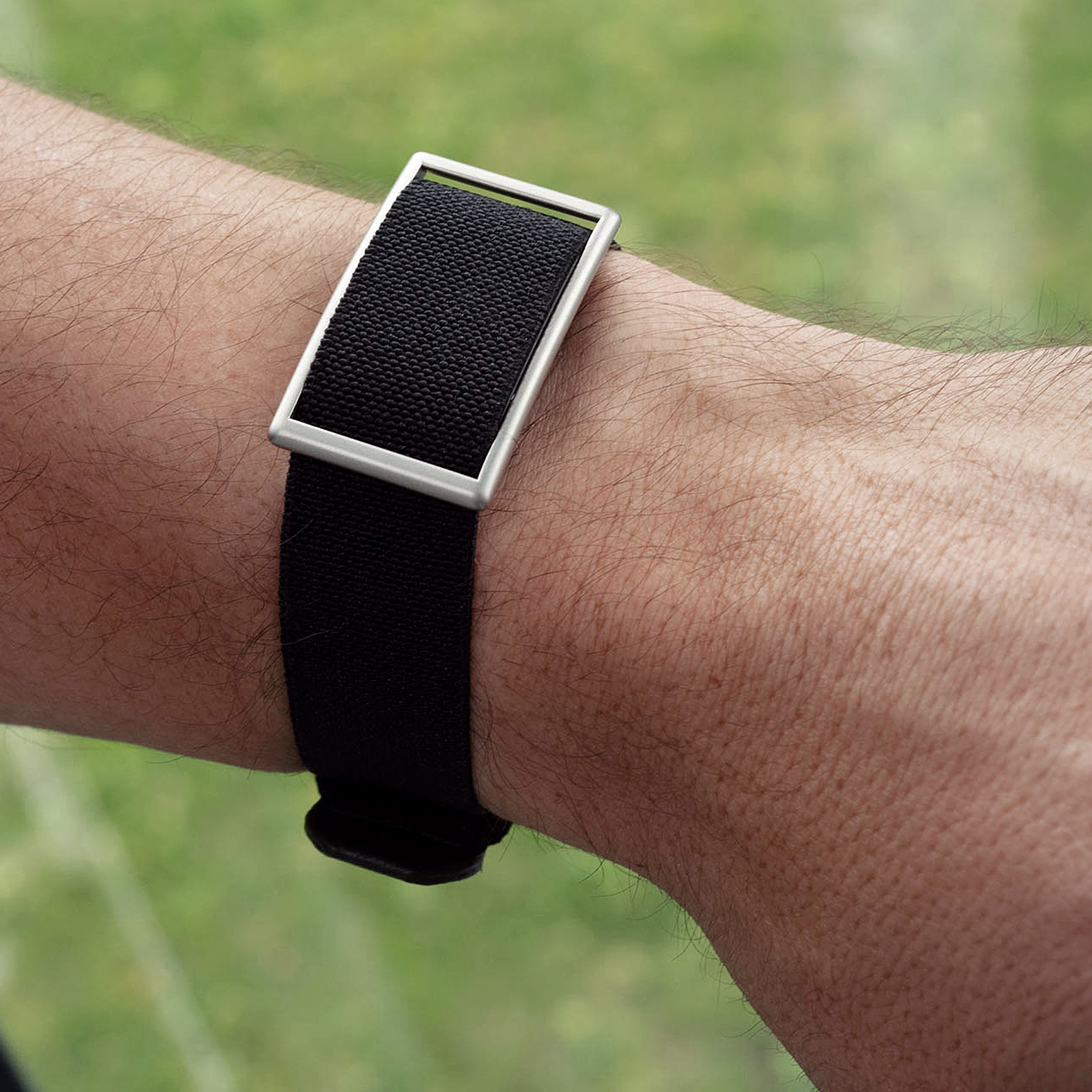
CardioWatch 287-2B
Designed for comfort and continuous wearability. Lightweight, IP67 waterproof, and equipped with a long-life battery built for continuous multi-day monitoring.
Get a Quote
API & Mobile SDK
Seamlessly stream raw signals and processed vital signs directly into hospital EMR, custom iOS/Android apps, or cloud analytics pipelines.
Get a Quote
Research Signal Suite
Access IP-free, uncompressed optical PPG, ECG, accelerometer, temperature, and GSR waveforms up to 128 Hz for advanced biomarker research.
Get a Quote5. Enterprise Authority & E-E-A-T Demonstration: Why Global Healthcare Leaders Partner with Corsano Health
In accordance with Google Search Quality Rater Guidelines, establishing E-E-A-T (Experience, Expertise, Authoritativeness, and Trustworthiness) requires demonstrable operational proof points. Corsano Health B.V. is not a startup concept; it is an established medical device manufacturer with extensive real-world clinical deployments across Europe, North America, and Asia-Pacific.
5.1 Strategic Global Distribution Partnerships
Corsano Health’s technology is validated and distributed by global leaders in medical technology and healthcare delivery. Key strategic milestones include:
- Medtronic Strategic Distribution (United States & Europe): Medtronic has expanded its acute care and monitoring portfolio by integrating Corsano’s multi-parameter wearable platforms across hospital and ambulatory monitoring networks in the United States and European territories.
- Netcare Network Deployment (South Africa): Strategic partner Netcare has implemented continuous wearable monitoring utilizing Corsano technology across general hospital wards to automate clinical deterioration detection and enhance patient safety.
- Top Tier Research Consortia: Active participant in major European research initiatives including the DETECT Consortium (focusing on early detection of out-of-hospital cardiac arrest alongside Radboud UMC, Erasmus MC, and Amsterdam UMC) and Watch-It (cardiorespiratory risk validation with Oslo University Hospital).
5.2 Enterprise Partner Wall
Corsano Health collaborates directly with world-leading medical centers, pharmaceutical pioneers, and technology institutes:










5.3 Clinical Endorsements & Key Opinion Leader Testimonials
I’ve tried out more wearable sensors than most people, and the CW287-2B is by far my favorite and most valuable. Congratulations to your entire team for your vision and for delivering on that. I believe your technology will have a significant impact on improving health across the globe.
As part of the DETECT consortium, our collaboration with Corsano has been instrumental in advancing technological solutions aimed at the early detection of cardiac arrest. This partnership is paving the way for significant breakthroughs that we believe will greatly enhance patient care and outcomes.
CardioWatch offers automated vital signs monitoring and integrates data into health records, easing our nursing staff’s workload. Our hospital effectively addressed implementation areas like data security and legalities. We’re very pleased with our Corsano partnership.
6. Comprehensive Procurement FAQ: Frequently Asked Questions by Global Healthcare Buyers
Below are detailed operational, technical, and regulatory answers to queries most frequently searched by B2B procurement managers, clinical IT leads, and healthcare buyers when sourcing Remote Patient Monitoring (RPM) Wearable platforms:
The CardioWatch 287 continuous monitoring platform derives up to 19 vital parameters using an integrated sensor suite. Derived parameters include continuous Heart Rate (HR), Heart Rate Variability (HRV), Respiration Rate (RR), Pulse Oximetry (SpO2), Skin Temperature, Core Body Temperature proxies, single-lead Electrocardiogram (ECG) rhythm strips, Galvanic Skin Response (GSR), Actigraphy, Posture/Body Orientation, and Sleep Architecture metrics. Unlike spot-check vitals monitors, sampling occurs continuously, giving clinical teams continuous micro-trend visibility.
Corsano Health is an audited medical device manufacturer operating under ISO 13485 quality management. The entire telemetry pipeline—from bracelet-to-gateway BLE transmission to cloud infrastructure—utilizes AES-256 bit end-to-end encryption. The cloud backend is fully compliant with European Union GDPR mandates and US HIPAA privacy standards. Organizations retain complete data governance, configuring exact role-based access permissions and anonymization protocols.
Yes. Corsano provides complete, IP-free access to raw optical PPG (green, red, and infrared channels), single-lead ECG waveforms, 3-axis accelerometer vector data, temperature dynamics, and GSR data sampled at frequencies up to 128 Hz (256 Hz for ECG). Data can be streamed in real-time or exported via research portals in structured formats (CSV, JSON, EDF) for independent digital biomarker development and machine learning training.
Integration is facilitated through documented REST APIs, HL7/FHIR standards compliance, and native mobile Software Development Kits (SDKs) for iOS and Android. Vital signs and calculated Early Warning Scores (NEWS2) can be fed directly into hospital EMR systems (such as Epic, Cerner, or ChipSoft), central nursing ward dashboards, or customized telemetry platforms without altering established nursing workflows.
The CardioWatch 287 is optimized for low-power consumption, delivering up to 7+ days of continuous multi-sensor tracking on a single charge depending on active sampling profiles. The device recharges fully within 90 minutes using a magnetic cradle, minimizing interruption to continuous monitoring protocols.
Consumer fitness trackers are regulated as general wellness products. They carry no legal guarantee of measurement accuracy, feature proprietary black-box filtering that alters data integrity, and cannot be used legally as the basis for medical diagnosis or clinical escalation. CE-MDR certified (EU 2017/745) and FDA 510(k) cleared medical devices undergo clinical validation trials against gold-standard clinical reference devices, operating under strict quality control to support formal clinical intervention.
Motion artifacts represent the leading cause of false alerts in optical PPG monitoring. The CardioWatch 287 incorporates a 3-axis accelerometer co-located with optical sensors. Advanced motion-compensation algorithms continuously subtract actigraphy vector noise from optical signals in real-time, maintaining precise physiological readings even while patients walk or perform daily activities.
Procurement officers and clinical leads can request hardware evaluation kits, API documentation, and trial pilot proposals directly by clicking the quote link below. Our clinical engineering team assists with study design, gateway setup, legal data processing agreements (DPAs), and nursing staff onboarding.
Initiate Your Remote Patient Monitoring (RPM) Wearable Procurement Evaluation
Contact Corsano Health’s clinical specialists today to request technical documentation, CE-MDR compliance packages, or volume pricing for institutional deployment.
Get a Quote