
Flagship OEM/ODM Health Trackers for Brazil Sourcing
Customizable medical-grade smart bands, watches, and rings tailored for private health plans, telehealth platforms, and wellness programs.
1. Strategic Overview of the Health Tracker Sourcing Landscape in Brazil
The Latin American wearable market—anchored primarily by Brazil—is undergoing a structural transformation. Driven by the expansion of private health maintenance organizations (Operadoras de Planos de Saúde like Bradesco Saúde, Amil, and Unimed), the rapid rollout of 5G telecommunications in cities such as São Paulo, Rio de Janeiro, and Brasília, and regulatory updates from ANVISA (Agência Nacional de Vigilância Sanitária), procurement teams can no longer rely on simple consumer step-counting wearables. Modern healthcare delivery requires high-precision, multi-sensor health monitoring devices capable of continuous data streaming, raw signal access, and LGPD-compliant cloud transmission.
When selecting a top-tier health tracker OEM/ODM manufacturer for the Brazilian market, global importers and healthtech brand owners must look beyond surface aesthetics. The ideal manufacturing partner must offer ISO 13485 quality management systems, proven PPG/ECG sensor accuracy, white-label SDKs for custom software stack integration, and robust hardware design resistant to Brazil’s tropical humidity and coastal environments.
2. Brazil Localized Application Scenarios for Smart Health Trackers
Sourcing wearable biometric devices requires a granular understanding of how devices are deployed across Brazil’s diverse healthcare, corporate, and public sectors. Below are the four primary commercial deployment models driving bulk orders in Brazil:
Remote Patient Monitoring (RPM) in Private Health Plans
Private healthcare operators in São Paulo and Minas Gerais deploy continuous PPG wristbands to manage high-risk diabetic and hypertensive patients post-discharge. Real-time SpO2, HRV, and blood pressure trend tracking allow clinicians to detect acute exacerbations early, reducing costly ICU readmissions.
Corporate Wellness Programs in Financial Hubs
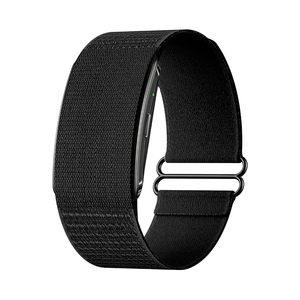
Multinational corporations headquartered in Faria Lima and Paulista utilize sleek, screenless ECG smart bracelets and ultra-thin health rings to power employee wellness challenges. Integrated SDKs feed anonymous burnout index, stress score (GSR/HRV), and sleep staging data directly into corporate HR portals.
Telemedicine Expansion in Northern & Rural Brazil
In remote territories across the Amazon basin and Northeast region where physician-to-patient ratios are low, standalone GPS/cellular-enabled smartwatches allow telehealth clinics to remotely capture single-lead ECG rhythm strips and pulse oximetry readings without requiring fixed broadband.
3. Key Sourcing Parameters: Comparing Wearable Sensor Architecture
To assist procurement directors and product managers in selecting the right hardware OEM, the table below breaks down the technical capabilities, sensor arrays, regulatory clearances, and ideal Brazilian market target for top health tracker form factors:
| Form Factor / Series | Sensor Array Capabilities | Sampling Frequency | Regulatory Readiness | Primary Brazilian Market Target |
|---|---|---|---|---|
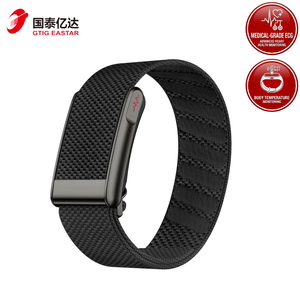
| E500 Medical ECG Series | Single-Lead ECG, Green/Red/iR PPG, Temp, SpO2 | 128 Hz Raw Signal | CE-MDR, ISO 13485, ANVISA Pathway | Hospitals, Acute RPM, Cardiology Clinics |
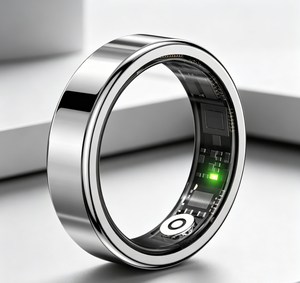
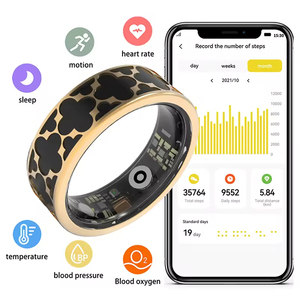
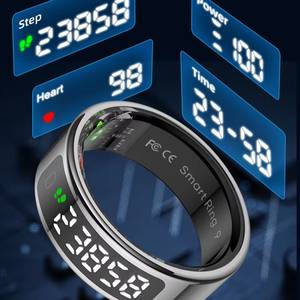
| OEM Smart Ring R26 / Thin Ring | Multi-Wavelength PPG, Skin Temp, Accelerometer | 25 Hz to 100 Hz Continuous | CE, FCC, RoHs, ANATEL Ready | Executive Wellness, Preventive Fitness |
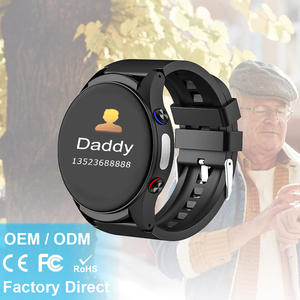
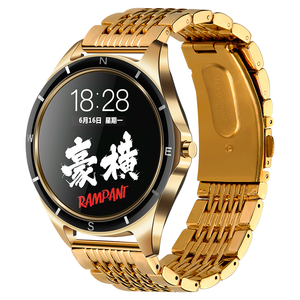
| L08P GPS Telecare Watch | GNSS GPS, Cellular 3G/4G, SpO2, Fall Detection | Real-Time Event Stream | ANATEL Homologation Ready | Senior Care, Telehealth Operators, Public SUS |
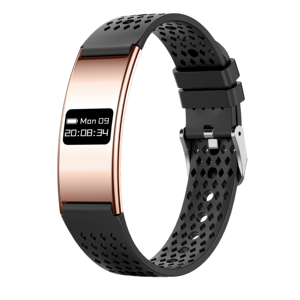
| Y105 Multi-Sport Wristband | PPG Heart Rate, Oscillometric BP Trend, Temp | Continuous Interval | CE, RoHS, REACH | Commercial Fitness Chains, Insurtech Rewards |
4. Local Market Dynamics & Technology Trends in Brazil (2026 Horizon)
Navigating the Brazilian market demands strict alignment with evolving technical and legal framework shifts. Importers must incorporate three critical market trends into their sourcing strategy:
1. LGPD (Lei Geral de Proteção de Dados) and Data Residency: Brazil’s data protection legislation mandates strict end-to-end encryption for health-related biometric signals. Leading manufacturers now offer localized SDKs that allow Bluetooth packets from smart bracelets and rings to bypass third-party overseas servers, routing raw telemetry directly to locally hosted AWS South America (São Paulo) cloud infrastructure.
2. ANATEL Wireless Homologation Demands: Every health tracker transmitting data over Bluetooth 5.0+, Wi-Fi, or cellular frequencies must undergo RF emissions and safety testing by an accredited OCD (Organismo de Certificação Designado) to secure ANATEL (Agência Nacional de Telecomunicações) approval. Choosing a manufacturer experienced in pre-compliance testing reduces certification timelines by up to 50%.
3. Integration of AI-Driven Early Warning Systems (EWS): Brazilian hospital networks are replacing manual nursing spot-checks with automated Modified Early Warning Scores (MEWS). Wearable sensors that continuously track respiration rate, skin temperature, and pulse rate variability enable algorithmic alerts long before clinical deterioration occurs.
5. Enterprise Manufacturing Excellence & Customization Services
As an industry-leading OEM/ODM health tracker factory, our production ecosystem is engineered to support B2B clients through every phase of product development—from industrial design to high-volume assembly.
Raw Biosensor Signal Access
We provide full IP-free API and SDK access to uncompressed raw PPG, single-lead ECG, accelerometer, and Galvanic Skin Response (GSR) waveforms sampled up to 128 Hz for custom AI algorithm training.
Comprehensive ODM Customization
From custom mold tooling, medical-grade silicone/fluororubber strap materials, laser-etched corporate logos, to localized Brazilian Portuguese companion app UI localization.
ISO 13485 Cleanroom Assembly
Manufactured in state-of-the-art cleanroom facilities following ISO 13485 medical device quality management standards, ensuring ultra-low defect rates and long-term sensor reliability.
6. Frequently Asked Questions for Brazilian B2B Importers
Do health trackers imported into Brazil require mandatory ANVISA registration?
If the device is marketed strictly as a consumer wellness, fitness, or general activity tracker without diagnostic or treatment claims, it is generally classified under non-regulated wellness electronics. However, if the device makes medical diagnostic claims (e.g., automated atrial fibrillation detection or clinical BP diagnostic reporting), it must be registered with ANVISA under Class I or Class II medical device frameworks. We provide full technical construction files (TCF) to support your local registration process.
How long does ANATEL homologation take for Bluetooth and Cellular smartwatches?
Standard ANATEL certification for Bluetooth/Wi-Fi wearables typically requires 6 to 10 weeks when working with an accredited OCD testing laboratory in Brazil. Our engineering team supplies pre-tested RF sample units, circuit schematics, block diagrams, and existing FCC/CE testing reports to significantly expedite local laboratory approval.
Can we customize the companion Android and iOS applications into Portuguese?
Yes. We offer complete white-label software packages, including localized Brazilian Portuguese string files for both iOS and Android applications. Alternatively, if you operate an existing digital health portal, you can utilize our iOS/Android mobile SDKs to connect the wearable directly to your app without using our standard UI.
What are the typical lead times for bulk OEM orders shipping to Brazil?
Standard OEM production lead times range from 20 to 30 days after sample approval and deposit confirmation. Air freight delivery to major Brazilian international hubs (Guarulhos/GRU or Viracopos/VCP) takes approximately 5 to 7 days, while ocean freight to ports such as Santos or Rio de Janeiro takes 30 to 40 days.
Ready to Expand Your Wearable Health Portfolio in Brazil?
Partner with a certified medical-grade factory. Contact our engineering and business development specialist team today to request hardware samples, SDK documentation, or custom OEM manufacturing quotes.