
Featured Medical Wearables & Continuous Health Monitors
Engineered for clinical-grade reliability, continuous parameter tracking, and seamless EMR/Telehealth integration across Iraqi hospitals and remote care programs.
1. The Transformation of Iraq’s Healthcare Ecosystem: Moving from Episodic Spot-Checks to Continuous Monitoring
The healthcare system in Iraq is undergoing a major digital transformation. Historically reliant on traditional episodic spot-checks, hospitals across Baghdad, Erbil, Basra, and Sulaymaniyah are moving toward continuous vital sign tracking and IoT-enabled patient care. The demand for continuous physiological monitoring is driven by a need to reduce bedside nursing burdens, detect early clinical deterioration, and extend care past hospital discharge.
The shift to continuous monitoring is particularly crucial in Iraq's public and private hospital sectors. Public facilities often face high patient-to-nurse ratios, making manual observation every 4 to 6 hours vulnerable to missed warning signs. Continuous monitoring wearables solve this issue by providing non-invasive, continuous streaming of key physiological markers straight to nurse dashboards and central Electronic Medical Record (EMR) platforms.
Key Market Insight: Wearable technologies with medical certification (CE-MDR and FDA 510(k)) bridge the gap between ward care and home recovery. By capturing multi-channel Photoplethysmography (PPG) and single-lead Electrocardiograms (ECG), clinical teams can establish objective Early Warning Scores (NEWS2/EWS) automatically.
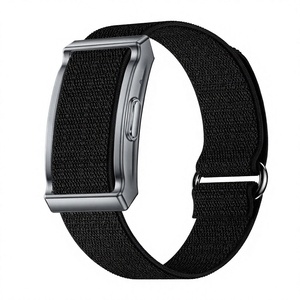
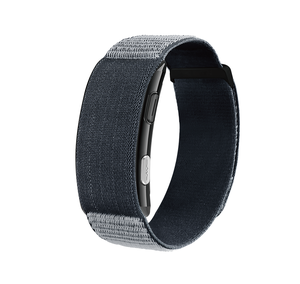
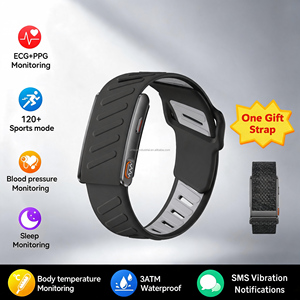
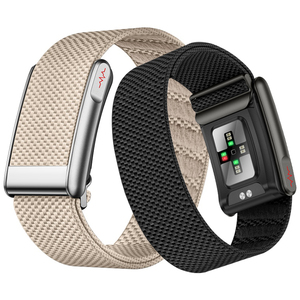
Furthermore, Iraq’s unique environmental conditions—including extreme summer temperatures exceeding 50°C and airborne dust exposure—require specialized medical-grade hardware. Standard consumer fitness trackers often fail under high heat, humidity, and constant sanitization protocols. Top digital health OEMs supply ruggedized, IP68/3ATM waterproof, screenless, and long-battery smart bracelets designed specifically for multi-day clinical wear and post-discharge monitoring.
2. Technical Benchmark for Evaluating Top Digital Health Manufacturers for Iraq Procurement
Selecting an OEM/ODM manufacturing partner for Iraqi healthcare facilities requires strict adherence to international quality management systems, data security frameworks, and hardware validation protocols.
Medical Regulatory Compliance
Ensure manufacturers hold ISO 13485 quality system certifications alongside verified CE-MDR (EU 2017/745) Class IIa/IIb or FDA 510(k) clearances. Unregulated consumer wearables lack validated algorithms and cannot be legally integrated into clinical decision-making or official patient logs within Iraqi Ministry of Health (MOH) infrastructure.
Open API & Raw Data Access
Advanced digital health research and clinical AI model development require raw signal export (PPG, ECG, 3-axis Accelerometer, Temperature, and Galvanic Skin Response) at up to 128 Hz. Complete SDK/API data access enables integration into local Iraqi hospital management software without vendor lock-in.
Cellular & eSIM Connectivity
For outpatient Remote Patient Monitoring (RPM) across governorates where residential Wi-Fi may be inconsistent, smart wearables equipped with standalone 4G LTE-M or eSIM capabilities allow direct telemetry uploading to central cloud gateways powered by local telecom networks (Zain Iraq, Asiacell, Korek).
3. OEM Hardware Architecture & Feature Matrix
Below is a comparative breakdown of key architectural specifications across screenless clinical bracelets, high-tier 4G emergency monitoring wearables, and consumer-grade fitness bands to aid procurement committees in evaluating technical specifications.
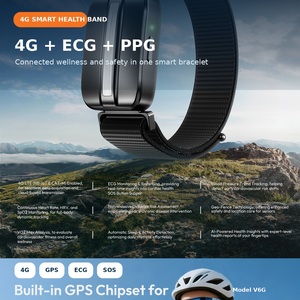
| Specification Feature | Clinical Screenless Band (e.g. E500 / G70) | 4G Emergency Telemetry Band (V6G) | Consumer Fitness Trackers |
|---|---|---|---|
| Primary Purpose | Continuous Clinical Monitoring & Ward RPM | Senior SOS, Telehealth & Ambulatory Care | Personal Lifestyle & Basic Fitness Tracking |
| Regulatory Status | CE-MDR / FDA 510(k) Cleared Algorithms | CE / FCC Certified Telemetry Device | Non-Medical Consumer Electronics |
| Biometric Sensors | Green/Red/IR PPG, Single-lead ECG, Skin Temp, GSR | PPG Heart Rate, SpO2, Single-lead ECG, Fall Detection | Single-color PPG (Basic Heart Rate only) |
| Battery Autonomy | 10 to 15 Days Continuous Wear | 3 to 5 Days (Active 4G/GPS Telemetry) | 2 to 5 Days (Varies by screen wake) |
| Raw Data Access | 128 Hz Raw PPG/ECG CSV & API Export | REST API JSON Stream to EMR | Encrypted Closed Cloud Ecosystem |
| Environmental Rating | IP68 / 3ATM Waterproof & Dust-tight | IP67 Water-resistant | IP67 Light Splashproof |
4. Localized Application Scenarios Across Iraqi Medical Systems
Translating digital health hardware into measurable clinical outcomes across public health sectors, private hospital networks, and remote humanitarian medical initiatives in Iraq.
General Ward Early Warning (Baghdad & Basra)
In high-capacity public hospitals, continuous wearable bands monitor post-operative and internal medicine patients around the clock. By constantly calculating vital sign trends—such as subtle rises in heart rate paired with drop-offs in peripheral respiration—the automated system alerts floor nurses to impending septic shock or cardiac collapse hours before physical collapse occurs.
Post-Discharge Cardiac Care (Erbil & Sulaymaniyah)
Private cardiovascular specialty centers in the Kurdistan Region utilize screenless ECG and blood pressure monitoring bracelets for patients recovering from coronary angioplasty or valve replacement. Patients wear the lightweight band for 14 days after discharge, automatically sending ECG rhythm strips and arterial wave trends back to the attending cardiologist’s portal.
Remote & Rural Telehealth Mobile Units
Humanitarian healthcare programs operating in remote governorates leverage 4G LTE-M emergency health bands equipped with GPS tracking and instant SOS triggers. Elderly patients living far from tertiary care centers receive automated vital signs monitoring, enabling doctors in regional hubs to manage chronic hypertension and arrhythmia remotely.
5. Original Manufacturer Capabilities & Global OEM/ODM Support
Our manufacturing facilities integrate medical hardware engineering, surface-mount technology (SMT) assembly, and proprietary algorithm design under strict ISO 13485 oversight. By establishing direct OEM/ODM supply agreements, Iraqi medical distributors, hospital conglomerates, and government procurement offices gain access to customized white-label solutions tailormade for local deployment.
Full Hardware & Firmware Customization
We provide complete ODM customization, including custom enclosure molding, localized Arabic software/app branding, modified Bluetooth low-energy (BLE) communication protocols, and custom sensor configurations (integrating specialized skin temperature or GSR modules).
Interoperable Cloud APIs & SDKs
Eliminate data silos with turnkey Mobile SDKs (iOS/Android) and server-side REST APIs. Effortlessly route continuous vital sign feeds directly into HL7/FHIR-compliant hospital databases, custom mobile health apps, or national electronic health record platforms.
Strict International Quality Control
Every single unit undergoes rigorous micro-environmental stress testing, dynamic optical sensor calibration, water-immersion pressure checks, and drop resilience testing before leaving the factory line, ensuring near-zero defect rates upon arrival in Iraq.
Frequently Asked Questions by Iraqi Healthcare Buyers
Direct answers to common technical, regulatory, and logistics questions raised by medical device importers and healthcare providers in Iraq.
We supply a full regulatory dossier for registration with the Iraqi Ministry of Health (MOH / KMOH), including ISO 13485 Quality Management System certificates, CE-MDR declarations of conformity, FDA clearance documentation, full EMC/safety test reports, and factory Free Sale Certificates (FSC).
Yes. Our screenless and 4G health bracelets feature fully sealed IP68 and 3ATM enclosure architectures, engineered with medical-grade hypoallergenic TPU/silicone materials. They are rated for operational temperature ranges up to 55°C, ensuring reliable continuous monitoring during hot summer months in central and southern Iraq.
Yes. Unlike proprietary consumer bands that restrict data to basic summaries, our platform grants research teams uninhibited access to raw optical PPG (green, red, infrared), single-lead ECG wave traces, and 3-axis accelerometer data sampled at up to 128 Hz via open API/CSV formats.
Standard white-label logo branding on existing hardware starts at flexible low MOQs (500 to 1,000 units). Full ODM projects—such as custom mainboard redesigns, specialized sensor additions, or custom outer shell molding—typically start at 3,000 to 5,000 units depending on technical complexity.
We work with established global air freight and sea freight logistics partners specializing in medical equipment shipments into Baghdad International Airport (BGW), Erbil International Airport (EBL), and sea freight routes through Umm Qasr Port, handling complete export customs documentation.
Accelerate Your Digital Health Deployment in Iraq Today
Request comprehensive product catalogs, technical whitepapers, SDK integration guides, and factory-direct OEM pricing tailored for hospital tenders and medical distribution in Iraq.