
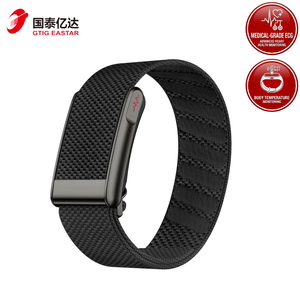
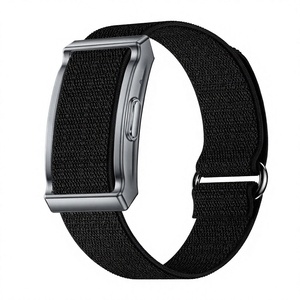
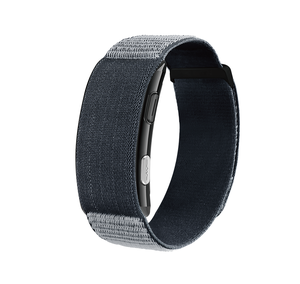
E500 ECG Screenless AI Health IP68 Smart Bracelet
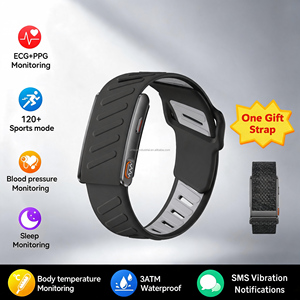
- Single-lead ECG & High-res PPG
- Continuous Skin Temp & SpO2
- IP68 Water Resistance (Ward/Home)
- Tamper-resistant Screenless Form
Engineered for early clinical deterioration detection, SIRS/qSOFA automated scoring, and uninterrupted patient monitoring across Australian hospitals, aged care, and regional telehealth networks.
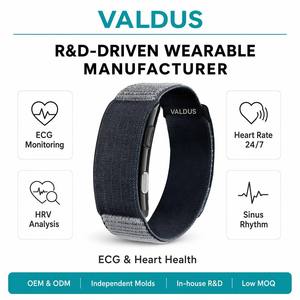
Transforming Acute Deterioration Protocols in Australian Public and Private Healthcare Systems
Sepsis remains one of the primary drivers of preventable hospital mortality and critical care admissions in Australia. According to data from the Australian Commission on Safety and Quality in Health Care (ACSQHC), sepsis claims the lives of over 8,700 Australians annually, with thousands more suffering long-term physical, cognitive, and psychological impairment post-discharge. The financial impact on state health services—including NSW Health, Queensland Health, and Victorian Department of Health—exceeds AUD $1.5 billion annually in ICU stay extensions and emergency readmissions.
The core bottleneck in traditional sepsis management lies in the reliance on intermittent visual spot-checks. Standard nursing observation rounds occur every 4 to 8 hours in general acute hospital wards. However, septic shock can escalate rapidly within a 2-hour window. Between rounds, subtle sub-clinical changes—such as micro-vascular vasodilation, compensatory tachycardia, subtle tachypnea, and peripheral thermal instability—go undetected. By the time overt physiological collapse triggers traditional SIRS (Systemic Inflammatory Response Syndrome) or qSOFA (quick Sequential Organ Failure Assessment) threshold criteria, organ damage is frequently under way.
Continuous multi-sensor monitoring shifts early warning paradigms from reactive intervention to predictive trajectory analysis. Our continuous medical wearable captures the primary pathophysiological triad of early sepsis simultaneously:
To understand the competitive advantage of deployed continuous wearable telemetry over legacy ward monitoring protocols, consider the clinical operational matrix below:
| Monitoring Metric | Traditional Ward Spot-Checks | Consumer Fitness Trackers | Our ISO 13485 Sepsis Wearable System |
|---|---|---|---|
| Sampling Frequency | Every 4 – 8 hours (Intermittent) | 1 – 5 min averages (Duty-cycled) | Continuous real-time stream (Up to 128 Hz raw) |
| Temperature Precision | Single spot core temp (Axillary/Tympanic) | Coarse skin temp trend ($\pm 0.5^\circ\text{C}$) | Medical-grade thermistor ($\pm 0.1^\circ\text{C}$ calibration) |
| Hemodynamic Tracking | Manual NIBP cuff every 4 hrs | Estimated arterial metrics (Unvalidated) | Continuous PPG Perfusion Index + Raw Waveforms |
| Early Warning Score Integration | Manual calculation (Human error risk) | None (Proprietary wellness scores) | Automated EWS / qSOFA algorithmic streaming |
| Regulatory Approval Path | N/A (Manual equipment) | Wellness / Non-Medical | CE-MDR, FDA 510(k), TGA ARTG Alignment |
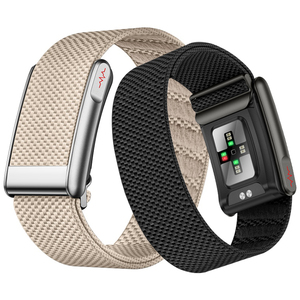
Our sepsis detection platform consists of an ultra-lightweight, screenless, medical-grade smart wristband paired with secure hospital gateway infrastructure. Designed specifically for inpatient hospital wards, sub-acute rehabilitation beds, and aged care settings, the device strips away non-essential consumer UI elements (screens, notification vibrators) to maximize battery longevity, tamper-resistance, and infection control compliance.
The multi-sensor array incorporates:
Addressing Geographical, Operational, and Regulatory Realities from Metropolitan Trauma Hubs to Outback Remote Care
In high-capacity public hospitals across Sydney, Melbourne, and Brisbane, general acute medical wards face severe nursing staff shortages. Deploying our screenless continuous sensors allows nursing units to monitor 30+ bed wards simultaneously via central telemetry screens, automating Between the Flags (BtF) and Victorian Health Incident Management System (VHIMS) escalation protocols.
Regional Australia (WA Goldfields, Far North Queensland, Northern Territory) presents extreme logistical challenges in acute escalation. Paired with 4G/Cellular standalone health bands, vital sign anomalies automatically route to regional base stations and Royal Flying Doctor Service (RFDS) triage centers, ensuring early septic air-evacuation decisions before systemic shock develops.
With Australia’s Australian National Aged Care Classification (AN-ACC) funding model emphasizing high-quality clinical outcomes, aged care providers use our non-intrusive wristbands to detect urinary tract infection (UTI) driven sepsis—a leading cause of acute hospital transfers in vulnerable elderly populations.
Australia’s NSQHS Standard 8 (Recognising and Responding to Acute Physiological Deterioration) mandates that healthcare facilities establish robust systems to detect clinical decline promptly. Our continuous wearable platform directly satisfies Standard 8 requirements by providing:
Strategic Insights for Hospital Purchasing Directors, MedTech Importers, and Clinical Research Consortia
The Australian healthcare technology ecosystem is undergoing a major structural evolution driven by federal digital health initiatives, decentralized clinical trials (DCTs), and post-pandemic "Hospital in the Home" (HITH) expansions. Key macro trends shaping the procurement of sepsis detection sensors include:
State health departments are heavily investing in virtual wards to reduce bed block in tertiary hospitals. HITH initiatives require medical-grade continuous monitors capable of high-fidelity data transmission over consumer Wi-Fi or cellular networks, enabling patients recovering from high-risk abdominal, orthopedic, or oncological surgeries to be safely monitored for post-operative sepsis at home.
Australian healthcare providers enforce strict data sovereignty guidelines under the Privacy Act 1988 and Australian Privacy Principles (APPs). Medical telemetry platforms must guarantee end-to-end encryption (AES-256), host patient data locally on Australian AWS/Azure cloud infrastructure (Sydney/Melbourne nodes), and support completely de-identified raw telemetry streaming for AI algorithmic training.
Leading academic research bodies—such as the University of Sydney, Monash University, and The Peter MacCallum Cancer Centre—are increasingly rejecting "black box" consumer wearables. Researchers demand direct, IP-free access to raw optical PPG wave patterns and ECG voltage samples at 128 Hz to co-develop custom machine learning algorithms for oncology-induced neutropenic sepsis detection.
Direct Manufacturing Rigor, Custom Firmware Engineering, and Global Supply Chain Reliability
As a premier global manufacturing facility and direct exporter specializing in medical continuous monitoring hardware, we provide Australian MedTech distributors, hospital networks, and research organizations with end-to-end OEM/ODM custom development:
Our state-of-the-art cleanroom manufacturing plants operate under certified ISO 13485 Quality Management Systems. Every circuit board, optical assembly, and biocompatible silicone strap undergoes automated optical inspection (AOI) and rigorous thermal shock stress testing.
We supply Australian importers and sponsors with complete technical documentation, clinical evaluation reports (CER), biocompatibility testing (ISO 10993), electrical safety certifications (IEC 60601-1, IEC 60601-1-2), and cyber-security audit reports required for swift TGA ARTG inclusion.
From custom BLE advertising UUIDs and hospital gateway pairing algorithms to custom on-device threshold alerting logic, our software engineering team delivers fully branded SDKs for iOS, Android, and Linux gateway environments.
With established freight routes into Sydney (SYD), Melbourne (MEL), and Brisbane (BNE) airports, we ensure reliable, duty-compliant batch shipping, complete with MSDS battery certification and UN38.3 transport safety validation.
Addressing Regulatory Approval, Integration, Data Sovereignty, and Clinical Trial Logistics
Medical devices imported into Australia must be listed on the Australian Register of Therapeutic Goods (ARTG) maintained by the Therapeutic Goods Administration (TGA). As an ISO 13485 certified manufacturer holding CE-MDR and FDA 510(k) clearances, we provide local Australian Sponsors and importers with full technical documentation (GAPR, CER, ISO 10993, IEC 60601) to support rapid TGA Class IIa/IIb medical device inclusion.
General consumer wearables aggregate long intervals of optical data, missing micro-spikes. Our clinical sensors deliver continuous, high-frequency (up to 128 Hz) multi-wavelength PPG, ECG, and skin thermistor sampling. This enables real-time computation of rapid Heart Rate Variability (HRV) decay, micro-vascular Perfusion Index (PI) dropping, and sub-clinical skin temperature changes—the physiological hallmarks of early systemic inflammatory response syndrome (SIRS) prior to septic shock.
Yes. Unlike proprietary consumer health devices that restrict access to processed summaries, our hardware supports full raw data streaming. Researchers can extract uncompressed, IP-free raw PPG (Green, Red, IR), single-lead ECG waveforms, 3-axis acceleration vectors, and skin temperature logs via our Mobile SDKs and Bluetooth raw data protocols for proprietary AI/ML algorithm development.
Our cloud and gateway architecture utilizes RESTful APIs and HL7 FHIR standards. Vital sign parameters and early warning scores (EWS) are transmitted from bedside gateway hubs directly into middleware systems, seamlessly populating patient EMR observation charts and nursing telemetry consoles without modifying existing nursing clinical workflows.
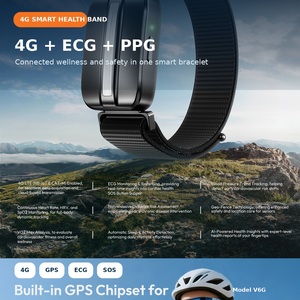
Yes. We manufacture standalone cellular-enabled health bands (such as our 4G LTE V6G model) that communicate directly with mobile networks without requiring a smartphone or home Wi-Fi hub. For locations with temporary signal blackouts, the device features onboard flash storage to buffer up to 7 days of continuous vital data, automatically backfilling the cloud once connectivity is restored.
The devices feature screenless, smooth, ingress-protected IP68/3ATM enclosures with no physical recessed buttons or speaker grilles. They are fully compatible with hospital-grade disinfectant wipes, including isopropyl alcohol (70%), hydrogen peroxide, and quaternary ammonium compounds commonly used across Australian hospital wards for terminal cleaning.
We support scalable trial-to-production pathways. Evaluation samples and pilot research kits are available with minimal quantities (10 to 50 units). For custom OEM/ODM co-branding, custom firmware configurations, or specialized packaging for Australian distributors, standard factory production MOQs start at 500 units.
Whether you are an Australian hospital procurement officer seeking continuous ward deterioration solutions, a MedTech distributor expanding your TGA-listed portfolio, or a clinical trial researcher requiring raw PPG/ECG telemetry—our engineering team is ready to assist.