
Precision Sensor Modules & Continuous Wearables
Deploying certified multi-parameter sensing hardware engineered for hospital ward automation, remote patient monitoring (RPM), and institutional care across Japan.
Navigating Japan’s Clinical Wearable & Remote Monitoring Revolution
Japan represents one of the most technologically advanced yet regulatory-rigorous medical device markets globally. As the country faces unprecedented demographic shifts—with over 29.1% of its population aged 65 or older—the Ministry of Health, Labour and Welfare (MHLW) and the Pharmaceuticals and Medical Devices Agency (PMDA) have accelerated initiatives toward digital health integration, home-based clinical care, and hospital bed efficiency.
For medical equipment distributors, system integrators, pharmaceutical CROs, and clinical research networks across Tokyo, Osaka, Fukuoka, and Hokkaido, sourcing continuous monitoring sensors requires a delicate balance of ultra-low power hardware architecture, unrestricted raw data access (PPG/ECG), and strict alignment with ISO 13485 quality frameworks. Episodic manual spot-checking by nursing personnel is rapidly transitioning toward automated, continuous physiological monitoring to address severe nursing shortages and fulfill Japanese statutory requirements for 7-to-1 patient-to-nurse acute care ward ratios.
Localized Deployment Pathways in the Japanese Healthcare Ecosystem
Medical wearables are no longer simple consumer novelties; in Japan’s structured clinical hierarchy, they serve as crucial digital endpoints across distinct health economic scenarios:
Acute Ward Patient Deterioration
Continuous surveillance in general hospital wards enables early warning scoring (EWS) automation. By monitoring multi-channel photoplethysmography (PPG) and single-lead ECG continuously, clinical care teams detect sub-clinical deterioration hours before acute arrest, alleviating night-shift workload for nurses in urban teaching hospitals.
Integrated Community Care (Chiiki-Pokatshu)
Japan’s regional care model relies heavily on seamless post-discharge follow-up. Our screenless, tamper-resistant smart bracelets provide real-time telemetry from elderly patients living in rural prefectures (e.g., Nagano, Tohoku) back to regional medical centers without requiring complex smartphone operation by the patient.
PMDA-Compliant Decentralized Trials (DCT)
Pharmaceutical sponsors and Contract Research Organizations (CROs) in Japan utilize our high-resolution raw signal export (128 Hz accelerometer, PPG Green/Red/Infrared, skin temp, GSR) to develop customized digital biomarkers for Phase II–IV oncology, cardiovascular, and neurological studies.
Engineering Excellence & Raw Signal Precision Architecture
Unlike off-the-shelf consumer fitness bands that utilize proprietary black-box algorithms, our medical-grade clinical wearables are built upon an open, non-proprietary data architecture. This provides research institutions, software vendors, and hospital systems with full sovereignty over collected biometrics.
Information Gain: Why Screenless Architecture Wins in Institutional Care
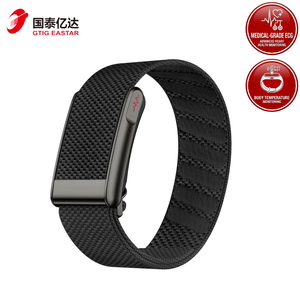
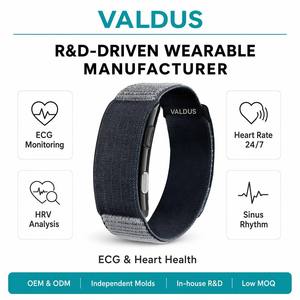
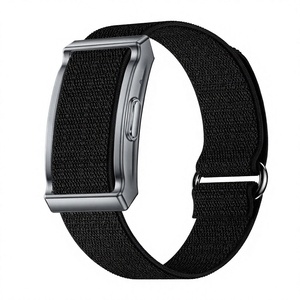
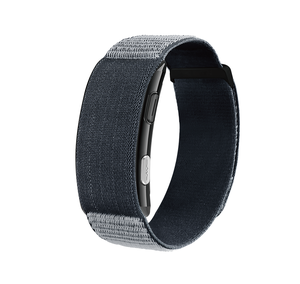
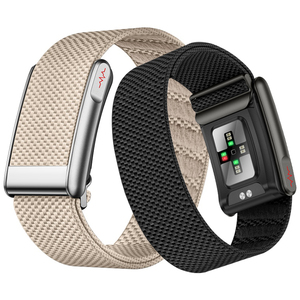
In clinical wards and senior care settings across Japan, interactive touchscreens introduce significant failure points: elevated battery consumption requiring daily charging, accidental user interaction, screen glare distraction, and hygiene/sanitization vulnerabilities. Our screenless form-factor (such as the E500 and G70 series) delivers up to 15 days of continuous operation, IP68/3ATM submersion resistance, and seamless passively collected telemetry.
Derived Vital Parameters & Sensor Array Capabilities
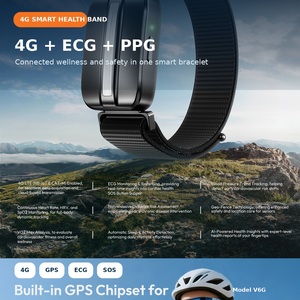
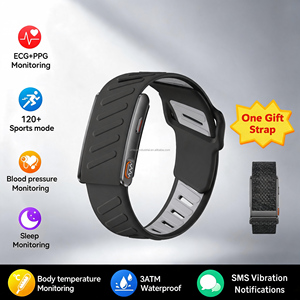
Through integrated 3-axis accelerometry, dual-wavelength or triple-wavelength photoplethysmography (PPG), galvanic skin response (GSR), surface micro-thermology, and single-lead ECG dry electrodes, our hardware yields 19 validated physiological metrics:
| Biometric Metric | Sensor Modality | Clinical Sampling / Output Frequency | Primary Clinical Utility in Japan |
|---|---|---|---|
| Continuous Heart Rate (HR) & HRV | Multi-Wavelength PPG / ECG | Continuous real-time / 128 Hz raw option | Autonomic nervous system strain, arrhythmia screening |
| Single-Lead ECG Rhythm Strip | Dry Micro-coaxial Electrodes | 500 Hz internal, 128 Hz transmission | AFib detection, QT interval analysis in trial protocols |
| Continuous Blood Oxygen (SpO2) | Red & Infrared Optical Sensors | Continuous trend spot-checking | Nocturnal desaturation, COPD & post-COVID remote care |
| Continuous Respiration Rate | Derived PPG Waveform & ACC | Minute-by-minute baseline tracking | Early detection of acute sepsis & respiratory failure |
| Core Skin Temperature Trend | Calibrated Thermal NTC Thermistor | Continuous 10-second interval logging | Infection tracking, perioperative thermal management |
| Galvanic Skin Response (GSR) | Epidermal Impedance Electrodes | Dynamic micro-siemens measurement | Stress evaluation, pain response in non-verbal cohorts |
| Actigraphy, Posture & Fall Risk | 3-Axis Precision Accelerometer | 32 Hz – 128 Hz motion vectors | In-patient bed egress monitoring, frailty profiling |
Japanese PMDA Regulatory Compliance & B2B Supply Framework
Entering or expanding within the Japanese medical device market requires clear regulatory positioning. Our corporate manufacturing infrastructure operates under stringent global quality management systems (ISO 13485:2016 certified), offering full support for local Market Authorization Holders (MAH) and Designated Marketing Authorization Holders (DMAH) in Japan.
OEM / ODM White-Label Customization
We provide full hardware and firmware tailored to Japanese market expectations. Options include customized outer housing colors, laser-etched institutional branding, specialized Japanese RF frequency tuning (TELEC / MIC compliance for Bluetooth LE and 4G LTE-M/NB-IoT), and custom packaging designed for hospital logistics.
SDK & REST API Cloud Interoperability
System integrators in Tokyo and Osaka can seamlessly connect hardware feeds into localized Electronic Medical Record (EMR) architectures, such as JAHIS-compliant systems, Fujitsu HumanBridge, or HL7 FHIR pipelines using our mobile iOS/Android native SDKs and cloud REST endpoints.
Frequently Asked Questions by Japanese Hospitals & Distributors
Addressing core technical, regulatory, and logistics queries from procurement officers and medical device distributors serving Japan.
Accelerate Your Clinical Monitoring Strategy in Japan
Partner with a trusted medical sensor manufacturer. Request our complete technical whitepaper, product catalog, raw data access specification documents, or schedule an OEM consultation with our engineering directors.
Get Catalog