
Recommended Inpatient Deterioration Monitoring Systems
Explore medical-grade continuous telemetry bands engineered for high-density general ward monitoring, rapid clinical triage, and seamless EMR integration in West African healthcare facilities.
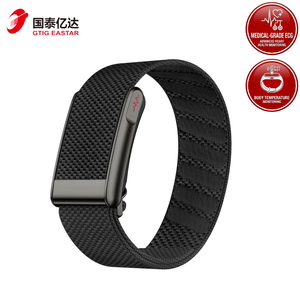
E500 ECG Screenless AI Health Smart Telemetry Band
Continuous single-lead ECG rhythm monitoring, SpO2, blood pressure trend analysis, and skin temperature tracking for general ward bed monitoring.
Inquire Now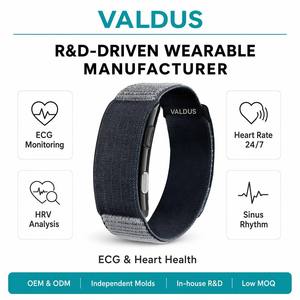
VITRO Screenless Medical-Grade ECG Ward Monitor
Tamper-resistant screenless architecture optimized for continuous 24/7 patient surveillance without accidental user interruption or battery depletion.
Inquire Now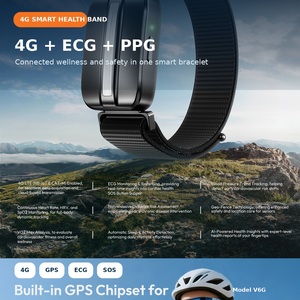
V6G 4G Standalone Cellular Patient Deterioration Band
Integrated 4G telemetry gateway with instant distress signaling, precise SpO2 tracking, and automated cardiac arrhythmia detection for high-risk wards.
Inquire Now
Minimalist Clinical Continuous ECG Patient Bracelet
Lightweight, high-durability sensor band providing uninterrupted ECG waveforms and thermal telemetry across long-stay hospital stays.
Inquire Now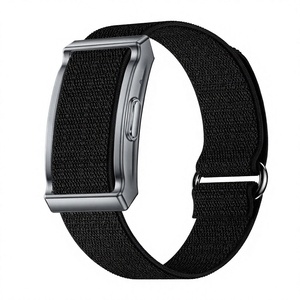
G70 Screenless Ward Telemetry & Vital Signs Band
Full vital sign matrix capturing continuous skin temperature, respiration rate, micro-circulation PPG, and movement artifacts.
Inquire Now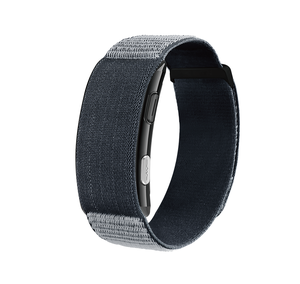
VITRO Wireless Multi-Parameter Medical Ward Telemetry Band
Designed for ward-wide infection control with IP68 washdown capability, continuous heart rhythm mapping, and real-time alert triggers.
Inquire Now
Long-Battery Screenless Continuous Inpatient ECG Tracker
Features a 180mAh ultra-low-power MCU delivering up to 15 days of continuous monitoring on a single charge—ideal for rural Ghanaian clinics.
Inquire Now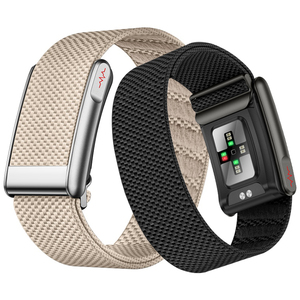
2026 E500 NFC Medical Smart Bracelet for General Wards
Integrates bed assignment NFC tagging with continuous ECG/SpO2/Temp algorithms to automate clinical handovers and eliminate record errors.
Inquire NowProven Global Clinical Impact & Operational Scale
Our medical-grade manufacturing facilities in China engineer telemetry systems designed for high-throughput general wards, validated across international clinical trial networks and public hospital ecosystems.
Solving the Inpatient Deterioration Blindspot in Ghana’s General Wards
In traditional general ward environments across West Africa, patient vital signs are typically captured manually during clinical nursing rounds every 4 to 8 hours. Between these episodic spot-checks, silent physiological deterioration—such as subtle hypoxia, septic decompensation, nocturnal cardiac arrhythmias, or respiratory depression—can progress unrecognised for hours. Studies in acute patient safety reveal that up to 75% of unmonitored ward cardiac arrests and emergency ICU transfers are preceded by quantifiable physiological distress that manifests hours prior to overt clinical collapse.
Clinical Information Gain: By transitioning from manual spot-checks to continuous wearable telemetry, medical centers in Ghana can capture up to 1,440 vital sign datapoints per patient per day. This shifts care models from reactive emergency response to proactive early intervention based on automated National Early Warning Scores (NEWS2).
As China’s premier original equipment manufacturer (OEM) and technology provider for continuous general ward patient deterioration systems, our factory designs end-to-end hardware and software telemetry ecosystems tailored specifically for the infrastructure realities of Ghanaian healthcare facilities. By combining high-precision photoplethysmography (PPG), single-lead electrocardiography (ECG), galvanic skin response (GSR), and micro-calorimetric skin temperature sensors into low-power, screenless wrist-worn form factors, we empower clinical teams to monitor every ward bed cost-effectively.
Core Architectural Pillars of Our Deterioration Telemetry
Engineered to deliver ICU-grade early detection capabilities at a fraction of traditional monitor costs.
Continuous Multi-Parameter Sensor Array
Derives 19 physiological parameters simultaneously, including continuous heart rate, heart rate variability (HRV), respiration rate from PPG pulse wave modulation, SpO2, skin temperature, and motion-compensated activity levels.
Automated NEWS2 / EWS Score Calculation
Algorithms process real-time biometric streams against international Early Warning Score criteria, triggering visual color-coded risk alerts on centralized nursing station displays when deterioration trends emerge.
Resilient Local Mesh Telemetry
Sub-GHz long-range low-power RF and BLE 5.3 mesh connectivity ensures uninterrupted signal transmission across thick concrete ward walls without overloading hospital Wi-Fi bandwidth.
Open EMR & API Architecture
Native RESTful APIs and SDKs enable effortless data streaming directly into OpenMRS, Lightwave Health Information Management System (LHIMS), DHIS2, or proprietary Ghanaian hospital databases.
Infection-Control & IP68 Waterproofing
Fully sealed, screenless medical-grade polymer housing permits medical disinfection with chlorine solutions, alcohol swabs, and disinfectant sprays between patient assignments.
Grid-Independent Battery Autonomy
Equipped with low-power microcontrollers operating up to 15 days on a single magnetic rapid charge, eliminating system outages during municipal power fluctuations (Dumsor).
Localized Application Scenarios Across Ghana’s Health System
Ghana’s healthcare infrastructure is undergoing rapid modernization driven by public expansion initiatives, such as the government’s Agenda 111 project, alongside investments in tertiary academic centers and private medical facilities. Our general ward patient deterioration systems are engineered to address specific operational workflows within diverse Ghanaian clinical settings:
1. Tertiary Academic Hospitals & Referral Centers
Major referral institutions like Korle Bu Teaching Hospital (Accra), Komfo Anokye Teaching Hospital (Kumasi), and Tamale Teaching Hospital manage high-acuity surgical recovery and medical wards. High patient-to-nurse ratios mean subtle signs of post-operative internal bleeding, septic shock, or acute respiratory distress can easily be missed between rounds. Deploying continuous wearable telemetry creates a virtual high-dependency unit (HDU) monitoring environment across standard general ward beds.
2. Regional Hospitals & Agenda 111 District Facilities
As new district hospitals expand surgical and maternal care across regions such as Volta, Western North, Upper East, and Ashanti, centralized continuous telemetry allows small nursing teams to monitor 30 to 60 beds simultaneously from a unified central station dashboard, prioritizing bed-side visits based on real-time clinical urgency.
3. Post-Operative & Maternal Care Surveillance
Post-cesarean sections and complex obstetric recoveries require rigorous surveillance for hemorrhage and preeclampsia decompensation. Continuous SpO2, heart rate, and temperature tracking provide immediate alerts at the onset of systemic inflammation or blood loss long before physical collapse occurs.
4. Private Medical Centers & Specialized Clinics
Leading private institutions in urban centers such as Accra, Tema, Takoradi, and Kumasi leverage continuous deterioration monitoring as a premium patient safety differentiator, assuring families of 24/7 continuous oversight while keeping operational staffing costs manageable.
- Rapid Bed Turnover via NFC: Nurses scan patient ID bracelets via built-in NFC modules to assign devices to beds in under 10 seconds.
- Tropical Climate Resistance: Fully enclosed IP68 hardware operates continuously in ambient tropical temperatures and humidity without sensor degradation.
- Central Nursing Station Alert Displays: High-contrast dashboard software visualizes all ward beds on a single monitor, flashing color-coded amber and red alerts when NEWS2 thresholds are breached.
Ghana Healthcare Market Trends & Strategic Sourcing Drivers
Strategic procurement directors and biomedical engineering leaders across Ghana are increasingly looking to direct Chinese OEM manufacturing partnerships for advanced patient monitoring solutions. Key macro market drivers shaping this transition include:
Shift Towards Value-Based Care & NHIS Cost Control
Under the National Health Insurance Scheme (NHIS) and private healthcare financing models, prolonged ICU admissions resulting from undetected general ward deterioration place severe financial burdens on health systems. Preventing ward crashes through early intervention significantly reduces ICU transfer rates, shortening mean length of stay (LOS) and reducing total care delivery costs.
Leapfrogging Heavy Cabled Infrastructure
Traditional multi-parameter bedside monitors require extensive wall-mounted cabling, fixed mounting arms, high capital expenditure ($3,000–$8,000 per bed), and stable AC mains power. Wireless continuous telemetry smart bands leapfrog this expensive infrastructure, providing dynamic continuous monitoring at a fraction of the cost per bed while remaining completely immune to municipal grid interruptions.
Direct Factory Sourcing from China’s Medical Tech Hubs
Ghanaian healthcare importers and Ministry of Health procurement partners benefit directly by eliminating intermediary distributor markups. By collaborating directly with our ISO 13485-certified manufacturing plant in Shenzhen, Ghanaian buyers obtain customizable firmware, localized software integrations, flexible OEM branding, and factory-direct warranty coverage.
Why Partner with Our Manufacturing Operations in China?
We bring world-class precision engineering, stringent quality assurance, and seamless West African logistics support to every order.
ISO 13485 & CE-MDR Compliance
Our manufacturing lines operate strictly under ISO 13485 quality management systems, holding CE-MDR notified body certifications and FDA 510(k) clearances for complete regulatory safety compliance in Ghana.
Complete OEM / ODM Customization
From hardware shell colors and hospital logo silkscreening to customized firmware algorithms tailored for African clinical baselines, we offer full design flexibility for distributors and healthcare groups.
Direct Freight Logistics to Tema & Accra
Established freight channels offering door-to-port and door-to-door express air freight to Kotoka International Airport (ACC) or sea shipping to Tema Port, complete with documentation support for FDA Ghana customs clearance.
Frequently Asked Questions for Ghanaian Procurement Officers
Key technical, regulatory, and commercial insights for medical directors, hospital administrators, and healthcare distributors in Ghana.
Are your patient deterioration monitoring systems certified for use in Ghana?
Yes. Our manufacturing facility in China operates under strict ISO 13485 Quality Management. Our telemetry wearables carry CE-MDR certification and FDA clearances. We provide full technical documentation packages, test reports, and Certificate of Free Sale (CFS) required by the Ghana Food and Drugs Authority (FDA Ghana) for smooth local registration and hospital import.
How does the system maintain continuous operation during local power outages (Dumsor)?
Our telemetry devices feature energy-efficient MCU designs with battery life ranging from 5 to 15 days on a single charge. Local ward gateways and central station servers are supplied with dedicated UPS battery backups, ensuring uninterrupted patient monitoring even during extended municipal power interruptions.
Can the system integrate with existing Electronic Medical Record (EMR) software used in Ghana?
Absolutely. We provide open RESTful APIs, Webhooks, and mobile SDKs. The telemetry system natively exports standardized HL7 and FHIR data protocols, enabling seamless real-time data streaming directly into OpenMRS, LHIMS (Lightwave), DHIS2, or custom hospital management software.
What is the wireless range and penetration capability inside typical concrete hospital wards?
Our sub-GHz and BLE 5.3 mesh gateways are specifically engineered for dense architectural environments. A single centralized gateway can reliably cover a radius of 30 to 50 meters through standard reinforced concrete ward walls, handling up to 32 continuous wearable connections simultaneously.
What shipping options and lead times do you offer for orders delivered to Ghana?
For urgent clinical pilot programs or smaller deployments, air express via DHL/FedEx/UPS reaches Accra in 5 to 7 business days. For bulk hospital rollout orders, sea freight to Tema Port takes approximately 30 to 35 days. We assist with all commercial invoices, packing lists, and certificates of origin (CO) for efficient clearance.
How are patient data security and privacy protected?
All wireless data transmissions between the patient wearable, local gateway, and hospital central server are encrypted using AES-128/256 bank-grade encryption protocols. Systems can be deployed on localized air-gapped hospital intranet servers to ensure full compliance with Ghana's Data Protection Act (Act 843) and international HIPAA/GDPR guidelines.
Transform General Ward Safety Across Ghana Today
Partner with China’s leading OEM/ODM medical wearable factory to equip your hospital network or distribution portfolio with advanced continuous patient deterioration monitoring systems.