
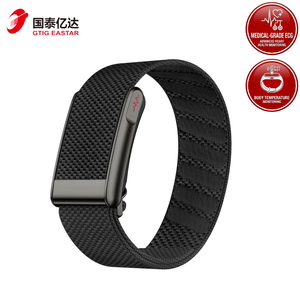
E500 ECG Screenless AI Health IP68 Smart Bracelet
- Dual-wavelength PPG + Single-lead ECG
- IP68 continuous immersion rating
- AI-assisted arrhythmia screening
Turnkey OEM/ODM continuous vital monitoring platforms equipped with multi-wavelength optical PPG sensors, single-lead ECG arrays, and clinical-grade health algorithms.
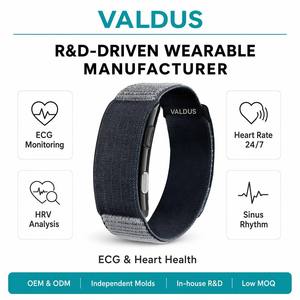


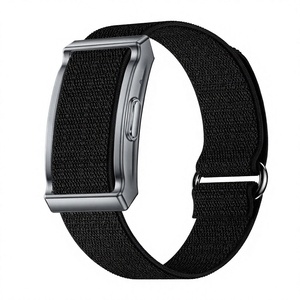
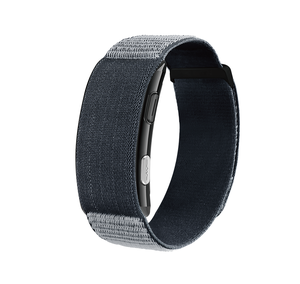
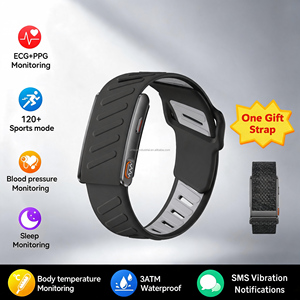
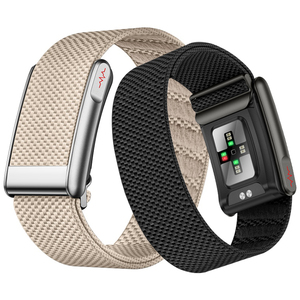
As a leading China PPG sensor manufacturer and Tier-1 OEM/ODM supplier, our engineering framework solves the foundational challenge of wearable optics: extracting clean, clinical-grade pulsatile signals from dynamic microvascular bed reflections amid severe motion artifacts and varying ambient lighting conditions.
Modern photoplethysmography relies on transmitting micro-bursts of specific light wavelengths—predominantly Green (525nm–535nm) for superficial microvascular perfusion, Red (660nm) and Near-Infrared (940nm) for arterial oxygen saturation (SpO2)—into the dermal layer. The reflected light intensity is captured by high-sensitivity PIN photodiodes, converted to photocurrent, and amplified via low-noise Analog Front-End (AFE) integrated circuits.
Our proprietary optical sensor modules utilize multi-channel light-emitting diode (LED) arrays paired with high-gain photodiode active areas. By physically decoupling the optical emitter-detector path through precision light barriers, we eliminate internal crosstalk and optical short-circuiting, achieving an uncalibrated Signal-to-Noise Ratio (SNR) exceeding 65 dB.
To support global medical device brands, digital health providers, and academic researchers, our custom OEM/ODM sensor solutions adhere to rigorous electronic and mechanical standards:
Integrated Green, Red, Infrared, and Infrared/Amber LED micro-chips with precise spectral tolerances (±2nm) ensuring consistent absorptance coefficients across diverse patient demographics.
24-bit high-resolution ADC sampling channels with integrated Ambient Light Cancellation (ALC) capable of suppressing up to 100uA of continuous background illumination.
316L Stainless Steel or Titanium-coated dry contact electrodes configured for simultaneous single-lead Electrocardiogram (ECG) and Galvanic Skin Response (GSR) registration.
Unfiltered, IP-free raw PPG, ECG, and 3-axis accelerometer waveform streams exported at up to 128 Hz via Bluetooth Low Energy (BLE 5.2) and mobile SDKs.
The global continuous health monitoring market is experiencing a profound paradigm shift. Simple step counting and consumer-grade heart rate estimation are no longer sufficient for institutional buyers, hospital systems, pharmaceutical CROs, and digital therapeutics (DTx) providers. B2B procurement strategies are pivoting toward medically certified, algorithmically validated, and multi-sensor integrated wearable platforms.
Traditional clinical ward workflows rely on manual vital-sign spot-checks conducted every 4 to 8 hours. Deterioration occurring between observation intervals often goes unnoticed, leading to unplanned ICU transfers and prolonged hospital stays. Sourcing managers are actively procuring continuous PPG wearable bands that record cardiovascular dynamics continuously, bridging the clinical monitoring gap across general wards and post-discharge home environments.
A major bottleneck with consumer wearables is the "black-box" proprietary algorithm constraint, which prevents research institutions and pharmaceutical sponsors from auditing underlying raw data. Modern contract manufacturing tenders strictly mandate access to uncompressed, time-synchronized photoplethysmography (PPG) waveforms, ECG rhythm strips, and tri-axial acceleration vectors. This allows data scientists to develop custom digital biomarkers for conditions such as sepsis early onset, atrial fibrillation (AFib), and surgical recovery indices.
Standalone optical pulse rate detection is subject to motion artifacts during daily physical activities. By pairing an optical PPG sensor with a single-lead ECG dry electrode layout on a screenless wristband platform, smart algorithms calculate Pulse Transit Time (PTT)—the delay between the R-wave peak of the ECG and the onset of the optical PPG pulse wave. PTT serves as a clinically validated surrogate for non-invasive continuous blood pressure (NIBP) estimation without an inflatable cuff.
With stringent global medical device regulations—such as EU CE-MDR and US FDA 510(k)—procurement directors are consolidating supply chains toward China PPG sensor manufacturers operating certified ISO 13485 manufacturing environments. Full component traceability, medical-grade skin biocompatibility testing (ISO 10993), and robust cybersecurity protocol compliance (GDPR/HIPAA) have transitioned from optional features to mandatory sourcing criteria.
As an established China PPG sensor manufacturing leader, our production facility features automated surface-mount technology (SMT) lines, high-precision optical alignment tooling, and ISO Class 7 cleanrooms designed for medical device assembly. Our turnkey OEM/ODM capabilities support global health technology brands from initial optical simulation to mass production.
Every optical PPG module undergoes automated spectroradiometer testing to verify LED peak wavelength accuracy, luminous flux, and photodiode dark-current leakage tolerances before encapsulation.
Utilizing medical-grade liquid silicone injection molding and ultrasonic structural welding, our smart bracelets achieve IP68 and 3ATM/5ATM waterproof ratings suitable for continuous multi-week patient wear.
Our engineering team collaborates directly with hospital networks, clinical trial coordinators, and medical device distributors worldwide. By deploying our certified screenless PPG/ECG wearables across general wards and remote patient monitoring (RPM) programs, health systems report up to a 40% reduction in manual nursing documentation time alongside improved early clinical deterioration detection scores.
Technical insights and operational guidelines for hardware procurement officers, bio-medical engineers, and OEM project managers.