
Top-Rated Wearable Health Monitors & Smart Bracelets
Direct from audited OEM/ODM manufacturing facilities: Medically validated, screenless, and high-precision physiological monitoring hardware engineered for healthcare institutions, senior telecare, and decentralized research.
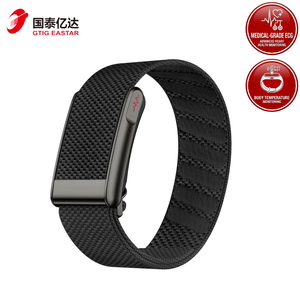
E500 ECG Screenless AI Health IP68 Smart Bracelet Heart Rate Blood Pressure Sleep Multisport Monitor MF90 MF91 ETQ13 2026
Contact Us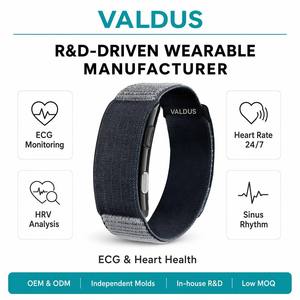
VALDUS VITRO ODM/OEM Manufacturer Screenless 2026 ECG Health Designed for Every Activity Smart Fitness Tracker Band Bracelet
Contact Us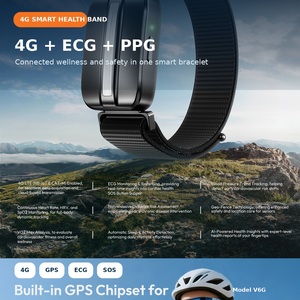
V6G 4G Smart Health Bracelet with ECG PPG GPS SOS Heart Rate SpO2 Sleep Monitoring for Seniors OEM ODM
Contact Us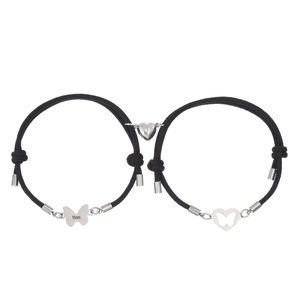
Fashion Hot Selling Minimalist Trendy Steel Color Electrocardiogram Magnetic Couple Bracelets Gift Set Wholesale
Contact Us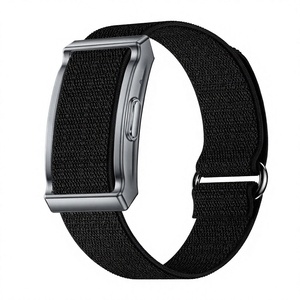
Screenless Smart Bracelet G70 ECG Heart Rate Blood Oxygen Body Temperature Sleep Monitoring Sports Fitness Band
Contact Us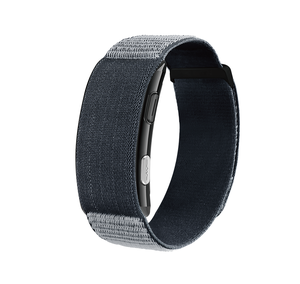
VITRO Smart Android IOS 1ATM Waterproof Fitness Bracelet with Heart Rate Sleep Tracker Remote Control ECG BT Call & Alarm Clock
Contact Us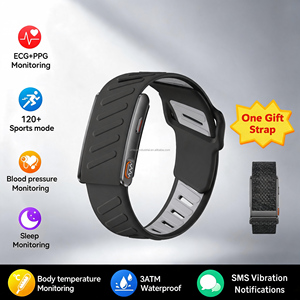
ECG No Screen Smart Bracelet 180mAh 15 Days Battery 3ATM Waterproof Heart Rate SpO2 Pedometer Sleep Monitor Fitness Android
Contact Us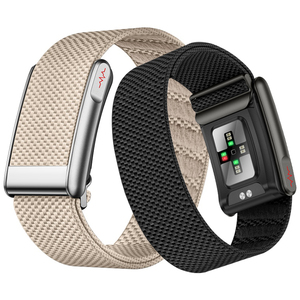
2026 New E500 Screenless Smart Bracelets with NFC ECG Blood Pressure Body Temperature Health Fitness Tracker Band Without Screen
Contact UsThe Paradigm Shift in Continuous Physiological Monitoring: Industry White Paper
Healthcare systems, pharmaceutical clinical trial sponsors, and remote patient monitoring (RPM) providers are experiencing a fundamental shift away from intermittent, spot-check monitoring toward uninterrupted continuous telemetry. Legacy clinical protocols reliant on manual nursing rounds conducted every 4 to 6 hours inherently suffer from observation blind spots. Physiological deterioration—such as sudden respiratory distress, nocturnal cardiac arrhythmias, or early-stage septic shock—frequently initiates between routine checks, delaying critical interventions.
Leading global exporters of wearable monitors are redefining medical-grade wearable architecture. Modern smart bracelets no longer serve merely as lifestyle fitness bands; they function as miniaturized, multi-sensor diagnostic hubs. By integrating multi-wavelength Photoplethysmography (PPG), single-lead Electrocardiography (ECG), continuous galvanometric skin response (GSR), surface body temperature sensors, and 3-axis accelerometry, these continuous monitoring platforms allow hospital wards and out-of-hospital telecare platforms to track up to 19 physiological parameters simultaneously in real time.
Critical Industry Insight: Consumer Trackers vs. Medical-Grade Wearable Telemetry
A primary bottleneck for enterprise buyers is distinguishing between consumer-grade fitness trackers and true medical-grade telemetry bands. Consumer wearables utilize proprietary, black-box smoothing algorithms that suppress raw optical signal artifacts. While suitable for casual step tracking, they are scientifically invalid for clinical diagnostic modeling. In contrast, certified medical wearable exporters provide raw PPG (green, red, infrared) and raw ECG waveform export at high sampling rates (up to 128 Hz), empowering data science teams and research partners to construct validated digital biomarkers without vendor lock-in.
Future Procurement Trends in Wearable Health Technology
Key market drivers reshaping B2B wearable procurement, international supply chain criteria, and institutional buying behaviors through 2030.
1. Screenless Form Factors for Inpatient Compliance
Institutional buyers are rapidly transitioning to screenless smart bracelets for hospital ward admission and senior telecare. Removing the display drastically reduces battery consumption—enabling 7 to 15 days of continuous telemetry—while eliminating patient distraction, accidental setting modifications, and screen breakage risks.
2. Direct EMR & REST API Cloud Interoperability
Modern procurement tenders strictly require open API and mobile SDK availability over proprietary standalone apps. Health systems demand seamless data streaming directly into Electronic Medical Records (EMR/EHR) platforms like Epic, Cerner, or customized HL7 FHIR cloud environments to automate Early Warning Score (EWS) calculations.
3. Regulatory Stringency: CE-MDR & FDA 510(k)
Global regulatory oversight has tightened. Institutional importers prioritize manufacturing partners operating under strict ISO 13485 quality management systems whose devices hold verified CE-MDR certification and FDA 510(k) clearance, guaranteeing clinical validation against gold-standard bedside monitors.
Technological Innovations & Hardware Engineering Breakthroughs
The wearable monitoring ecosystem is undergoing continuous hardware and software refinement. Exporters at the forefront of medical technology are integrating groundbreaking innovations that allow deeper physiological insights while minimizing power profiles:
High-Density Multi-Wavelength Optical Arrays
Modern medical wearables incorporate multi-spectral optical sensor arrays combining Green (525nm), Red (660nm), and Infrared (940nm) light-emitting diodes paired with high-sensitivity photodetectors. Green wavelengths penetrate cutaneous microvascular beds to capture high-fidelity heart rate variability (HRV) during movement, while synchronized Red and Infrared wavelengths compute arterial oxygen saturation (SpO2) via photoplethysmography differential absorption ratios.
Single-Lead ECG Electrodes & AI Arrhythmia Screening
Incorporating dry-contact titanium or stainless-steel electrodes directly into the wristband module enables single-lead electrocardiogram acquisition on demand or upon rhythm anomaly detection. Advanced micro-controller units (MCUs) running lightweight edge AI neural networks continuously screen raw ECG signals for Atrial Fibrillation (AFib), premature ventricular contractions (PVCs), and sinus bradycardia/tachycardia prior to cloud transmission.
Continuous Galvanic Skin Response (GSR) & Core Thermal Tracking
Integrating continuous micro-calorimetric surface temperature sensors alongside Galvanic Skin Response (GSR) sensors allows the tracking of autonomic nervous system responses. This data provides objective measurements for nocturnal fever spikes, physical exertion recovery, acute stress responses, and early indications of systemic inflammation or sepsis onset.
Why Partner With Us: Global OEM/ODM Manufacturing Leadership
As a premier European-engineered and globally distributed wearable medical technology innovator, our manufacturing infrastructure and software development architecture are built specifically to support high-stakes clinical and enterprise supply chains.
ISO 13485 Certified Manufacturing
Every batch of continuous vital signs smart bracelets is produced under audited ISO 13485 quality management standards. From cleanroom optical calibration to automated thermal stress testing, our hardware quality guarantees medical-grade precision across millions of operational hours.
End-to-End SDK & Raw Data Access
We empower pharmaceutical sponsors, CROs, and digital health developers with unrestricted access to raw PPG (Green, Red, IR) and single-lead ECG data at up to 128 Hz. Integrate our hardware into your proprietary iOS/Android applications via native SDKs or utilize our REST APIs for automated cloud data ingestion.
Frequently Asked Questions for Wearable Monitor Procurement
Authoritative answers to common technical, regulatory, and supply chain queries encountered by institutional buyers and healthcare equipment importers.
Elevate Your Healthcare Telemetry & Wearable Monitoring Supply Chain
Partner with a certified global exporter of continuous health monitoring bracelets. Request technical datasheets, evaluate sample devices, or discuss custom OEM/ODM production volumes with our engineering team.