
Featured Medical & Fitness Wristband Recommendations
Explore high-precision OEM/ODM smart bracelets engineered for continuous vital signs monitoring, hospital ward automation, remote patient monitoring (RPM), and commercial wellness programs.
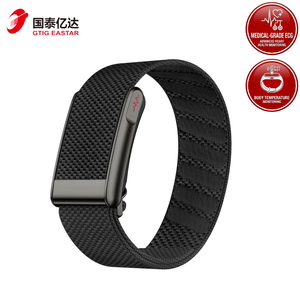
- Screenless continuous ECG & PPG tracking
- AI-driven cardiac arrhythmia analysis
- IP68 deep water resistance
- Multi-sport & sleep monitoring
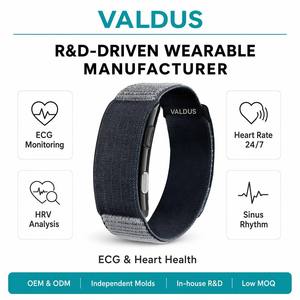
- Designed for continuous clinical trials
- Ergonomic 24/7 patient compliance wear
- High-frequency single-lead ECG capture
- Turnkey OEM/ODM firmware customizing
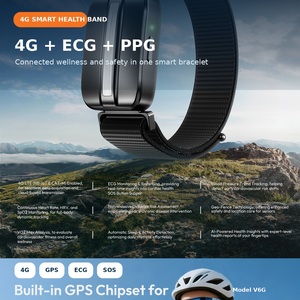
- Standalone 4G LTE cellular connectivity
- Real-time GPS tracking & SOS alert button
- Integrated ECG, SpO2, and fall detection
- Ideal for telecare & remote elder care
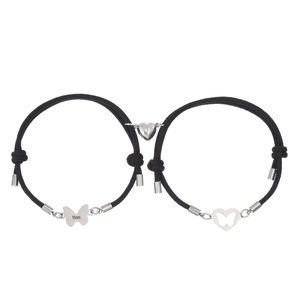
- Premium stainless steel aesthetic finish
- Integrated magnetic closure mechanism
- Wholesale gift & lifestyle market fit
- Customizable laser branding options
- Continuous skin temperature sensing
- Ultra-low power optical PPG sensor array
- Continuous SpO2 blood oxygen tracking
- Lightweight design maximizes battery life
- Cross-platform iOS & Android sync
- 1ATM water resistance standard
- Bluetooth calling & remote notifications
- Automated cardiac stress profiling
- 180mAh high-density Li-Po battery
- 3ATM dynamic water protection
- Up to 15 days continuous monitoring
- Low-latency Bluetooth 5.2 data dump
- Integrated NFC access & identity control
- Blood pressure waveform trend estimation
- Screenless form factor prevents distraction
- Multi-channel bio-impedance sensing
1. Industry Paradigm Shift: The Evolution of Health Wristband Manufacturing
The global medical wearable and smart wristband market is undergoing a structural transition. What began as a consumer-centric step-counting accessory ecosystem has matured into a critical pillar of decentralised healthcare, continuous ward monitoring, and pharmaceutical research. Strategic B2B procurement directors, healthcare system integrators, and digital health solution vendors are no longer evaluating suppliers based solely on unit cost or battery standby time. Instead, the procurement paradigm has pivoted toward medical-grade measurement accuracy, raw data accessibility, regulatory compliance (CE-MDR and FDA 510(k)), and seamless enterprise EMR integration.
Traditional spot-check patient evaluations in general hospital wards take place every 4 to 6 hours. Clinical studies repeatedly demonstrate that physiological deterioration—such as sudden respiratory distress, nocturnal sepsis onset, or silent atrial fibrillation—frequently develops in the unmonitored windows between nursing rounds. By deploying continuous health wristbands equipped with multi-wavelength Photoplethysmography (PPG), Electrocardiography (ECG), Galvanic Skin Response (GSR), and surface body temperature sensors, healthcare providers convert isolated data points into high-resolution, continuous physiological streams.
2. Comparative Architecture: Evaluating the Top 10 Manufacturers
Navigating the complex global vendor landscape requires a rigorous evaluation framework. The top tier of OEM/ODM health wristband manufacturers distinguishes itself by bridging hardware micro-engineering with clinical software certification. Below is an executive matrix outlining the critical technical capabilities required from tier-1 suppliers in 2026 and beyond:
| Manufacturer Capability Tier | Primary Target Applications | Sensor Architecture | Data Governance & Regulatory | Integration Methods |
|---|---|---|---|---|
| Tier 1: Clinical-Grade OEM/ODM | General hospital wards, RPM, pharma clinical trials | Multi-channel PPG (Green/Red/iR), Single-lead ECG, GSR, Skin Temp, 3-Axis Accel | CE-MDR Certified, FDA 510(k) Cleared, ISO 13485, GDPR/HIPAA compliant | Open REST APIs, Mobile SDKs, Raw Signal Access (up to 128 Hz), HL7/FHIR |
| Tier 2: Commercial Telehealth Suppliers | Corporate wellness, senior care telecare, insurance programs | Standard Dual-Green PPG, Estimated ECG, 3-Axis Accelerometer | ISO 9001, CE-EMC, FCC, RoHS, Local Consumer Health Certifications | Proprietary Cloud Portal, Standard Bluetooth API, CSV Data Export |
| Tier 3: Consumer Fitness Manufacturers | Lifestyle tracking, mass market retail, promotional fitness | Single PPG LED, Basic Motion Accelerometer | Standard CE/FCC Consumer Directives | Closed Ecosystem, User App Only, Bluetooth Sync |
Corporate Strengths & Clinical Validation Infrastructure
Built upon proven European engineering, clinical trial consortia, and strategic distribution partnerships with MedTech pioneers like Medtronic and Netcare.
CE-MDR & FDA Certification
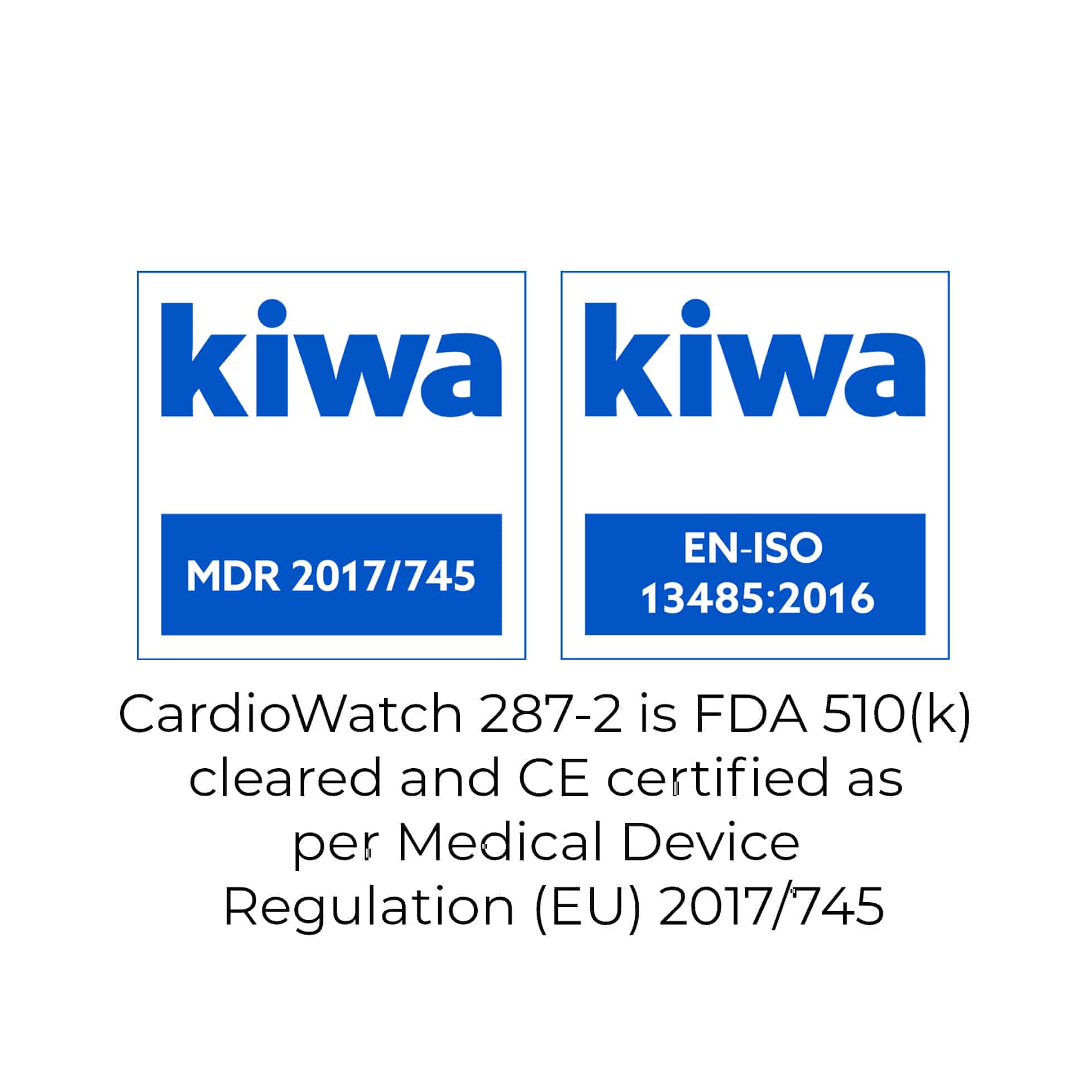
Manufactured under ISO 13485 quality systems and audited by notified body Kiwa. Devices meet stringent European Medical Device Regulation (CE-MDR) standards and possess FDA 510(k) market clearance.
Unrestricted Raw Data Access
Empower clinical research and AI biomarker development with IP-free access to raw PPG (green, red, infrared), single-lead ECG rhythm strips, acceleration, and GSR data sampled at up to 128 Hz.
Seamless EMR & API Integration
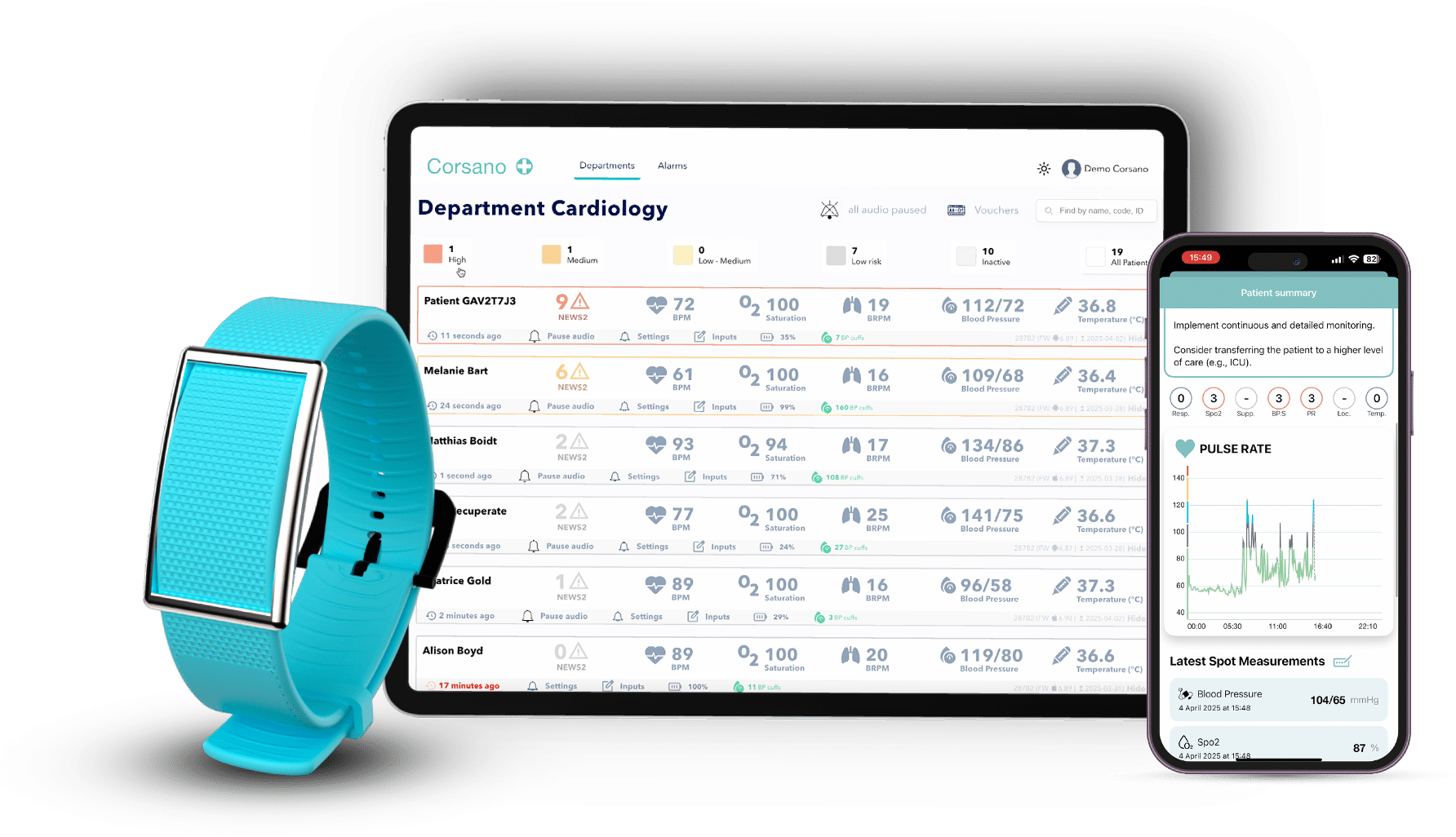
Fully documented RESTful APIs and mobile SDKs allow clinical IT teams to stream continuous vital signs and Early Warning Scores (EWS) directly into EPIC, Cerner, or proprietary hospital dashboards.
End-to-End Clinical Wearable Architecture
From wrist-worn sensor acquisition to local Bluetooth gateway routing, encrypted cloud processing, and direct integration into hospital Electronic Medical Records (EMR).
3. Strategic Sourcing Trends in Enterprise Wearable Procurement
As procurement officers look toward 2026–2030 contract cycles, several micro-electronic and data architectural trends dominate vendor qualification standard operating procedures (SOPs):
A. Transition to Screenless Form Factors for Inpatient & Trial Compliance
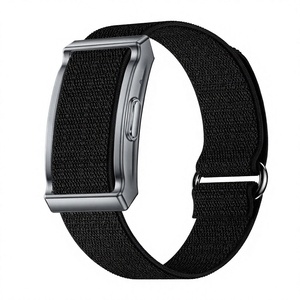
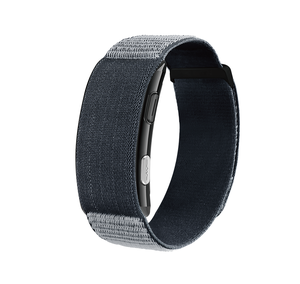
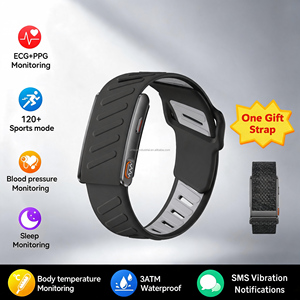
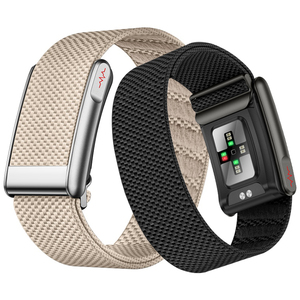
While consumer smartwatches prioritize bright AMOLED touchscreen displays, enterprise clinical monitors are increasingly shifting to screenless wristband designs (such as the E500 and G70 series). Removing the display eliminates patient distraction, prevents unintentional setting toggles, drastically reduces power consumption, and permits high-frequency sampling (128Hz raw signal capture) without requiring daily recharging. Screenless designs also ensure compliance in pediatric and cognitive care units.
B. Photoplethysmography (PPG) and Electrocardiography (ECG) Fusion Sensor Arrays
Single-optical-sensor wristbands struggle with motion artifacts and periferal vasoconstriction. Next-generation ODM suppliers integrate multi-spectral LED clusters combining green (525nm for superficial microvascular pulse rate), red (660nm), and infrared (940nm for deep tissue oxygen saturation / SpO2), coupled with dry-contact stainless steel or titanium electrodes for single-lead ECG rhythm acquisition. Algorithm-driven signal fusion cancels motion noise during dynamic physical activity.
C. Energy-Harvesting Micro-Chips & Narrow-Band IoT (NB-IoT)
Advanced research consortia (such as the European LifeTime project) are pioneering self-sustaining, energetically autonomous health bands. By combining micro solar ambient light harvesters with ultra-low-power Narrow-Band IoT cellular chips, future wristbands will communicate vital statistics directly to public cloud infrastructure without requiring mobile phone pairing or local Wi-Fi bridges.
4. Regulatory Compliance & Quality Management Standard
For enterprise purchasing agents in the European Union and the United States, importing non-compliant wearables carries severe legal and financial risks under MDR 2017/745 and FDA medical software mandates. Enterprise buyers must verify that their chosen manufacturer maintains validated Quality Management Systems (QMS).
Kiwa Audited CE-MDR Certification
Medical device regulations mandate that claims regarding continuous heart rate variability (HRV), continuous respiration rate, early warning deterioration scoring, and arrhythmia detection be backed by notified-body audited clinical studies. Standard CE-EMC consumer approval is legally insufficient for clinical documentation.
- ISO 13485 certified design & manufacturing lines
- Fully traceable post-market surveillance (PMS)
- ISO 14971 medical device risk management protocol
- Cybersecurity compliance adhering to EU NIS2 directives
Frequently Asked Procurement & Technical Questions (FAQ)
Expert guidance for B2B buyers, medical device importers, and software integrators.
Q1: What is the primary difference between consumer health bands and medical-grade OEM smart bracelets?
Consumer health bands are designed for non-diagnostic wellness tracking, utilizing broad algorithm estimates with low sampling frequencies to preserve consumer battery life. Medical-grade smart bracelets (such as CE-MDR certified devices) undergo rigorous clinical trial validations against reference ECG monitors and arterial blood gas metrics. Furthermore, medical devices are produced under ISO 13485 conditions, provide audit-ready data security (GDPR/HIPAA), and offer open SDK/API access to uncompressed raw physiological data streams (up to 128 Hz).
Q2: Can our software team access raw PPG, ECG, and accelerometer data for custom AI model training?
Yes. Leading OEM/ODM manufacturers featured in this whitepaper provide IP-free, unrestricted access to raw multi-wavelength optical PPG (green, red, infrared), single-lead ECG wave data, 3-axis accelerometer values, and Galvanic Skin Response (GSR) signals via Bluetooth SDKs and cloud REST APIs. This allows pharmaceutical researchers and AI developers to build proprietary digital biomarkers without vendor lock-in.
Q3: How do screenless smart bracelets improve patient compliance in clinical trials and hospital wards?
Screenless designs remove visual distractions, eliminate accidental touch-screen interactions by elderly or cognitively impaired patients, and dramatically decrease device failure rates caused by screen impact. Additionally, eliminating display power draw extends operating battery life, permitting continuous 24/7 multi-sensor sampling for multi-week monitoring periods without requiring frequent device removal for charging.
Q4: What integration protocols are available for hospital Electronic Medical Record (EMR) systems?
Data collected by the wristband is transmitted via low-energy Bluetooth (BLE 5.2) to a hospital gateway or mobile companion application, which securely routes encrypted payloads to cloud microservices. From the cloud backend, parameters and automated Early Warning Scores (EWS/NEWS2) are converted into HL7 or FHIR standards, enabling direct population of patient charts in platforms like EPIC, Cerner, or custom hospital dashboards.
Q5: What OEM/ODM customization options are supported for enterprise orders?
Enterprise procurement packages typically include custom enclosure branding (laser etching), medical-grade silicone or fabric strap coloring, custom packaging boxes, firmware-level BLE broadcast name modifications, specialized SDK parameter thresholds, and tailored cloud API endpoint routing. Minimum order quantities (MOQs) vary depending on the level of micro-hardware modification required.
Q6: What water ingress protection rating is recommended for continuous inpatient monitoring?
For inpatient hospital wards and post-discharge remote patient monitoring, a minimum rating of IP68 or 3ATM is strongly recommended. This ensures that the health wristband remains fully operational during daily patient hygiene routines (showering and hand washing) and withstands rigorous chemical disinfection protocols between patient reassignments using hospital-grade isopropyl or bleach wipes.
Request Enterprise Pricing & Technical Specifications
Consult with our senior biomedical engineers and international sourcing specialists to evaluate pilot batch quantities, raw API data documentation, and CE-MDR/FDA certification packages.
Get a Quote