
Next-Gen OEM/ODM Vital Sign & Respiratory Monitoring Wearables
Screenless high-compliance designs, multi-sensor integration, and IP-free raw signal access (up to 128 Hz) for enterprise partners.
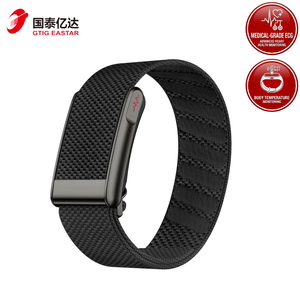
E500 ECG Screenless AI Health IP68 Smart Bracelet
- Derived Respiration Rate & ECG
- IP68 Waterproof Medical Enclosure
- Multi-Day Continuous Telemetry
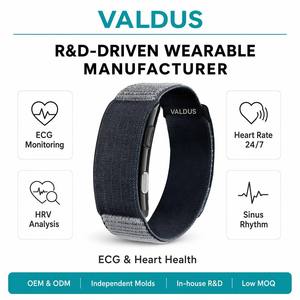
VALDUS VITRO ODM/OEM Screenless Health Band
- High-Compliance 24/7 Wearability
- PPG Respiratory Motion Algorithm
- Custom Branding & SDK Integration
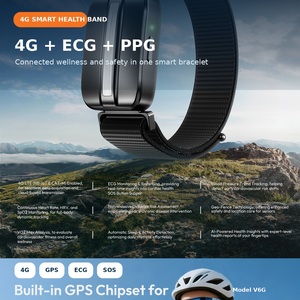
V6G 4G Telemetry Smart Health Bracelet
- Standalone 4G Direct Cloud Sync
- ECG, PPG SpO2 & SOS Emergency
- Ideal for Senior RPM Pathways
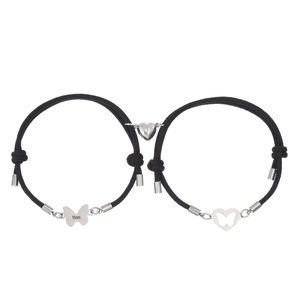
Minimalist Electrocardiogram Magnetic Health Series
- Sleek Metallic Design Form Factors
- Heart Rate & Pulse Wave Sensors
- OEM Custom Packaging & Logo
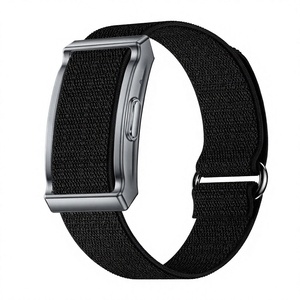
G70 Screenless ECG & Temperature Sensor Band
- Continuous Skin Temperature & SpO2
- Screenless Ultra-Long Battery Life
- Raw Signal Export (Up to 128 Hz)
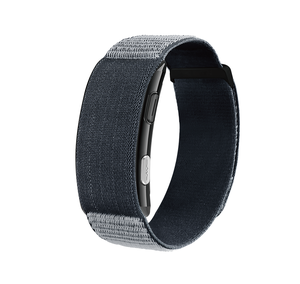
VITRO 1ATM Waterproof Continuous Health Monitor
- 1ATM Submersible Waterproofing
- Remote Patient Escalation Triggers
- Android & iOS REST API Integration
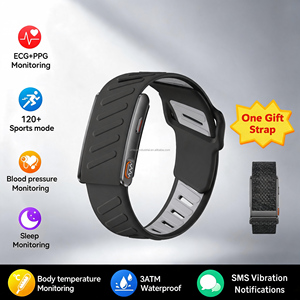
Screenless 15-Day Battery Telemetry Bracelet
- 180mAh Optimized Power MCU
- 3ATM Water Resistance Rating
- Automated Early Warning Scoring
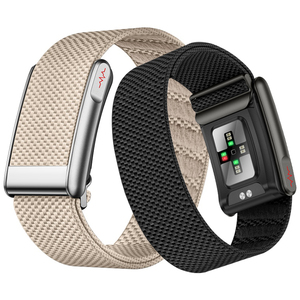
2026 Flagship E500 NFC ECG & Blood Pressure Band
- Integrated NFC Patient Identification
- Comprehensive 19-Parameter Derivation
- Hospital EMR & EHR Interoperability
Medical-Grade Continuous Respiratory & Physiological Telemetry
In traditional general ward settings, vital signs are documented periodically during nursing rounds, leaving critical hours unmonitored. Early signs of acute respiratory distress, sepsis, or cardiovascular deterioration frequently emerge between these manual spot-checks.
As a specialized OEM/ODM respiratory monitor manufacturer and global exporter, our hardware engineering focuses on closing this clinical surveillance gap. Utilizing sophisticated multi-wavelength Photoplethysmography (PPG)—combining Green, Red, and Infrared spectrums—alongside single-lead Electrocardiography (ECG) and micro-axial accelerometers, our wrist-worn platforms accurately derive continuous Respiration Rate (RR), Heart Rate Variability (HRV), peripheral capillary oxygen saturation (SpO2), and skin temperature.
Clinical Validation Integrity: Built under ISO 13485 quality management systems, our wearable monitoring architecture complies with stringent regulatory frameworks (CE-MDR certified pathways and FDA 510(k) clearance requirements), bridging the line between clinical accuracy and patient compliance.
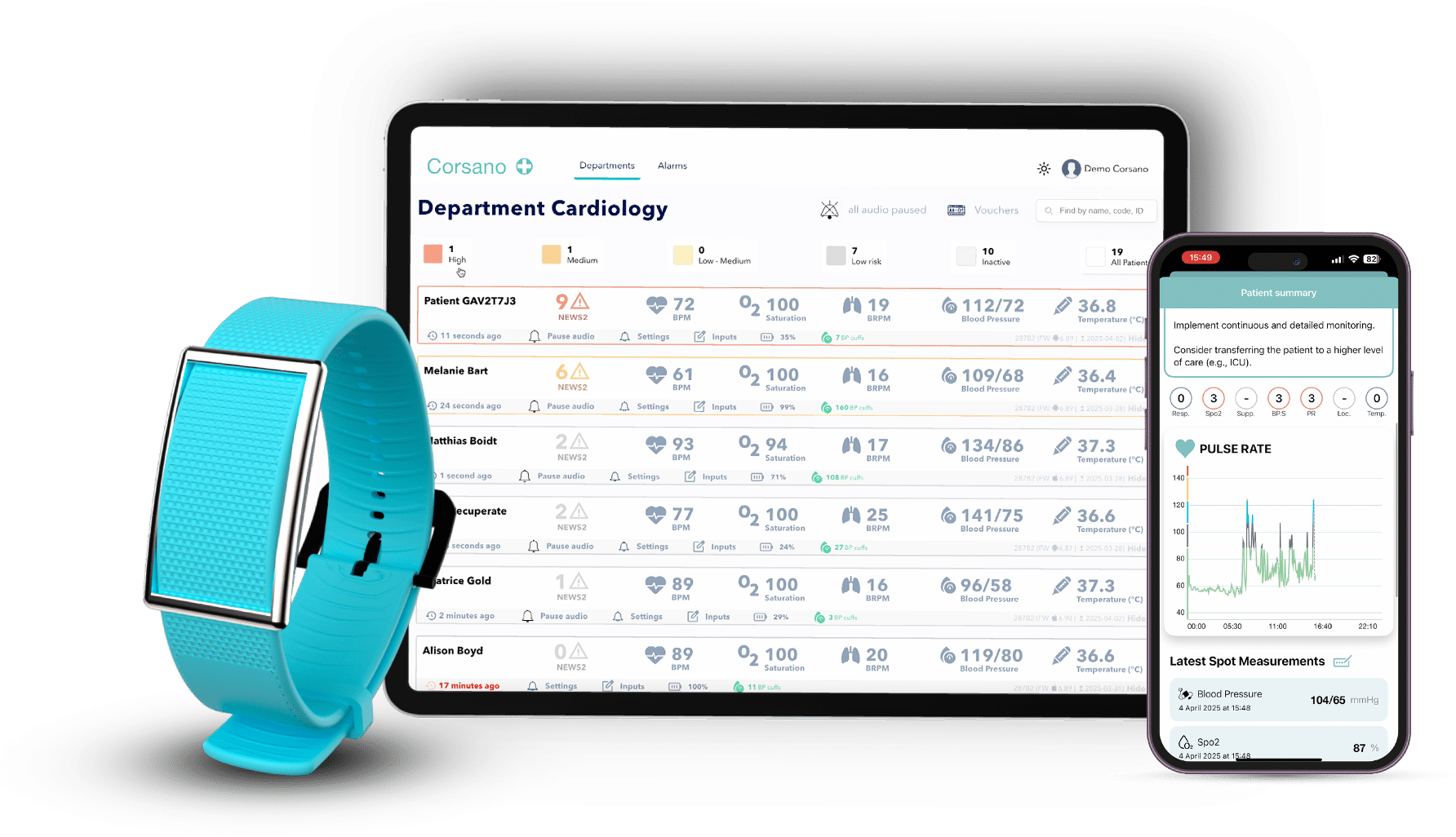
Why Global MedTech Brands Choose Our OEM/ODM Platform
Flexible manufacturing, uncompromised raw data pipelines, and hospital enterprise integration.
Derivation of 19 Vital Parameters
Beyond basic pulse tracking, our algorithm suite continuously calculates Respiration Rate from PPG peak modulation, baseline wander, and R-R interval spectral analysis, yielding clinically actionable respiratory trends.
Unrestricted IP-Free Raw Data Access
We empower academic research groups, CROs, and pharmaceutical sponsors by providing full, unencrypted access to raw sensor arrays (PPG green/red/IR, 128Hz ECG, accelerometer) for proprietary AI model development.
ISO 13485 & Regulatory Ready
Avoid years of regulatory delay. Our white-label wearables are manufactured in audited medical facilities, supplied with complete technical files, biocompatibility documentation, and EMC compliance reports.
Seamless EMR & Cloud Interoperability
Engineered for enterprise connectivity. Transfer continuous patient streams effortlessly into hospital EHR systems via documented REST APIs, BLE gateways, mobile SDKs, and HL7/FHIR interfaces.
Ultra-Low Power Microcontroller Unit
Screenless form factors maximize battery longevity up to 15 days on a single magnetic charging cycle, eliminating frequent recharging friction and boosting patient protocol compliance to over 95%.
Custom Mechanical & Casing ODM
From custom strap materials (hypoallergenic silicone, medical TPU, stainless steel) to customized laser engraving and bespoke firmware bootloaders, we tailor hardware precisely to your specification.
Future Sourcing & Procurement Trends in Respiratory Telemetry (2026–2030)
The global market for continuous vital signs and respiratory monitoring devices is undergoing a structural paradigm shift. Health systems, CROs, and medical hardware distributors are rapidly transitioning away from legacy episodic spot-check monitors toward ambient, continuous, and non-intrusive wrist-worn form factors.
1. Shift from Ward Spot-Checks to Continuous Early Warning
Hospitals are adopting National Early Warning Scores (NEWS2) powered by continuous biometric telemetry. Procuring monitors that continuously measure respiratory rate—the most sensitive early marker of physiological deterioration—allows clinical teams to intervene hours before respiratory failure or cardiac arrest occurs.
2. Decoupling Hardware from Proprietary SaaS Lock-In
Modern medical equipment buyers resist hardware tied to rigid, closed SaaS ecosystems. The current procurement trend heavily favors OEM suppliers offering open API architectures and raw signal export (ECG/PPG at 128 Hz), enabling healthcare providers to ingest raw biometrics into their own proprietary algorithms or hospital central stations.
3. Rise of Decentralized Clinical Trials (DCT)
Pharmaceutical sponsors require medical-grade wearables validated for remote multi-week patient wear. Key purchasing criteria now center on battery performance (>7-15 days), screenless high-compliance enclosures, and multi-sensor fusion (ECG + PPG + Temperature + SpO2) within a single lightweight casing.
4. AI-Powered Biomarker Acceleration
Next-generation ODM requirements demand on-device edge computing capable of executing preliminary signal quality filtering and respiratory peak detection directly on the MCU, reducing Bluetooth data payload while maintaining clinical accuracy.
OEM/ODM Wearable Platform Specifications
Comprehensive comparative overview for engineering and procurement evaluation.
| Parameter / Feature | Hospital Ward Standard Spec | RPM / Senior Telemetry Spec | Clinical Trial Raw Data Spec |
|---|---|---|---|
| Respiratory Rate (RR) Derivation | PPG Modulation (8-40 rpm) | Continuous Ambient Derivation | Raw PPG + ECG RSA Spectral Analysis |
| ECG Hardware | Single-Lead Dry Electrodes | On-Demand / Continuous ECG | 128 Hz Sampling Uncompressed Raw Waveform |
| Optical Sensors | Multi-Wavelength (Green/Red/IR) | Dual Green PPG + SpO2 Red/IR | Raw 3-Channel Optical Signal Export |
| Battery Life & MCU | 7-10 Days Active Transmission | 10-15 Days Ultra-Low Power | Continuous Burst Logging Protocol |
| Connectivity | BLE 5.2 / Hospital Gateway Sync | Standalone 4G LTE-M / NB-IoT / BLE | BLE Direct to Mobile SDK / Cloud Gateway |
| Waterproof Rating | IP68 / 1ATM Medical Grade | IP68 Daily Living Water Resistance | 3ATM Reinforced Enclosure |
| Regulatory Compliance | CE-MDR Class IIa / ISO 13485 | CE / FCC / RoHS / HIPAA Aligned | ISO 13485 Cleanroom Production |
Frequently Asked Procurement & Technical Questions
Direct answers for medical buyers, systems integrators, and OEM brand managers.
Q: How does your wearable derive continuous Respiration Rate (RR)?
Our proprietary optical algorithm extracts respiration rate by analyzing three distinct physiological phenomena within the Photoplethysmography (PPG) signal: Respiratory Induced Intensity Variation (RIIV), Respiratory Induced Amplitude Variation (RIAV), and Respiratory Sinus Arrhythmia (RSA) derived from heart rate interval fluctuations. This multi-modal approach yields accurate breathing rates even during mild ambulatory motion.
Q: Are you a direct manufacturer or a trading company?
We operate audited ISO 13485 certified manufacturing facilities specializing in OEM and ODM medical wearables. We control the complete lifecycle: SMT electronics assembly, optical sensor calibration, cleanroom mechanical casing, custom firmware development, and international export clearance.
Q: Can our team access uncompressed raw PPG and ECG data?
Yes. Unlike consumer smartwatch brands that restrict access to high-resolution signals, our SDK and cloud APIs provide IP-free access to raw 128 Hz single-lead ECG waveforms, multi-wavelength PPG arrays (Green, Red, IR), tri-axial accelerometer data, galvanic skin response (GSR), and skin temperature streams.
Q: What customization services are included under ODM agreements?
Our ODM solutions encompass customized mechanical casing design, private-label branding and packaging, bespoke firmware algorithms, custom BLE advertising payloads, direct gateway pairing protocols, and assistance with local medical device regulatory filings (CE-MDR, FDA 510(k), ANVISA, NMPA).
Q: How does the platform integrate into hospital EMR systems?
Patient data flows securely from the wrist monitor via BLE to an in-ward gateway or mobile application, which then transmits formatted biometrics over HTTPS/WSS to our cloud engine. From there, documented REST APIs and HL7/FHIR adapters push continuous parameters directly into hospital EMR systems, electronic nursing dashboards, or remote monitoring software.
Q: What is the Minimum Order Quantity (MOQ) for OEM/ODM projects?
For standard white-label ordering with customized logo printing and packaging, our typical MOQ starts at 500 units. For complete ODM engineering projects involving custom tooling, bespoke PCB design, or specialized regulatory submissions, MOQs are determined based on engineering scope. Pilot evaluation kits are available upon request.
Q: What regulatory support do you provide for international export?
As an established exporter, we provide comprehensive technical dossiers, including ISO 13485 certificates, CE declarations of conformity, CB scheme electrical safety reports (IEC 60601-1 / IEC 60601-1-2 EMC), biocompatibility test results (ISO 10993), and MSDS battery transport documentation.
Q: Why are screenless designs preferred for medical surveillance?
Screenless wearables drastically reduce power consumption, extending battery life up to 15 days. More importantly, they prevent patient tampering, eliminate distraction, reduce user anxiety, and deliver significantly higher protocol compliance in elderly, pediatric, or general ward clinical trials.