
Precision Multi-Parameter Vital Signs Monitors
Explore our certified OEM/ODM vital sign monitoring systems engineered for human clinical wards, emergency response, intensive care, and specialized veterinary medicine.
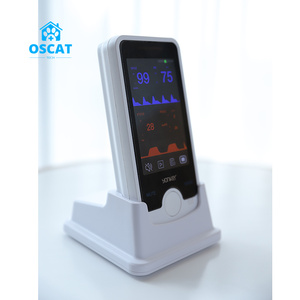
OSCAT VE4 Vet Multi-Parameter Monitor with EtCO2 & NIBP
- Mainstream/Sidestream EtCO2 Capnograph
- High-precision Veterinary NIBP & SpO2
- Multi-lead ECG & Temperature Telemetry
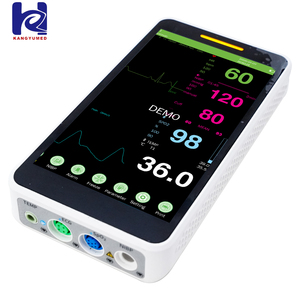
Intelligent Handheld Multi-Parameter Spot-Check Device
- Ultra-portable ergonomic clinical design
- Continuous SpO2, PR, and Temp tracking
- Wireless EMR data transmission interface
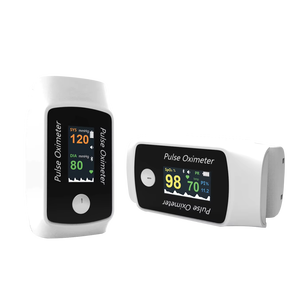
BERRY Wireless Multi-Parameter Monitor with Mobile App Integration
- CE Certified electric-powered reliability
- Real-time app connectivity & continuous logging
- Non-invasive blood pressure & arrhythmia check
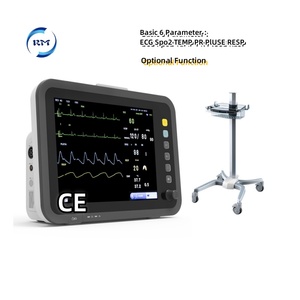
12.1-Inch ICU Patient Monitor with Dual IBP & Cardiac ECG
- High-resolution 12.1" TFT color display
- Dual Invasive Blood Pressure (IBP) support
- Advanced arrhythmia analysis & EtCO2 module
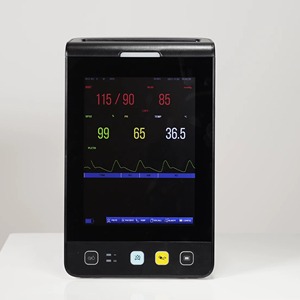
Ultra-Thin Portable TFT Multi-Parameter Monitor (MTR Model)
- Slimline form-factor for ambulatory care
- Dual-mode algorithms (Human / Veterinary)
- Rechargeable lithium battery for continuous use
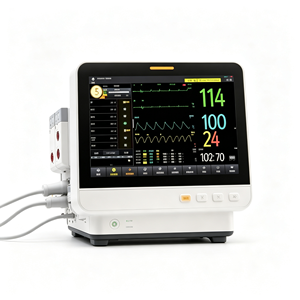
Clinical Modular ICU Patient Monitoring Workstation
- Multi-parameter monitoring (ECG, SpO2, NIBP, RESP)
- Central station networking integration
- Audible/visual multi-level alarms
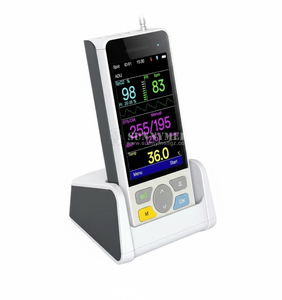
SY-W001N-3 4-Inch Compact Vital Sign Monitor
- Handheld 4" TFT high-contrast display
- Versatile sensor calibration for human/animal
- Ruggedized shock-resistant exterior casing
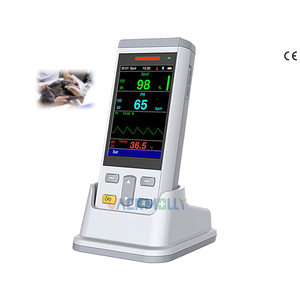
JM-300K Handheld CE-Marked Multiparameter Monitor
- CE-certified vital signs telemetry
- Flexible power architecture (DC / Internal Battery)
- Comprehensive trend memory storage
Proven Medical Engineering at Scale
The Paradigm Shift in Custom OEM Vital Monitor Manufacturing
The modern healthcare ecosystem is undergoing a fundamental structural transition from periodic, manual spot-checking to continuous, data-dense patient monitoring. For medical device brand owners, hospital networks, and pharmaceutical clinical trial sponsors, partnering with a specialized Custom OEM Vital Monitor Manufacturer is no longer merely an exercise in outsourced assembly—it is a strategic decision that bridges biomedical sensor precision, cloud interoperability, and stringent international regulatory compliance.
Historically, multi-parameter patient monitors were designed as heavy, stationary bedside towers confined to Intensive Care Units (ICUs) and operating theaters. However, rising pressures on nursing staff, high general ward readmission rates, and the expansion of Remote Patient Monitoring (RPM) have driven urgent market demand for miniaturized, multi-sensor monitoring platforms. These modern OEM monitors deliver hospital-grade vital signs continuous monitoring both within ward environments and across decentralized post-discharge care pathways.
Clinical Insight: Research indicates that unmonitored general ward blind spots contribute significantly to unpredicted clinical deterioration. Transitioning to continuous physiological signal acquisition (collecting up to 19 distinct vital parameters) enables automated Early Warning Scores (EWS) that alert care teams hours before overt adverse events occur.
Key Technological Pillars of Modern OEM Vital Signs Systems
When selecting a contract manufacturing partner for custom patient monitors, biomedical engineering teams must evaluate hardware and software stack integration across four core technological pillars:
Multi-Sensor Array Architecture
Integration of optical Photoplethysmography (PPG with Green/Red/IR wavelengths), single-lead and multi-lead Electrocardiography (ECG), continuous skin temperature, bio-impedance respiration, and non-invasive continuous blood pressure (cNIBP) into unified sensor platforms.
Unrestricted Raw Signal Access
Unlike consumer smartwatches that output opaque, pre-processed estimates, medical-grade OEM platforms provide IP-free, raw signal telemetry (up to 128 Hz sampling rates) allowing research teams to train custom proprietary AI and digital biomarker algorithms.
Medical Regulatory Dossiers
Full manufacturing compliance under ISO 13485 Quality Management Systems, with turn-key technical file support for European CE-MDR Class IIa/IIb certification and US FDA 510(k) pre-market clearance.
Strategic Procurement & Future Market Trends (2025–2030)
As global healthcare systems shift toward value-based care model frameworks, procurement officers and MedTech product managers must align their OEM sourcing strategies with upcoming regulatory, technical, and operational shifts:
1. Seamless EMR & EHR Interoperability (HL7 FHIR & REST APIs)
Modern hospital purchasing committees reject standalone vital monitors that operate as data silos. Future-proof OEM monitors feature embedded Wi-Fi, Bluetooth Low Energy (BLE), and Narrow-Band IoT (NB-IoT) microchips. These chips stream continuous telemetry directly into Electronic Medical Record (EMR) systems such as Epic, Cerner, and Philips IntelliSpace via open RESTful APIs and HL7 FHIR protocols, eliminating manual nursing transcription errors.
2. Transition from Episodic to Continuous Early Warning Scores (EWS)
Traditional spot-check protocols capture patient vital parameters every 4 to 6 hours. However, patient decompensation, respiratory depression, and septic onset can occur within minutes. Strategic OEM procurement favors multi-parameter systems capable of deriving automated Modified Early Warning Scores (MEWS) and National Early Warning Scores (NEWS2) continuously at the bedside, sending dynamic alert notifications to nurse dashboards.
3. Decentralized Clinical Trials (DCT) & Digital Biomarkers
Pharmaceutical CROs and sponsors are rapidly adopting wearable multi-parameter OEM vital monitors to capture continuous digital endpoints during decentralized drug trials. By capturing high-frequency raw ECG and PPG waveform datasets in home environments, researchers accelerate trial validation timelines in oncology, cardiovascular disease, and immunological therapies.
4. Human-Animal Cross-Platform Modular Calibration
Leading contract manufacturers now design unified hardware architectures with dual software firmware pipelines. This enables white-label distributors to deploy identical core monitoring modules across both clinical human ICUs and high-end veterinary research facilities by merely toggling algorithmic calibration profiles for physiological baseline variations.
Why Partner With Our OEM / ODM Manufacturing Ecosystem?
Our European-engineered manufacturing and R&D facilities provide end-to-end turnkey product design, custom industrial design, PCBA prototyping, firmware compilation, and regulatory dossier submission:
- ISO 13485 Cleanroom Production: Manufactured under validated medical-grade quality systems with rigorous Automated Optical Inspection (AOI) and multi-point simulator testing.
- Complete White-Label Customization: Custom enclosure molding, customized silk-screen branding, white-labeled iOS/Android gateway mobile applications, and customized cloud portal UI dashboards.
- Open SDK & API Integration: Native Software Development Kits (SDKs) allow client engineering teams to build custom healthcare apps directly on top of our certified Bluetooth and cloud transport protocols.
- Consortium Proven Architecture: Active technology partner in Horizon Europe, Eurostars, and major university research consortia (e.g., Radboud UMC, Charité Berlin, Medtronic, Roche Diagnostics).
Frequently Asked Questions by OEM Procurement Teams
What is the typical lead time and NRE for custom OEM vital monitor modifications?
For standard white-label modifications (custom logo, casing color, localized packaging), lead time is typically 4 to 6 weeks. For custom PCB redesigns, specialized sensor array integration, or custom housing tooling, NRE timelines range from 3 to 6 months depending on regulatory validation scope.
Are your patient monitors compliant with European CE-MDR and US FDA regulations?
Yes. Our core multi-parameter monitor platforms are manufactured under audited ISO 13485 quality systems. We maintain CE-MDR certification issued by Kiwa notified bodies and FDA 510(k) market clearance, offering complete technical dossier access to simplify client local registration.
Can research institutions and pharmaceutical sponsors access uncompressed raw sensor data?
Absolutely. Unlike consumer wearable brands that lock raw signals behind proprietary algorithms, our OEM hardware delivers full IP-free access to raw PPG (Green, Red, IR), 128Hz ECG, 3-axis accelerometer, skin temperature, and Galvanic Skin Response (GSR) data streams.
How do your vital sign monitors integrate into hospital Electronic Medical Record (EMR) systems?
Our cloud server architecture and mobile SDKs expose documented RESTful APIs and HL7 / FHIR data interfaces. This allows seamless automated vital sign data synchronization into Epic, Cerner, and third-party central nursing monitoring dashboards.
What minimum order quantities (MOQ) apply to custom OEM orders?
Standard OEM brand packaging and casing branding starts at low MOQs of 100 units. Custom hardware modifications or proprietary sensor module designs typically start at 1,000 units per production run.
How do you handle veterinary versus human clinical vital sign monitor calibrations?
While the underlying micro-controller and signal conditioning hardware are shared, our software firmware employs distinct algorithmic filter libraries tailored to the distinct physiological heart rates, perfusion indices, and respiratory patterns of human patients versus animals.