
Featured Medical-Grade OEM Telemetry Devices
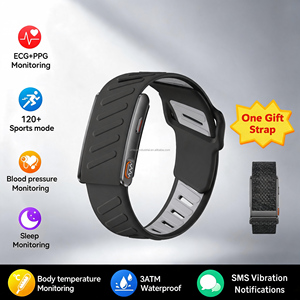
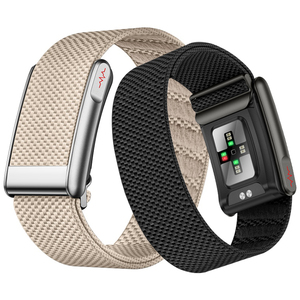
Explore our core product matrix engineered for original equipment manufacturers (OEM), remote patient monitoring (RPM) vendors, clinical research organizations (CROs), and health system integrators. Each wearable leverages clinical-grade bio-sensors, long battery life, and robust data streaming capabilities.

Original Equipment Manufacturing (OEM) Infrastructure & Technical Depth
As healthcare systems transition from reactive treatment to proactive continuous care, the global demand for custom OEM telemetry device manufacturing has reached an unprecedented inflection point. Modern medical ecosystems require wearable devices that deliver clinical accuracy without the physical burden traditionally associated with bulky telemetry monitors. Our enterprise OEM/ODM manufacturing facility bridge the gap between high-precision medical engineering and consumer-grade ergonomic design.
Operating under strict ISO 13485 quality management systems, our specialized telemetry production facilities integrate advanced Surface Mount Technology (SMT) lines, micro-fluidic sensor calibration chambers, and cleanroom assembly zones. We specialize in contract design, co-development, and turn-key manufacturing of multi-parameter telemetry devices capable of acquiring, processing, and transmitting real-time physiological data directly to hospital Electronic Medical Records (EMR) and secure cloud architectures.
Full Hardware Customization
Complete flexibility over PCB micro-architecture, multi-sensor photoplethysmography (PPG) arrays (Green, Red, Infrared), single-lead and multi-lead ECG electrode geometry, skin temperature sensors, and Galvanic Skin Response (GSR) modules.
Firmware & SDK Abstraction
Open access to raw waveform data at sampling rates up to 128 Hz. We supply flexible iOS/Android mobile SDKs and documented RESTful APIs to ensure frictionless telemetry integration into third-party dashboards and algorithmic pipelines.
Global Regulatory Clearance
Our OEM manufacturing baseline complies with stringent international medical regulations, including CE-MDR (EU Medical Device Regulation) certification, FDA 510(k) predicate readiness, ISO 13485 design control, and GDPR/HIPAA privacy compliance.
Strategic Sourcing & Procurement Trends in OEM Telemetry (2026–2030)
B2B telemetry procurement teams, hospital supply chain executives, and pharmaceutical trial directors are rapidly reassessing their hardware sourcing strategies. The era of single-parameter spot-check monitors is rapidly waning, replaced by continuous, multi-modal biometric intelligence. Strategic buyers must account for several primary market shifts when evaluating OEM/ODM manufacturing partners:
1. Shift Toward "Screenless" High-Compliance Form Factors
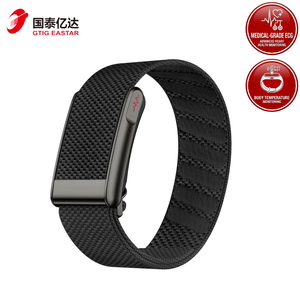
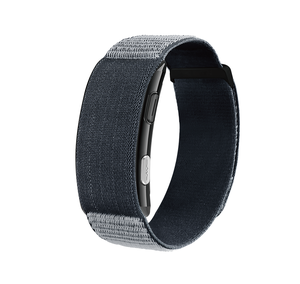
One of the most profound industry developments is the transition toward screenless smart bracelets (such as the G70 and E500 series). In clinical trials and general ward environments, active digital displays often lead to patient anxiety, accidental touch interventions, and accelerated battery consumption. Screenless telemetry bands maximize compliance by shifting the primary interaction away from the patient and into automated background data synchronization. Procurement teams are prioritizing screenless form factors that offer up to 15 days of continuous power on a single 180mAh battery charge.
2. On-Device AI & Automated Early Warning Scores (EWS)
Modern medical telemetry exporters are moving beyond simple data pass-through. Procurement requirements now dictate that OEM devices possess localized edge computing capabilities to calculate automated Early Warning Scores (EWS, MEWS, NEWS2). By analyzing multi-variate continuous telemetry—combining heart rate variability (HRV), continuous respiration rate derived from PPG, ambient skin temperature, and motion artifacts—the wearable can instantly detect physiological deterioration prior to acute clinical events such as sepsis or cardiac arrest.
3. Cellular Telemetry Integration (4G LTE-M / NB-IoT)
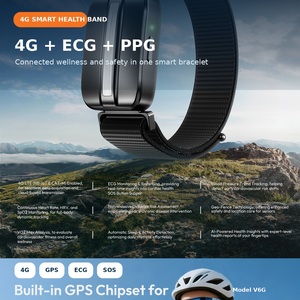
While Bluetooth Low Energy (BLE) remains the standard for short-range bedside gateways, post-discharge remote patient monitoring (RPM) and decentralized clinical trials (DCTs) demand friction-free transmission. OEM buyers are increasingly specifying integrated 4G direct-to-cloud cellular modules (such as the V6G series). Cellular telemetry eliminates the need for elderly or non-tech-savvy patients to manage smartphone pairings or home Wi-Fi networks, driving telemetry submission rates above 95% across broad population studies.
4. Unrestricted Raw Signal Access over Closed Proprietary Algorithms
Traditionally, wearable vendors locked physiological data behind closed, proprietary algorithms, returning only aggregated daily summaries. Modern research institutions, digital biomarker developers, and pharmaceutical sponsors explicitly require IP-free access to raw PPG (Green/Red/IR), ECG rhythm strips, and tri-axial accelerometer streams. OEM partners who offer transparent raw signal pipelines empower enterprise buyers to train proprietary machine learning models without vendor lock-in.
Technological Advancement & Product Evolution in Wearable Telemetry
The convergence of advanced bio-materials, ultra-low-power microcontrollers, and multi-wavelength optical arrays is reshaping the technical architecture of telemetry wearables. To maintain competitive advantage, OEM factories are driving engineering breakthroughs across several core technological domains:
Multi-Spectral Optical Sensor Modules
By integrating multi-wavelength photoplethysmography (PPG) arrays—utilizing green light for heart rate and HRV, alongside red and infrared wavelengths for pulse oximetry (SpO2)—modern telemetry bracelets maintain clinical-grade arterial oxygen saturation readings even during severe peripheral vasoconstriction or motion artifact events.
Single-Lead Dry Electrode ECG Architectures
Replacing traditional wet gel electrodes, advanced OEM telemetry bracelets utilize biocompatible titanium or stainless-steel dry contact electrodes. Coupled with high-CMRR (Common Mode Rejection Ratio) analog front-ends, these devices capture pristine single-lead electrocardiogram (ECG) rhythm strips capable of identifying Atrial Fibrillation (AFib), premature ventricular contractions (PVCs), and baseline ST-segment changes.
Energy Harvesting & Ultra-Low-Power Management
Innovative micro-power management circuits (PMICs) paired with narrow-band communication protocols allow telemetry devices to operate for multi-week monitoring windows without recharging. Advanced research consortia are currently testing photo-voltaic and thermal energy harvesting modules to enable perpetual, zero-maintenance clinical wear.
Furthermore, structural IP68 and 3ATM/1ATM waterproof engineering ensures that continuous telemetry monitoring remains uninterrupted during patient showering, hydrotherapy, or intensive daily activity. Biocompatible silicone and hypoallergenic steel enclosures prevent skin irritation during prolonged 30-day clinical trials.
Custom Telemetry Manufacturing & Sourcing FAQ
Below are critical technical and commercial considerations addressed by our engineering team for procurement officers, medical device brand owners, and research leads evaluating OEM telemetry production.
Our OEM telemetry devices communicate via low-latency Bluetooth Low Energy (BLE 5.3) or direct 4G cellular transmission to custom mobile applications or dedicated ward gateways. Data payloads are formatted in standardized HL7, FHIR, or JSON structures, enabling direct RESTful API ingestion into Epic, Cerner, or proprietary hospital monitoring dashboards.
We provide comprehensive white-label and ODM customization. This includes custom casing tooling, biocompatible strap materials, custom silkscreen logo printing, tailored firmware algorithm tuning, bespoke packaging design, custom BLE UUID broadcast signatures, and complete API/SDK integration into your brand's software ecosystem.
Yes. Unlike consumer wearables that only output processed metrics, our medical OEM platforms provide IP-free access to raw 128 Hz accelerometer, multi-wavelength PPG, single-lead ECG, skin temperature, and GSR data. This enables researchers and digital biomarker developers to train proprietary machine learning algorithms.
We provide full technical master files, including ISO 13485 audit reports, CE-MDR Declaration of Conformity, FDA 510(k) predicate testing matrices, RoHS/REACH material safety compliance, IEC 60601-1-2 EMC test reports, and biocompatibility evaluation files (ISO 10993) to accelerate your regulatory submission process globally.
Standard white-label logo and packaging customization starts at an MOQ of 500 to 1,000 units with a 3–4 week lead time. Deep hardware modifications, custom enclosure tooling, or bespoke sensor integration typically involve a 8–12 week NPI (New Product Introduction) engineering cycle prior to mass production.
Our optical PPG modules feature dynamic gain control (Automatic Gain Control / AGC) and high-power multi-LED arrays. The adaptive sensor front-end automatically adjusts current drive levels based on skin melanin content, tissue density, and perfusion index, ensuring validated signal fidelity across all patient demographics.
All telemetry payloads are encrypted at the hardware layer using AES-128/256 bit encryption prior to wireless transmission. Cloud endpoints adhere strictly to HIPAA and GDPR data privacy frameworks, utilizing OAuth 2.0 authentication, TLS 1.3 encryption in transit, and role-based access control (RBAC).
Why Partner with Our Custom OEM Telemetry Manufacturing Facility
Building high-reliability telemetry hardware demands a manufacturing partner who understands the absolute necessity of zero-defect medical production. Over the past decade, our factory infrastructure has evolved into a leading global exporter of biometric telemetry equipment, supporting health networks, life science innovators, and MedTech distributors in over 45 countries.
Our operational advantages stem from a holistic integration of hardware engineering, regulatory mastery, and scalable production capacity:
ISO 13485 Certified Production
Every device is manufactured under rigorous quality systems, undergoing 100% automated optical inspection (AOI), functional burn-in testing, and precision fluid calibration before shipment.
Proven Clinical Validation
Our biometric algorithms (ECG rhythm analysis, SpO2, arterial pressure estimation) have been benchmarked against clinical gold standards across 35+ top-tier medical centers and 200+ clinical trials.
End-to-End Supply Chain Security
We maintain direct strategic partnerships with leading tier-1 semiconductor and optical component foundries, guaranteeing long-term component lifecycle availability and supply chain stability.
Initiate Your Custom OEM/ODM Telemetry Hardware Project
Consult directly with our senior bio-medical hardware engineers and global business managers. Whether you require custom device tooling, firmware SDK integration, or high-volume ISO 13485 manufacturing, our team delivers turnkey telemetry solutions tailored to your commercial roadmap.
Inquire Now