
Featured OEM/ODM Clinical Smart Bracelets & Trackers
Explore our flagship, medical-grade, multi-sensor wrist-worn devices engineered for high patient compliance, raw PPG/ECG telemetry, hospital ward monitoring, and decentralized clinical research.
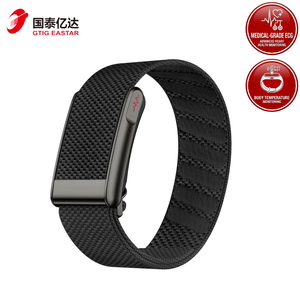
E500 ECG Screenless AI Health IP68 Smart Bracelet
- Screenless design for low power & long wear
- Continuous Heart Rate, BP & Sleep Monitor
- AI-driven Arrhythmia Screening (MF90/MF91/ETQ13)
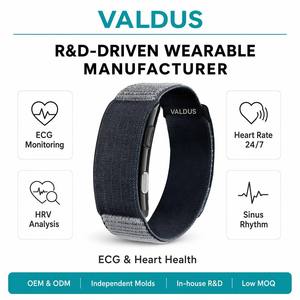
VALDUS VITRO ODM/OEM Screenless ECG Fitness Tracker
- Ergonomic 24/7 continuous activity tracking
- Single-lead ECG wave telemetry
- Medical-grade hypoallergenic TPU wristband
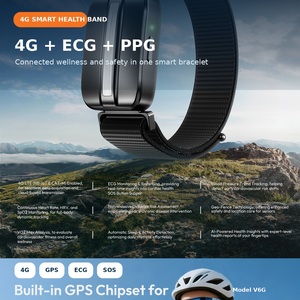
V6G 4G Cellular Health Bracelet with ECG, PPG & GPS SOS
- Standalone 4G LTE-M / NB-IoT connectivity
- Integrated SOS button & real-time GPS tracking
- Designed for senior care & remote monitoring
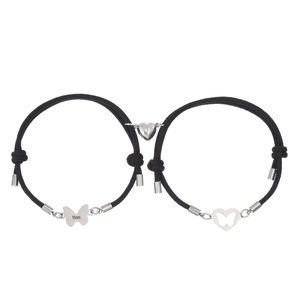
Minimalist Steel Color Electrocardiogram Magnetic Bracelet
- High-durability 316L stainless steel enclosure
- Integrated dry-electrode ECG contact points
- Customizable logo engraving & magnetic clasp
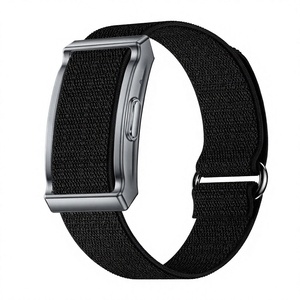
G70 Screenless Smart Bracelet ECG & Body Temp Monitor
- Sub-surface skin temperature sensor accuracy
- SpO2 blood oxygen continuous logging
- Zero-distraction screenless form factor
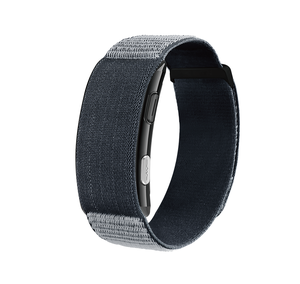
VITRO Smart 1ATM Waterproof ECG & BT Call Bracelet
- 1ATM water resistance for hydro-therapy wear
- Dual-mode Bluetooth 5.2 BLE data sync
- Remote patient camera & alarm control
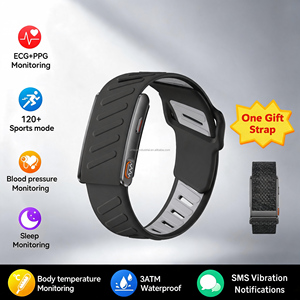
ECG No-Screen 180mAh 15-Day Battery 3ATM Bracelet
- Ultra-extended 15-day continuous battery life
- 3ATM waterproof grade for full aquatic safety
- High-frequency step, sleep & HR algorithms
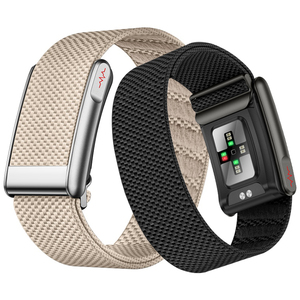
2026 E500 Screenless NFC ECG Blood Pressure Bracelet
- Integrated NFC tag for bed-side tap identification
- Multi-wavelength PPG sensor cluster
- Real-time early warning telemetry interface
Why Global Healthcare Leaders Partner With Us
Bridging the gap between consumer wristwear and regulated medical technology. We deliver certified, continuous biosensing hardware paired with an open data architecture.
Medically Certified & Audited
Unlike fitness trackers claiming clinical utility, our manufacturing facility operates under strict ISO 13485 Quality Management standards. Our flagship platforms maintain CE-MDR certification (Notified Body Kiwa) and FDA 510(k) clearances, guaranteeing legal compliance and clinical acceptability in North America and the European Union.
IP-Free Raw Data Access (Up to 128 Hz)
Pharmaceutical sponsors and academic researchers are not locked into proprietary black-box algorithms. We grant unrestricted access to raw Photoplethysmography (PPG green, red, infrared), single-lead ECG wave telemetry, tri-axial Accelerometer (ACC), Skin Temperature, and Galvanic Skin Response (GSR) signals.
Proven Clinical Ecosystem Deployment
With over 10,000 devices deployed across 35+ top-tier hospitals (including NHS Manchester, Foch Hospital Paris, and Radboud UMC) and participation in 200+ clinical trials, our technology seamlessly streams physiological vital signs into hospital Electronic Medical Record (EMR) systems like Epic and Cerner via REST APIs and SDKs.
From Admission Ward to Home Remote Care
Our OEM clinical wearable ecosystem couples low-power biosensing wristbands with dedicated Bluetooth BLE gateways and clinical cloud dashboards. Nurses monitor ward-wide Early Warning Scores (EWS) to prevent unexpected patient deterioration between manual observation rounds. Upon discharge, patients wear the exact same device home, establishing unbroken continuous monitoring.
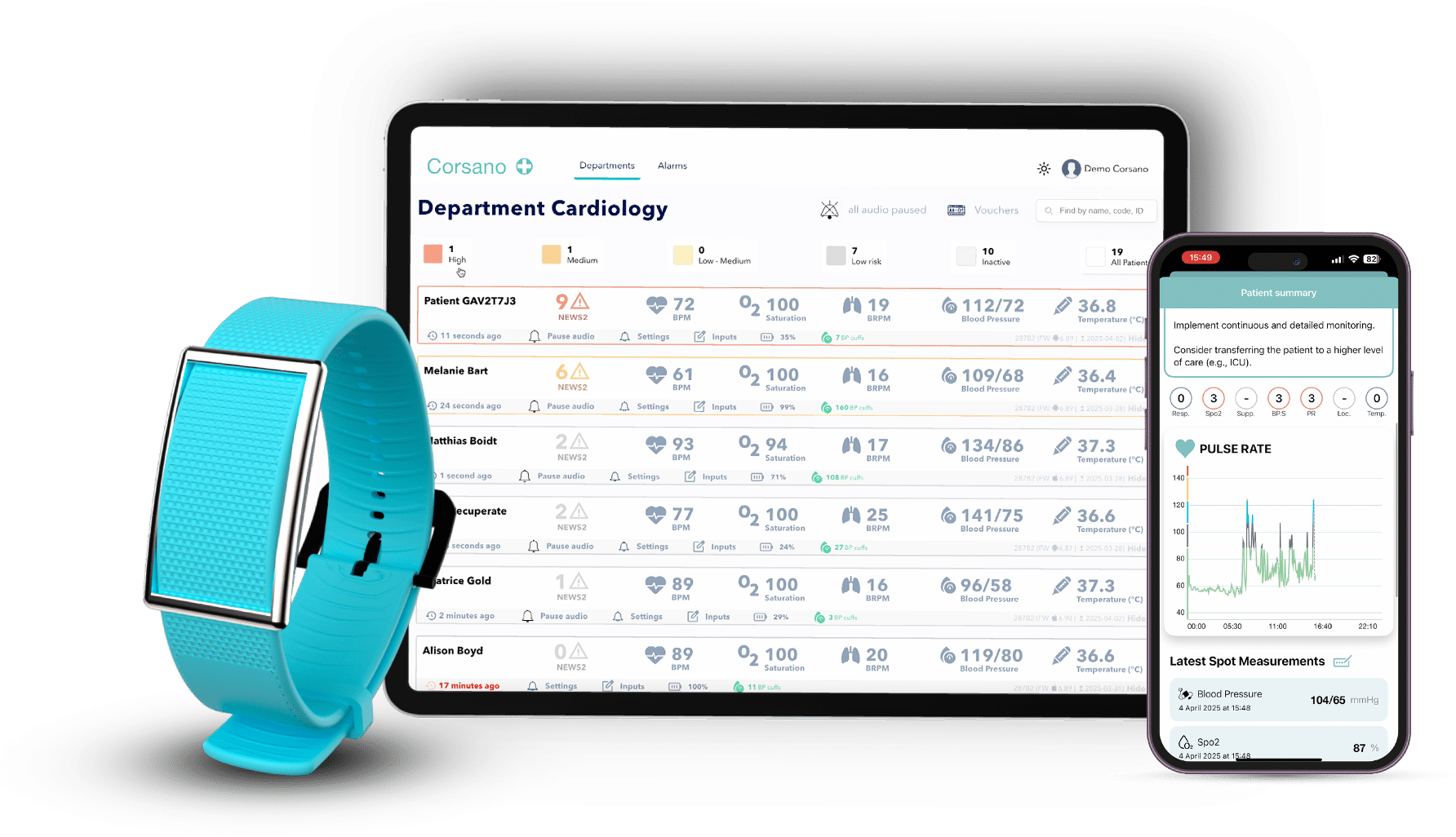
Future Procurement Trends in Clinical Wearable Technology
An authoritative whitepaper breakdown for medical device procurement managers, pharmaceutical CROs, and hospital IT buyers preparing for next-generation vital sign monitoring standardizations.
1. Paradigm Shift: From Spot-Check Nursing Rounds to Continuous Multi-Parametric Telemetry
Historically, general ward patient management has relied upon manual vital-sign spot checks conducted every four to eight hours. Clinical evidence demonstrates that physiological deterioration (such as respiratory failure, sepsis, or cardiac arrest) often begins 6 to 12 hours prior to overt clinical collapse. Between traditional observation rounds, patients remain unmonitored.
Global hospital systems are actively restructuring procurement specs to mandate continuous, automated multi-sensor monitors. By continuously recording up to 19 physiological parameters—including heart rate, heart rate variability (HRV), continuous respiration rate, SpO2, skin temperature, and activity posture—clinicians receive real-time trend trajectories rather than static snapshots. This paradigm shift significantly mitigates ward mortality, reduces ICU escalations, and decreases average length of stay (LOS).
2. Hardware Form Factor Evolution: Screenless Architecture & Ambient Energy Harvesting
In clinical environments, wrist-worn devices with bright touchscreens present significant drawbacks: high power consumption requiring frequent charging, accidental user interaction, and optical distractions for bedridden patients. Modern procurement criteria strongly favor screenless medical bracelets.
Screenless hardware maximizes battery longevity (extending continuous operation from 24 hours to 15+ days on a single charge), minimizes device footprint, and ensures patient compliance across vulnerable demographics, such as geriatric patients, pediatric patients, and individuals suffering from cognitive decline. Furthermore, research initiatives (such as the European LifeTime Eurostars project) are integrating micro-power solar and thermal energy harvesting with Narrow-Band IoT (NB-IoT), enabling completely maintenance-free, self-powered monitoring modules.
3. Data Sovereignty & The Demand for Open API / Raw Waveform Telemetry
Medical procurement officers and digital health developers are increasingly refusing vendor lock-in. Legacy medical equipment manufacturers historically forced buyers into closed proprietary software ecosystems, restricting access to underlying raw sensor signals.
The future of clinical research and AI biomarker development relies on unrestricted raw data export. OEM manufacturers who provide raw PPG, ECG, and accelerometer data sampled at high frequencies (up to 128 Hz) via standardized REST APIs, MQTT queues, and Mobile SDKs allow health systems and biopharma enterprises to train proprietary artificial intelligence models for targeted therapeutics, early sepsis detection, and custom digital biomarker validation.
Key Regulatory Takeaway for OEM Buyers
Under the European Union's Medical Device Regulation (CE-MDR 2017/745), clinical wearables used to inform medical diagnostics or automated early warning scores must be classified under Class IIa or higher. Procurement teams must verify Notified Body certificates (e.g., Kiwa CE 0560) and ISO 13485:2016 audit reports prior to selecting an OEM/ODM manufacturing partner. Consumer-grade wearables lacking clinical validation expose healthcare facilities to severe regulatory non-compliance risks.
Technological Breakthroughs in Sub-Surface Biosensing
Discover how advanced optical engineering, sensor fusion algorithms, and miniaturized dry electrodes are redefining wearable clinical diagnostics.
Multi-Wavelength PPG Sensor Array
Transitioning from single-green light optical sensors to multi-spectral clusters combining Green (525nm), Red (660nm), and Near-Infrared (940nm) wavelengths. This enables deeper sub-surface microvascular tissue perfusion tracking, eliminating motion artifacts and accommodating diverse skin tone melanin levels with clinical-grade SpO2 precision.
Single-Lead ECG & Arrhythmia Screening
Directly integrated dry-contact micro-electrodes allow on-demand and continuous single-lead Electrocardiogram (ECG) waveform acquisition. Coupled with embedded edge-AI algorithms, the hardware identifies Atrial Fibrillation (AFib), premature ventricular contractions (PVCs), and cardiac conduction abnormalities in real time.
Thermal & Galvanic Skin Response (GSR)
Continuous monitoring of peripheral skin temperature dynamics paired with electrodermal activity (GSR) provides sensitive digital biomarkers for sympathetic nervous system arousal, autonomic stress responses, early infection onset, and systemic inflammatory responses.
Frequently Asked Questions by Medical Equipment Buyers & OEM Partners
Everything you need to know about custom OEM manufacturing, regulatory clearances, raw data integration, and global supply chain capabilities.
What specific physiological parameters can your custom OEM smart bracelets continuously measure?
Our clinical wearable platform derives up to 19 continuous physiological parameters. These include real-time Heart Rate (HR), Heart Rate Variability (HRV in time and frequency domains), Continuous Respiration Rate, Blood Oxygen Saturation (SpO2), Peripheral Skin Temperature, Galvanic Skin Response (GSR), Tri-axial Accelerometry (step count, physical activity intensity, posture, and fall detection), Sleep Stage Architecture, and on-demand or continuous Single-Lead Electrocardiography (ECG) rhythm strips. Unlike episodic spot-checking devices, our wearables log telemetry continuously, presenting complete historical trend lines.
What regulatory medical certifications do your manufacturing lines and products hold?
We are a fully audited, regulated medical device manufacturer. Our manufacturing facilities operate under ISO 13485:2016 Medical Devices Quality Management System certification. Our core wearable platforms hold official CE-MDR (EU Medical Device Regulation 2017/745) certification issued by Notified Body Kiwa (CE 0560) and FDA 510(k) clearance for commercial distribution in the United States. All vital sign algorithms undergo rigorous clinical trial validations against hospital gold-standard bedside reference monitors.
Can pharmaceutical companies and research institutions export uncompressed raw sensor data?
Yes. We provide complete, IP-free access to raw uncompressed signals including multi-spectral PPG (Green, Red, IR), single-lead ECG wave data, 3-axis accelerometer output, skin temperature, and electrodermal impedance sampled at up to 128 Hz. Research entities, CROs, and biopharma sponsors utilize our open data architecture to construct, test, and validate proprietary digital biomarkers and machine-learning algorithms without proprietary firmware lock-in.
How does the wearable hardware integrate with existing hospital EMR systems and remote monitoring software?
Integration is facilitated via robust developer tools. We provide documented RESTful APIs, WebSocket data streams, and native iOS/Android Mobile SDKs. Physiological telemetry and calculated Early Warning Scores (EWS) can be directly funneled into major electronic medical record (EMR) architectures such as Epic, Cerner, and Philips Capsule, as well as customized Remote Patient Monitoring (RPM) dashboards, without disrupting existing clinical workflows.
What customization options (OEM/ODM) are available for large-volume enterprise orders?
We offer end-to-end OEM and ODM services. Customization scope includes custom mechanical housing design, medical-grade silicone or TPU strap materials, private-label branding and laser engraving, custom enclosure colors, firmware modification for specialized sensor sampling rates, tailored BLE broadcasting protocols, custom packaging, and dedicated cloud tenant server localization to ensure compliance with regional data residency laws.
How do your wearables handle data security, privacy, and regulatory compliance (GDPR / HIPAA)?
Security is built into our hardware and cloud architecture by design. All wireless transmissions between the bracelet, gateway, and cloud utilize AES-128 / AES-256 bit encryption over Bluetooth BLE 5.2 and TLS 1.3 encryption for cloud data in transit. Our cloud infrastructure is fully compliant with EU General Data Protection Regulation (GDPR) and US Health Insurance Portability and Accountability Act (HIPAA) guidelines, featuring strict role-based access control (RBAC) and pseudonymized data storage.
What is the Minimum Order Quantity (MOQ) and lead time for custom OEM manufacturing runs?
Standard white-label evaluation kits and pilot batches are available in low minimum quantities (starting at 50–100 units) to support initial feasibility studies and clinical trials. Full OEM/ODM custom manufacturing runs typically begin at 1,000 to 5,000 units depending on the level of hardware tooling and firmware customization. Production lead times range from 4 to 8 weeks following prototype sign-off and engineering validation testing (EVT).
Trusted by MedTech Giants and Academic Cardiology Centers
Our OEM wearable technologies are validated through strategic distribution agreements with global MedTech leaders and multi-center clinical trials across Europe and North America.
U.S. & European Distribution Partnerships
Strategic commercial distribution agreements bring our continuous multi-parameter wearable platforms to acute care facilities and home monitoring networks across the United States and Europe, expanding hospital ward coverage and reducing nursing observation overhead.
The DETECT Consortium & Horizon 2020
Cooperating with leading university cardiology centers (including Radboud UMC, Amsterdam UMC, and Erasmus MC), our wearables are deployed in research programs targeting early automated recognition of out-of-hospital cardiac arrest and early warning sepsis detection.
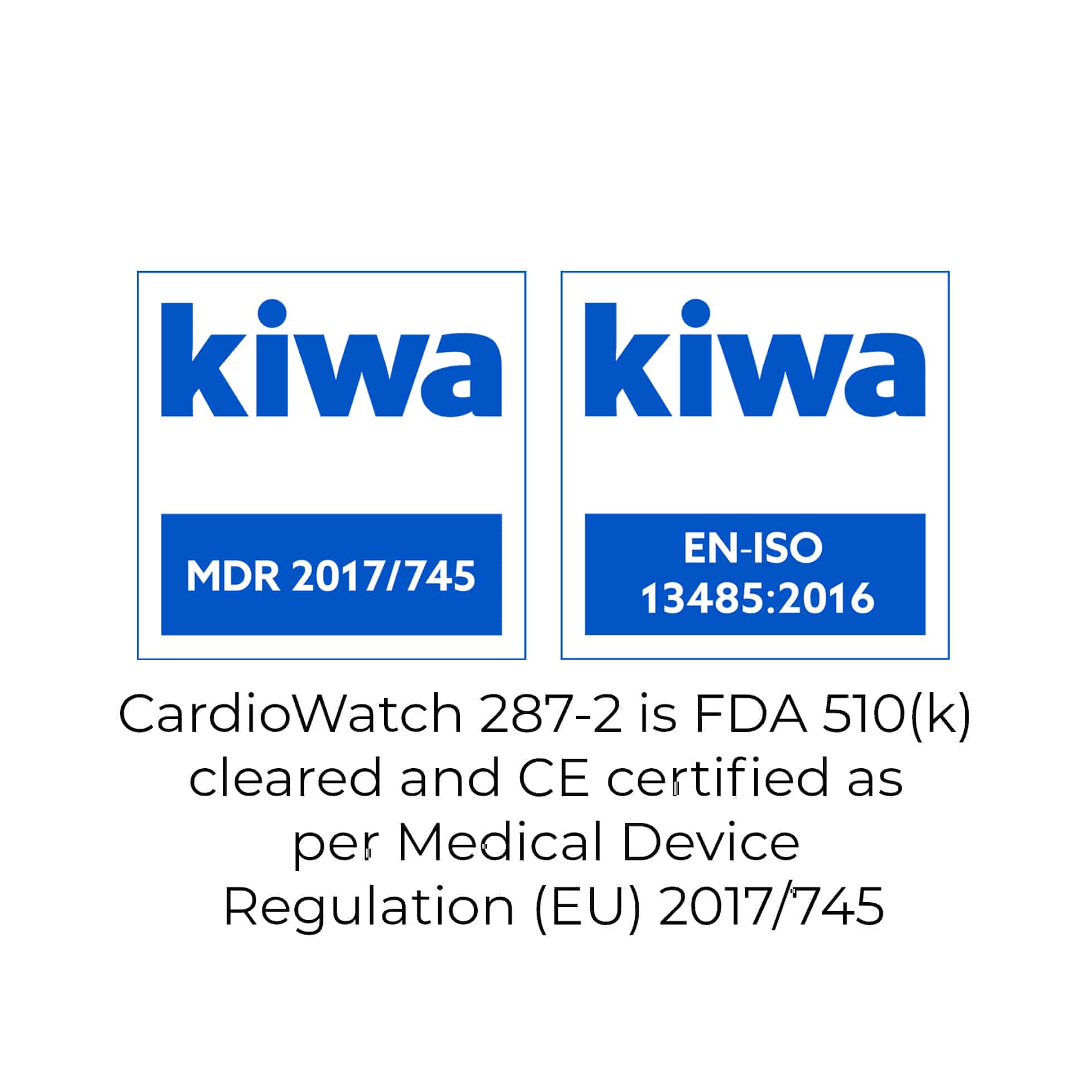
Official Kiwa Medical Device Regulation Certification confirming ISO 13485 quality control and CE-MDR conformity for continuous clinical monitoring hardware.
Partner with a Premier OEM Clinical Wearable Manufacturer
Whether you are establishing a hospital continuous ward monitoring initiative, launching a pharmaceutical remote trial, or developing a custom medical smart bracelet, our engineering team is ready to support your specifications.