
OEM / ODM Medical & Commercial Biometric Trackers
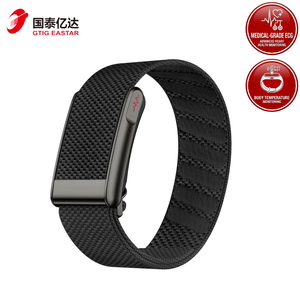
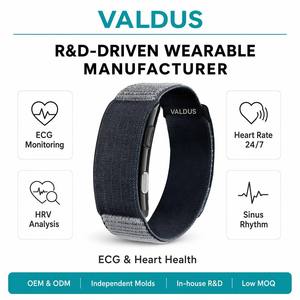
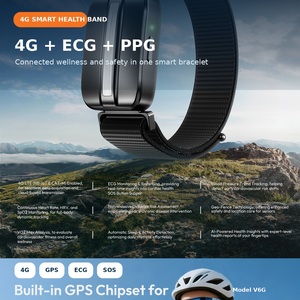
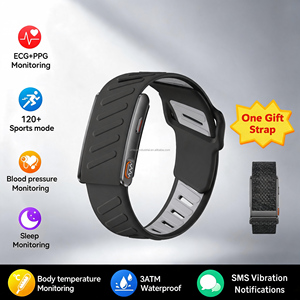
Turnkey wearable hardware integrated with multi-wavelength PPG optical sensors, single-lead ECG arrays, continuous temperature monitoring, and low-latency Bluetooth connectivity.
The Paradigm Shift in Continuous Biometric Monitoring
Transitioning from intermittent consumer metrics to clinical-grade, continuous physiological telemetry for Remote Patient Monitoring (RPM), post-discharge care, and decentralised clinical trials.
The global wearable medical device market is undergoing a structural evolution. Traditional episodic diagnostic methods—such as spot-check blood pressure cuffs or intermittent pulse oximetry—fail to capture transient physiological deterioration, nocturnal cardiac arrhythmias, or subtle autonomic dysfunctions. As healthcare providers shift toward value-based care and proactive intervention models, demand has surged for high-fidelity, continuous biometric tracking architecture.
Multi-Spectrum PPG Sensing
Utilizing green, red, and infrared optical wavelengths (525nm to 940nm) to measure arterial volumetric changes, pulse arrival time (PAT), continuous blood oxygenation (SpO2), and peripheral perfusion index across diverse skin tone phototypes.
- High Signal-to-Noise Ratio (SNR)
- Active Ambient Light Cancellation
- Motion Artifact Suppression Algorithms
Single-Lead ECG Electrodes
Integrated dry-contact titanium and stainless steel electrode arrays enabling instantaneous or continuous Lead-I Electrocardiogram recording. Formulated for high input impedance and ultra-low noise baseline drift.
- Medical-grade QRS detection
- Arrhythmia & Atrial Fibrillation (AFib) screening
- Real-time HRV (SDNN, RMSSD) extraction
Edge AI & Sensor Fusion
On-chip microprocessor architectures running lightweight artificial intelligence models for automated Early Warning Scores (EWS), movement-compensated vital calculation, and dynamic power state scaling.
- Ultra-low power ARM Cortex-M4/M33 processors
- Continuous fall detection via 3-axis accelerometer
- Galvanic Skin Response (GSR) stress tracking
Information Gain Architecture: Unlike conventional consumer smartwatches that lock health metrics inside proprietary consumer applications, custom OEM biometric hardware built for enterprise deployment offers direct, IP-free raw data extraction up to 128 Hz. This allows clinical research organizations (CROs), hospital networks, and digital therapeutics platforms to train bespoke Machine Learning (ML) models on unfiltered physiological signals.
The Strategic Superiority of Screenless Form Factors in Institutional Healthcare
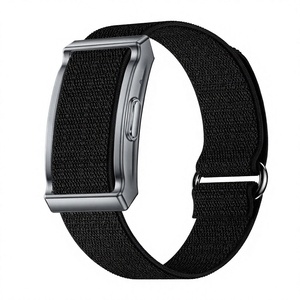
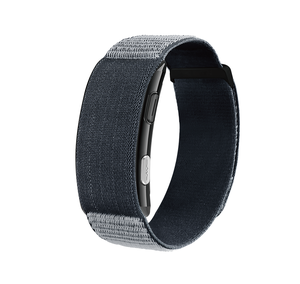
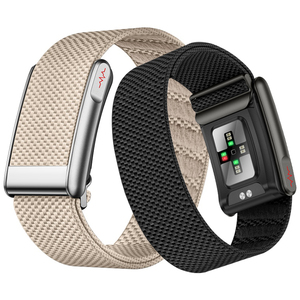
While consumer wearables emphasize touchscreens and notification delivery, institutional healthcare environments require purpose-built screenless biometric bands. Screenless form factors eliminate distraction, drastically reduce power consumption, and enforce single-purpose compliance—preventing patients from tampering with monitoring parameters. Furthermore, eliminating display glass significantly improves enclosure structural integrity, enabling IP68 and 3ATM/5ATM fluid ingress protection required for continuous multi-day wear during showering and sanitization cycles.
Key Procurement & Technology Trends (2025–2030)
Essential market directions and technical specifications procurement directors must evaluate when sourcing biometric hardware from OEM/ODM exporters.
1. Decentralized Clinical Trials (DCT) & Digital Biomarkers
Pharmaceutical sponsors are replacing static trial visits with continuous decentralized data collection. Custom OEM biometric trackers allow pharmaceutical teams to discover digital biomarkers for oncology, neurological conditions, and cardiovascular safety endpoints.
- Unrestricted raw PPG (Green/Red/IR) and ECG wave export
- Timestamp synchronization with electronic Clinical Outcome Assessments (eCOA)
- Regulatory submission readiness (FDA 21 CFR Part 11 compliant data pipelines)
2. Multi-Bed General Ward Continuous Monitoring
Hospitals are expanding continuous monitoring beyond Intensive Care Units (ICUs) into general medical-surgical wards. By replacing manual 4-to-6 hour spot checks with continuous biometric bands, nursing staff can automatically detect patient deterioration early via automated Early Warning Score (EWS) triggers.
- Drastic reduction in unmonitored ward deterioration incidents
- Automated ingestion into Electronic Medical Record (EMR) systems via RESTful APIs
- Rapid bedside onboarding via NFC tag assignment
3. Ultra-Low Power Communication Protocols
Modern biometric hardware leverages Bluetooth Low Energy (BLE 5.2 / 5.3), Narrowband IoT (NB-IoT), and LTE-M technologies. Dual-mode transmission ensures that device data seamlessly syncs via patient smartphone applications or dedicated room-based gateway hubs without manual user intervention.
- 15 to 30 days continuous battery life on single charge
- End-to-end AES-128 encryption over hardware trust anchors
- Store-and-forward flash memory to prevent data loss during signal dropouts
4. Strict Regulatory Compliance & Quality Auditing
Cross-border procurement demands rigorous compliance validation. Medical-grade biometric exporters must maintain documented quality systems auditing every stage of product creation—from Surface Mount Technology (SMT) component sourcing to biocompatibility testing for skin-contact plastics and silicones.
- ISO 13485 quality management certification
- CE-MDR (EU 2017/745) and FDA 510(k) cleared platforms
- ISO 10993 cytotoxicity and skin sensitization compliance
End-to-End Custom OEM/ODM Capabilities
Partnering with a specialized biometric exporter provides access to full-stack engineering, rapid industrial prototyping, firmware customization, and compliant mass manufacturing.
Hardware & Circuit Design
Custom PCB layout engineering optimized for miniature wearable form factors. Precision sensor alignment, optical barrier design to eliminate crosstalk, and antenna tuning for high wireless reliability.
Custom Firmware & SDKs
Native mobile SDKs for iOS and Android, embedded BLE protocol drivers, and customizable data sampling rates (from 1 Hz aggregated metrics to 128 Hz raw optical waveform streams).
Quality Control & Testing
Every batch undergoes automated optical inspection (AOI), 100% hydrostatic water pressure testing, thermal shock chambers, drop/vibration testing, and optical calibration against gold-standard reference devices.
Frequently Asked Questions for B2B Procurement
Addressing core technical, regulatory, and commercial inquiries from health system buyers, pharmaceutical sponsors, and global distributors.