
Recommended Wholesale Telecare Devices & Medical Smart Bands
Explore our export-ready, clinically validated telecare devices and screenless ECG smart bracelets engineered for B2B distributors, healthcare system integrators, and Remote Patient Monitoring (RPM) solution providers globally.
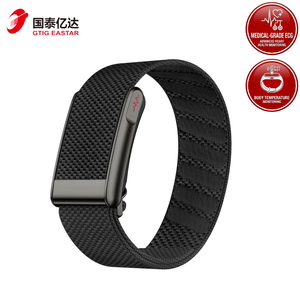
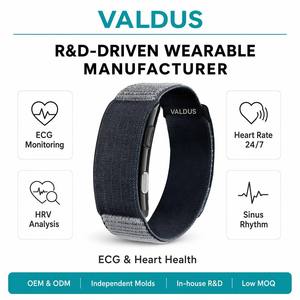
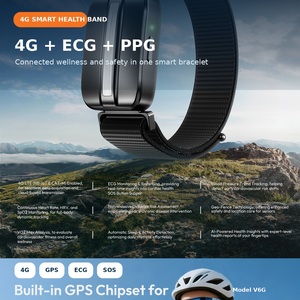
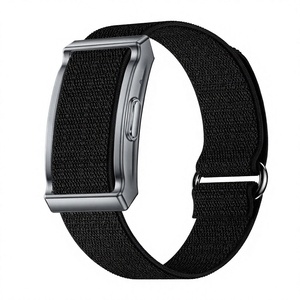
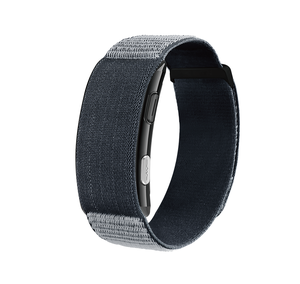
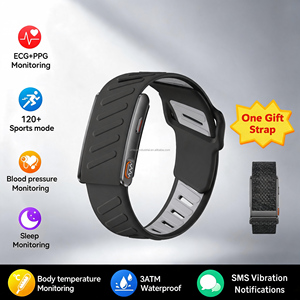
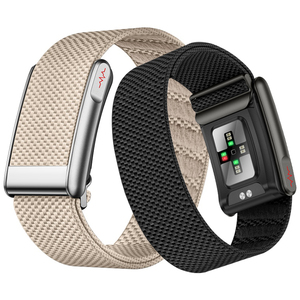
The Shift in Telecare Sourcing: Transitioning to Medical-Grade Multi-Sensor Hardware
The global telecare and telehealth market is undergoing a paradigm shift. Historically dominated by basic emergency panic buttons and consumer-grade step counters, modern healthcare providers, hospital networks, and senior care operators now demand medically validated continuous physiological monitoring platforms. For global procurement directors, medical device brand owners, and OEM/ODM buyers, selecting an elite China wholesale telecare device manufacturer requires looking beyond aesthetic industrial design to evaluate sensor precision, algorithm validation, regulatory compliance, and raw data access capabilities.
Continuous monitoring closes the dangerous monitoring gap that exists between manual nursing rounds in general hospital wards and post-discharge home settings. Episodic spot-checks recorded every 4 to 6 hours often miss subtle signs of clinical deterioration. By deploying wrist-worn continuous telecare monitoring bracelets engineered with multi-wavelength Photoplethysmography (PPG) and single-lead Electrocardiography (ECG), clinical teams gain real-time visibility into vital sign trajectories, empowering early intervention before critical events occur.
Factory OEM/ODM Capabilities & Manufacturing Architecture
As a premier OEM/ODM manufacturer specializing in high-precision telecare technology, our manufacturing ecosystem is audited and certified under ISO 13485 Quality Management Systems. Our state-of-the-art production facilities in China bridge the gap between advanced micro-electronics engineering and rigorous international medical device standards.
Regulated Compliance Standards
Our platforms are designed to conform with strict international frameworks including CE-MDR (EU 2017/745) Class IIa/IIb requirements and FDA 510(k) clearances. Full technical documentation, clinical performance data, and risk management files (ISO 14971) are available for private-label brand registration.
Multi-Sensor Fusion & Raw Data Access
We combine 3-axis precision accelerometers, multi-wavelength PPG (Green, Red, Infrared), single-lead ECG dry electrodes, skin temperature thermistors, and Galvanic Skin Response (GSR) sensors into a single low-power chipset capable of up to 128 Hz raw signal streaming.
Enterprise API & EMR Integration
Data isolation is eliminated through our open REST APIs and mobile SDKs (iOS/Android). Measured parameters seamlessly feed into Electronic Medical Record (EMR) environments, custom nurse dashboards, and Remote Patient Monitoring (RPM) software platforms via HL7 / FHIR protocols.
Technical Specifications & Architectural Comparison
When selecting a manufacturing partner in China, understanding the technical tradeoffs between consumer smartbands and medical-grade telecare wearables is critical. The table below outlines our enterprise manufacturing capabilities.
| Feature Parameter | Consumer Smart Band | OEM Telecare Medical Bracelet (Our Factory) |
|---|---|---|
| Primary Application | Fitness, lifestyle tracking | General Wards, Post-Discharge, Senior Care, Clinical Trials |
| Quality Management System | ISO 9001 | ISO 13485 Certified Medical Device Facility |
| Sensor Array | Basic PPG Green LED | Multi-Wavelength PPG (G/R/iR) + Single-lead ECG + Temp + GSR |
| Data Export & Access | Proprietary app lock-in; summarized metrics | Unrestricted Raw Data Access (up to 128 Hz) via API / SDK |
| Biomarker Metrics | Heart Rate, Basic Sleep | Up to 19 Parameters: HRV, SpO2, Respiration Rate, EWS Scores, Sleep Staging |
| Cellular Telemetry | Bluetooth companion app only | Standalone 4G / NB-IoT Gateways + Bluetooth Low Energy (BLE 5.2) |
| Industrial Design | Screen-centric (High battery draw) | Screenless / Ultra-Low-Power (Up to 15 days active wear) |
Future Procurement Trends in Telecare and Remote Patient Monitoring
As global healthcare procurement departments, regional authorities, and private hospital networks evaluate telecare hardware contracts for 2026 and beyond, key strategic trends are reshaping purchase specifications:
1. Dominance of Screenless, Continuous Form Factors
Traditional smartwatches with touchscreens suffer from two major flaws in clinical and telecare settings: high battery consumption requiring daily charging, and accidental user intervention by elderly or cognitively impaired patients. Future procurement trends show a rapid movement toward screenless medical wearables. Operating without a power-hungry display allows devices to achieve 7 to 15 days of continuous multi-sensor operation on a single charge, ensuring high patient compliance and zero operational interruption.
2. Seamless Convergence of Hospital Ward and Home Telemetry
Health systems are actively seeking unified hardware platforms that transition with the patient. A single telecare bracelet assigned to a patient upon admission to a general hospital ward remains on the patient's wrist during discharge to continuous home monitoring ("Hospital-at-Home"). This continuity eliminates the friction of re-onboarding hardware and provides an uninterrupted digital baseline for clinicians evaluating recovery trajectories.
3. IP-Free Raw Signal Rights for Pharmaceutical & AI Developers
Institutional buyers and pharmaceutical trial sponsors are rejecting "black-box" consumer algorithms. Modern contract specifications demand full ownership of raw optical photoplethysmography (PPG) waveform, electrocardiogram (ECG) voltage samples, and 3-axis accelerometer vector magnitude data. Raw data access enables clinical research teams to build proprietary digital biomarkers for oncology, cardiovascular health, sepsis early detection, and frailty indexing without vendor lock-in.
Technology & Market Development Trends (2026–2030 Horizon)
The telecare industry is evolving from reactive emergency response to continuous predictive health analysis. China's manufacturing ecosystem is at the forefront of combining advanced micro-chipset integration with artificial intelligence at the edge.
Automated Early Warning Scores (EWS)
By feeding real-time physiological inputs—such as continuous pulse rate, calculated respiration rate from PPG signal modulation, skin temperature variations, and arterial oxygen saturation—into on-device or cloud-based Early Warning Score (EWS / NEWS2) algorithms, telecare platforms automatically quantify patient risk level and trigger targeted nursing alerts before clinical collapse occurs.
Ambient Energy Harvesting & NB-IoT Telemetry
Next-generation telecare research projects (such as European Eurostars consortium initiatives) are developing energy-harvesting modules that capture energy from indoor ambient light, paired with ultra-low-power Narrowband IoT (NB-IoT) cellular transmitters. This technology enables truly autonomous, battery-indefinite continuous monitoring without needing a smartphone bridge.
Why Partner with Our China Telecare Manufacturing Hub?
Our facility combines robust European research partnerships with the speed, scalability, and cost efficiency of China’s advanced electronics manufacturing ecosystem. Having produced over 10,000 medical-grade devices deployed across 35+ international hospitals and 200+ clinical trials, we offer unmatched engineering expertise to OEM/ODM buyers.
From custom PCB mold development, optical housing calibration, and firmware tailoring to white-label packaging and API middleware setup, our team guides global partners through every stage of bringing a certified telecare solution to market.
Global Strategic Partnerships: Our continuous monitoring wearable architecture is trusted and integrated alongside international MedTech leaders, pharmaceutical giants, and prestigious medical universities including Medtronic, Roche Diagnostics, Charité Berlin, Radboudumc, and Erasmus MC.
Frequently Asked Questions (FAQ) for Global B2B Procurement
Our multi-sensor medical telecare bracelets derive up to 19 physiological parameters continuously. These include heart rate (HR), heart rate variability (HRV), respiration rate derived from PPG, blood oxygen saturation (SpO2), skin temperature, activity index, body posture/fall indication, sleep stages, and single-lead ECG rhythm strips. Parameters are logged continuously rather than as periodic spot-checks.
We are a certified medical device manufacturer operating under ISO 13485 quality management systems. Our core wearable platforms are engineered to meet CE-MDR certified and FDA 510(k) clearance requirements, utilizing clinically validated vital-sign algorithms tested against reference medical monitors. Complete regulatory support files are provided for international OEM registration.
Yes. Unlike consumer smartband brands that restrict access to aggregated data, our architecture provides IP-free access to raw 3-axis accelerometer data, raw multi-wavelength PPG signals (green, red, infrared), raw single-lead ECG wave samples, and skin temperature data sampled at up to 128 Hz via our mobile SDKs and REST APIs.
We offer full OEM and ODM customization services, including custom strap materials (biocompatible medical silicone, steel, anti-microbial fabric), custom laser-etched branding and private-label packaging, customized firmware default settings (sampling rate, alarm logic), customized mobile gateway applications, and dedicated cloud API endpoints.
Data integration is straightforward using our documented REST APIs and mobile SDKs (iOS & Android). Vital sign metrics and automated early warning scores can be transmitted via standard medical messaging formats (HL7, FHIR) directly into Electronic Medical Records (EMR), nursing dashboards, or third-party telehealth platforms.
Standard white-label wholesale orders start at low trial quantities (50–100 units) for clinical pilots and platform evaluation. Deep OEM/ODM customizations (custom tooling, tailored PCB layouts) typically start at 1,000 units. Factory lead times range from 2 to 4 weeks depending on production volume and certification requirements.
Start Your Telecare Hardware Sourcing & OEM Partnership
Contact our senior medical engineering team to request sample evaluation units, complete technical datasheets, regulatory compliance dossiers, and wholesale volume pricing.