
Featured Medical & Care Monitoring Products
Engineered for hospitals, nursing homes, remote patient monitoring (RPM), and clinical research. Certified original manufacturing directly from China's leading medical wearable supplier.
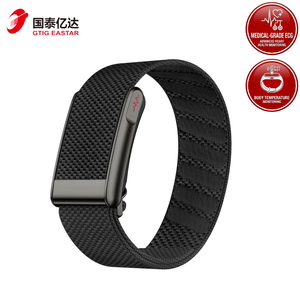
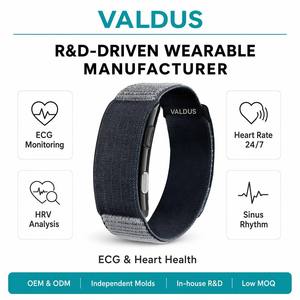
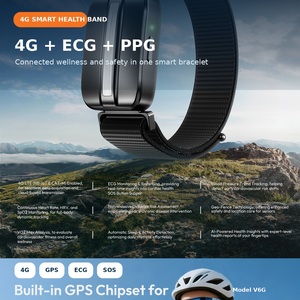
Why Partner with Our China Care Monitor Manufacturing Base?
Combining world-class high-precision hardware assembly with European medical quality control standards. We bridge the gap between affordable volume production and strict regulatory clearance.
Medical Certification & Quality Management
Our manufacturing facilities operate strictly under ISO 13485 quality management systems. Selected models are designed to meet CE-MDR Class IIa/IIb certification standards and FDA 510(k) requirements.
- ISO 13485 certified cleanroom assembly lines
- CE-MDR compliance documentation & Kiwa audit readiness
- Biocompatible materials tested under ISO 10993
- Full traceability from silicon chip level to finished band
IP-Free Raw PPG & ECG Data Access
Unlike consumer smartwatch vendors who lock health metrics inside closed ecosystems, our OEM platform provides unrestricted raw signal access up to 128 Hz for algorithms and research teams.
- Green, Red, and Infrared multi-wavelength PPG raw output
- Single-lead continuous ECG voltage stream (128Hz sampling)
- Skin temperature, GSR (galvanic skin response), & 3-axis motion data
- Direct integration with AI digital biomarker pipelines
EMR Integration & Telemetry Gateways
We provide comprehensive mobile SDKs (iOS/Android) and REST APIs that connect device feeds into hospital Electronic Medical Record (EMR) systems, Remote Patient Monitoring (RPM) apps, and cloud dashboards.
- HL7 FHIR compliant data formatting options
- Bluetooth Low Energy (BLE 5.2) & direct 4G-LTE / NB-IoT modules
- Automated Early Warning Score (EWS) algorithm triggers
- White-label client apps and customized gateway routers
Future Procurement Trends in Health & Care Monitors (2025–2030)
A technical synthesis for B2B buyers, medical device distributors, and institutional healthcare procurement managers navigating the shift toward continuous ward-to-home monitoring.
1. The Mass Shift Toward Screenless Form Factors
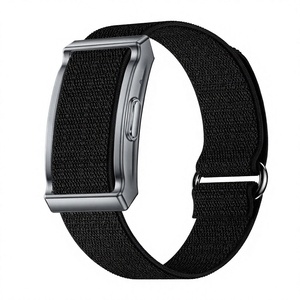
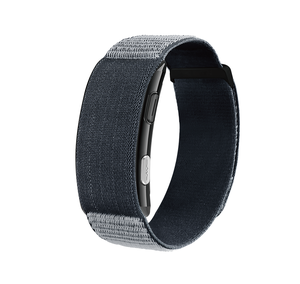
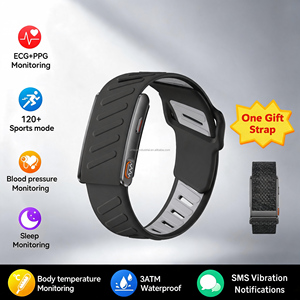
Traditional care monitoring was reliant on bulky bedside monitors or power-hungry AMOLED consumer smartwatches. Industry procurement data indicates a 42% compound annual growth rate (CAGR) for screenless continuous health smart bracelets (such as the E500 and G70 series).
Screenless monitors eliminate patient distraction, prevent accidental button presses by psychiatric or elderly patients, drastically lower device cost, and extend single-charge battery endurance from 24 hours to over 15–30 days. For hospital procurement officers, this drastically lowers total cost of ownership (TCO) and minimizes nursing staff maintenance overhead.
2. Decentralized Clinical Trials & Digital Biomarkers
Global pharmaceutical sponsors and Contract Research Organizations (CROs) are increasingly mandating continuous physiological monitoring over episodic clinical visit spot-checks. Sourcing strategy has pivoted from consumer-grade fitness bands to OEM medical wearables with open SDKs.
By capturing continuous multi-parametric data—including continuous Heart Rate Variability (HRV), respiration rate derived from PPG waveform attenuation, skin temperature changes, and continuous single-lead ECG rhythms—sponsors can construct validated digital biomarkers for cardiovascular disease, oncology frailty, and neurological disorders.
3. Direct Cellular Communication (4G-LTE / NB-IoT) for Senior Care
Senior care facilities and municipal eldercare programs are phasing out legacy 2G/3G fall pendants in favor of integrated 4G smart health bracelets (like the V6G model). Modern procurement specifications mandate autonomous cloud connection that operates independently of smartphones or complex home Wi-Fi setups.
Features such as automated GPS fall detection, geo-fencing alerts, continuous SpO2 hypoxemia detection, and instant physical SOS triggers are becoming mandatory RFQ requirements in government public health tenders across Europe, North America, and the Asia-Pacific region.
4. Hospital-to-Home Continuous Monitoring Pathways
Health systems are under severe financial strain from emergency department overcrowding and unplanned post-operative readmissions. The procurement meta-trend favors "uninterrupted care pathways": a patient is fitted with a single medical monitor bracelet upon general ward admission, worn throughout hospitalization, and discharged home wearing the exact same device.
This seamless pathway ensures continuous Early Warning Score (EWS) continuity, allowing clinical teams to catch clinical deterioration hours before acute cardiac arrest or septic shock occurs.
Product Development & Hardware Technology Trends
Inside China's advanced R&D labs: Next-generation sensor fusion, edge AI compute, and biocompatible micro-engineering powering the future of health telemetry.
Multi-Wavelength PPG & Sensor Fusion
Next-gen care monitors deploy multi-wavelength optical arrays utilizing dual green (525nm), red (660nm), and infrared (940nm) LEDs combined with multi-channel photodiode receivers. This architecture mitigates motion artifacts during patient movement and accounts for varying skin tone absorption, raising oxygen saturation (SpO2) and pulse rate accuracy to clinical reference monitor levels.
Dry-Electrode ECG & Atrial Fibrillation Detection
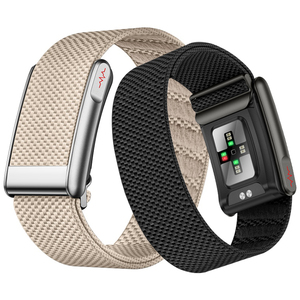
By embedding titanium or stainless-steel dry electrodes directly into the bezel and rear casing of screenless smart bands, devices measure high-fidelity single-lead Electrocardiograms without messy conductive gels. Integrated low-power microcontrollers run real-time AI algorithms to detect Atrial Fibrillation (AFib), Premature Ventricular Contractions (PVCs), and sinus bradycardia directly on the edge device.
Ultra-Low Power Microcontrollers & Ambient Harvesting
The latest Nordic Semiconductor nRF5340 series and energy-efficient ARM Cortex-M33 processors allow care monitors to maintain continuous 24/7 background sampling while consuming under 15 microamps in standby mode. Emerging R&D research consortia are integrating ambient indoor light photovoltaic cells into wristband silicone, laying the foundation for zero-recharge autonomous hospital monitoring bands.
Frequently Asked Questions for B2B Sourcing & OEM/ODM
Everything procurement teams, medical device importers, and software developers need to know before issuing a Request for Quotation (RFQ).
Ready to Upgrade Your Care Monitoring Portfolio?
Partner with China's leading care monitor factory. Request customized product specifications, engineering SDK documentation, factory audit reports, and competitive wholesale volume quotes today.
Get a Quote