
Medical-Grade Patient Tracking & Telemetry Wearables

China's B2B Ecosystem for Patient Tracker Manufacturing & Factory OEM/ODM
The global healthcare industry is experiencing a seismic paradigm shift from episodic vital-sign spot-checking to continuous, passive, wearable telemetry. As global health systems, clinical research organizations (CROs), and medical technology distributors seek reliable manufacturing partners, China has emerged as the premier global manufacturing hub for medical-grade patient trackers and wearable health monitors. However, procuring patient monitoring hardware requires navigating strict regulatory hurdles, algorithmic validation, optical sensor calibration, and enterprise cybersecurity requirements.
A true medical-grade manufacturing facility differs fundamentally from consumer electronics factories. Manufacturing high-precision patient tracking bands requires an ISO 13485 quality management framework, cleanroom surface-mount technology (SMT) lines, optical phantom testing for Photoplethysmography (PPG) calibration, dynamic dry-electrode testing for Electrocardiogram (ECG) acquisition, and full compliance with international medical device standards including CE-MDR (EU 2017/745) and US FDA 510(k) cleared submission readiness.
While consumer fitness bands prioritize esthetics and approximate step counts, medical-grade patient tracking wearables engineered in certified Chinese manufacturing plants utilize multi-wavelength optical sensor arrays (Green 525nm, Red 660nm, Near-Infrared 940nm), medical-grade bio-compatible TPU/silicone straps, ISO 10993 cytotoxicity testing, dynamic skin-impedance compensation circuits, and direct raw signal access up to 128Hz for EMR integration and Early Warning Score (EWS) modeling.
ISO 13485 Certified Assembly
Our manufacturing infrastructure operates strictly under ISO 13485 Quality Management Systems. Every SMT line incorporates Automated Optical Inspection (AOI) and X-ray soldering validation for multi-sensor PCBA layouts.
Multi-Sensor Telemetry Integration
Simultaneous continuous sampling of single-lead ECG rhythm strips, PPG heart rate variability (HRV), continuous SpO2 oxygen saturation, Galvanic Skin Response (GSR), skin temperature, and 3-axis motion posture telemetry.
Medical-Grade Cyber Security
End-to-end data encryption across Bluetooth Low Energy (BLE 5.3), 4G NB-IoT, and Wi-Fi gateways. Full compliance with European GDPR data protection directives and US HIPAA health telemetry privacy frameworks.
Global B2B Procurement Trends in Patient Tracking & Remote Patient Monitoring (2026–2030)
Institutional buyers, hospital procurement committees, and medical device brand owners must align their product roadmaps with emerging global health telemetry trends. Analyzing procurement data across European, North American, and Asian healthcare systems reveals four decisive technology procurement shifts:
1. Shift from Screened Smartwatches to Ergonomic Screenless Patient Bands
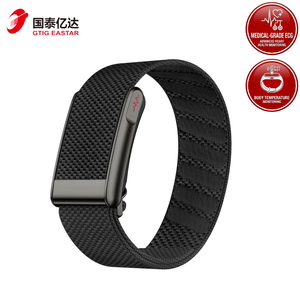
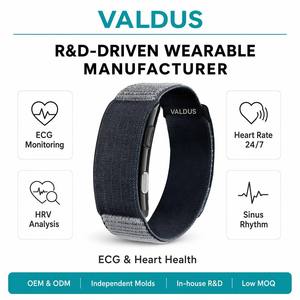
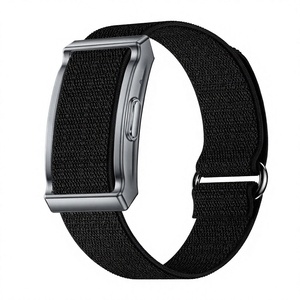
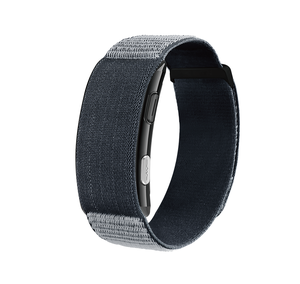
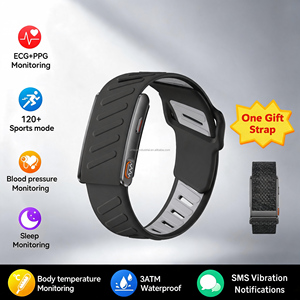
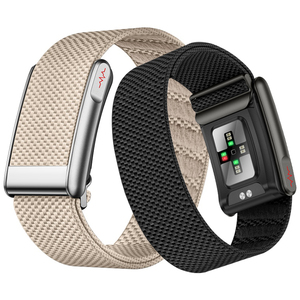
In hospital ward environments and post-discharge recovery programs, screen-equipped consumer smartwatches present severe operational challenges: high battery drain, accidental patient tampering, distraction, and increased vulnerability to physical damage or fluid ingress. Advanced procurement teams are heavily shifting purchase orders toward screenless medical tracking bracelets (such as the E500, G70, and VALDUS VITRO platforms). Screenless designs extend battery longevity up to 15 days on a single charge, minimize patient interaction, lower per-unit manufacturing unit costs, and dedicate 100% of processing capability to continuous sensor signal acquisition and edge-computing artifact suppression.
2. Demand for Unrestricted Raw Signal Data Access (128 Hz Telemetry)
Traditional medical device vendors locked hospital systems into proprietary data silos, providing only pre-processed, averaged numeric values every 15 to 30 minutes. Modern pharmaceutical clinical trials and academic medical research consortia demand full access to raw physiological waveforms. Leading Chinese patient tracker factories now build hardware architectures capable of streaming raw, IP-free PPG (green, red, infrared wavelengths), single-lead ECG, acceleration, skin temperature, and GSR data streams at up to 128 Hz via open REST APIs and mobile SDKs.
3. Integration with National Early Warning Scores (NEWS2) & AI Predictive Modeling
Hospitals are adopting Early Warning Score (EWS) algorithms to detect clinical deterioration in general wards long before catastrophic events—such as sepsis, cardiac arrest, or respiratory failure—occur. B2B buyers now mandate that manufacturing partners deliver vital sign telemetry (respiration rate derived from PPG, HR, SpO2, and skin temperature) directly formatted for real-time EWS computation, allowing seamless push notifications to nurse-call stations and Centralized Monitoring Dashboards.
4. Multi-Modal Connectivity: Hybrid BLE, 4G NB-IoT, and Standalone Cellular Tracking
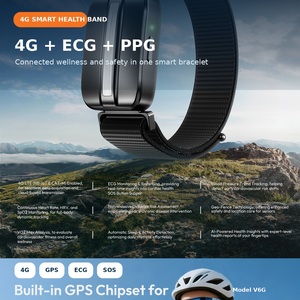
While general ward tracking relies on short-range BLE 5.3 gateways connected to hospital Wi-Fi, post-discharge Hospital-at-Home programs require direct-to-cloud telemetry that eliminates complex smartphone pairing for elderly patients. B2B buyers are increasingly procuring hybrid patient trackers equipped with integrated 4G LTE-M / NB-IoT modules and standalone GPS/SOS distress triggers (such as the V6G senior monitoring bracelet), ensuring continuous data transmission even in low-connectivity rural environments.
Comprehensive Technical Specification Comparison Matrix
Compare the core architecture, sensor modalities, and hardware parameters across our flagship patient tracking wearable series manufactured in our certified China facility:
| Model Architecture | Sensor Modalities | Wireless Telemetry | Battery & Power | Waterproof Rating | Primary Clinical Target |
|---|---|---|---|---|---|
| E500 Series (Screenless AI) | ECG, PPG, Blood Pressure, Temp, SpO2 | BLE 5.3 / NFC Medical Tag | 280mAh (7-10 Days Active) | IP68 Medical Ingress | General Wards & Post-Discharge RPM |
| VALDUS VITRO Series | Single-Lead ECG, HRV, Sleep, Motion | Bluetooth Low Energy / Gateway Sync | 200mAh (10-14 Days) | 1ATM / IP68 Dual Rating | Ambulatory Care & Fitness Tracking |
| V6G Cellular SOS Series | PPG, ECG, SpO2, GPS / Wi-Fi Positioning | 4G LTE-M / NB-IoT / Standalone SOS | 500mAh (3-5 Days Cellular) | IP67 Waterproof | Senior Telecare, Dementia & Home Care |
| G70 Ultra-Light Band | Continuous Temp, SpO2, ECG, HRV | BLE 5.2 Ultra-Low Power | 180mAh (12-15 Days) | 3ATM Submersible | Clinical Research & Trial Cohorts |
| E500 NFC Medical Variant | ECG, BP Trend, Temp, NFC ID Tag | BLE 5.3 + Active NFC Reader | 280mAh (7-12 Days) | IP68 Sealing | Patient Bedside ID & EHR Linking |
Technological Evolution of Patient Tracking: Optical & Bio-Electrical Principles
To evaluate China's top patient tracker manufacturers, enterprise engineering teams must understand the physical and mathematical signal processing methodologies employed within high-precision health wearables.
Photoplethysmography (PPG) and Multi-Wavelength Pulse Oximetry
Optical patient monitoring relies on illuminating cutaneous tissue with light-emitting diodes (LEDs) and detecting changes in light intensity reflected back to a photodiode. Our advanced factory layouts integrate multi-spectral sensor clusters:
- Green Wavelength (525nm): Provides optimal signal-to-noise ratios for superficial microvascular blood volume changes, ideal for continuous heart rate and heart rate variability (HRV) derivation during active motion.
- Red (660nm) & Near-Infrared (940nm) Wavelengths: Leverages differential optical absorption spectra of oxygenated hemoglobin ($HbO_2$) and deoxygenated hemoglobin ($Hb$) to calculate continuous arterial oxygen saturation ($SpO_2$) and photoplethysmographic respiration rate.
Single-Lead Electrocardiogram (ECG) and Bio-Impedance Telemetry
Unlike optical PPG, which measures volumetric pulse waves, integrated ECG sensor modules utilize bio-compatible dry-contact stainless steel or titanium electrodes to capture the electrical depolarization wave of the myocardium. The raw microvolt signals are fed into high-impedance instrumentation amplifiers, passed through 50/60Hz notch filtering, and converted into continuous single-lead rhythm strips (Lead I equivalent). This enables automated detection of atrial fibrillation (AFib), premature ventricular contractions (PVCs), and resting heart rate abnormalities directly on the edge hardware or cloud server.
Enterprise OEM/ODM Manufacturing Infrastructure & Factory Capabilities
As a leading medical patient tracker original equipment manufacturer (OEM) and original design manufacturer (ODM) in China, our facility offers turnkey product development pathways tailored to international medical brands, pharmaceutical clients, and hospital networks.
Custom Firmware & Mobile SDKs
We provide complete software development kits (iOS / Android Native SDKs, Flutter, React Native) and documented REST APIs allowing instant white-label app customization and direct gateway-to-EMR data streaming.
Industrial Design & Tooling
From custom enclosure molding using medical-grade polycarbonate/ABS to specialized anti-microbial silicone strap formulations, our tooling workshop executes rapid prototyping to mass-production ramp-up in under 6 weeks.
Regulatory Audit Assistance
Full support for client regulatory filings. We supply technical master files (TMF), ISO 10993 biocompatibility test reports, IEC 60601-1 / IEC 60601-1-2 EMC safety dossiers, and clinical performance verification data.
Frequently Asked Questions (FAQ) for B2B Buyers & Procurement Managers
Partner with China's Leading Patient Tracker Manufacturer
Whether you are scaling a national Remote Patient Monitoring (RPM) initiative, procuring general ward telemetry hardware, or launching a specialized medical wearable brand, our engineering team is ready to support your OEM/ODM requirements.
Get Catalog