
Featured Medical-Grade & Commercial IoT Smart Bands
Explore our flagship OEM/ODM wearable platforms. Engineered with proprietary sensor arrays, PPG/ECG bio-signal processing, and enterprise SDK support for global healthcare providers, research consortia, and IoT brands.
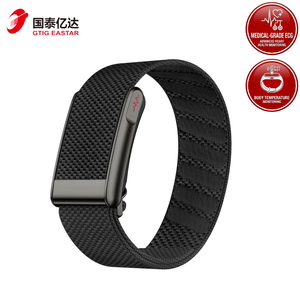
E500 ECG Screenless AI Health Smart Bracelet
IP68 waterproof screenless design engineered for continuous baseline physiological tracking, AI heart rhythm analysis, and multi-sport telemetry.
Contact Us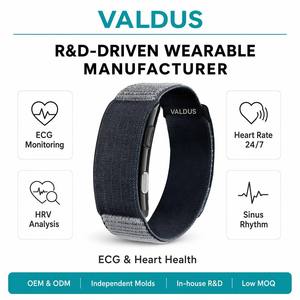
VALDUS VITRO ODM/OEM Screenless ECG Fitness Tracker
Ultra-lightweight biometric band built for active clinical monitoring and seamless daily wear, integrating continuous single-lead ECG capture.
Contact Us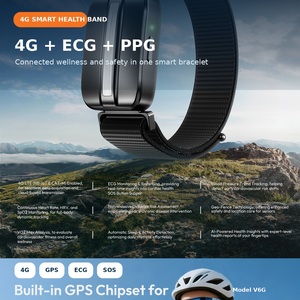
V6G 4G Senior Smart Health Bracelet GPS & SOS
Standalone cellular connectivity with fallback positioning, ECG+PPG monitoring, automated fall detection, and emergency SOS button for senior care.
Contact Us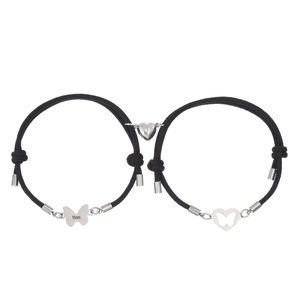
Minimalist Steel Electrocardiogram Smart Bracelet Set
Sleek metallic aesthetic housing advanced ECG sensors, magnetic charging, and lifestyle health tracking for fashion-forward consumer brands.
Contact Us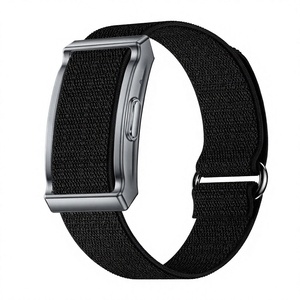
G70 Screenless Smart Band (ECG, SpO2, Temp)
Discreet wrist-worn monitor combining medical-grade continuous body temperature sensing, blood oxygen (SpO2), and HR trend analytics.
Contact Us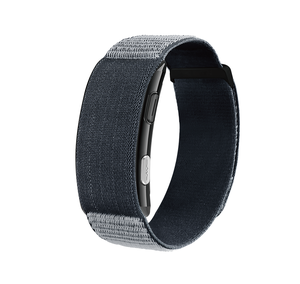
VITRO 1ATM Waterproof Bluetooth Call Fitness Band
Feature-packed hybrid wearable supporting Bluetooth calling, dual-mode optical PPG monitoring, and extended 14-day autonomy.
Contact Us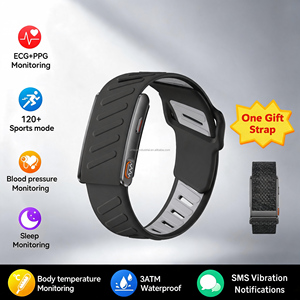
3ATM Waterproof 15-Day Battery Screenless Smart Band
Ruggedized enclosure with 180mAh ultra-efficient power architecture, designed for continuous multi-week remote patient telemetry.
Contact Us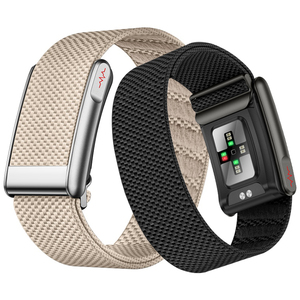
2026 E500 NFC Screenless Multi-Sensor Health Band
Next-generation hardware integrating contact-free NFC access control, automated Early Warning Score algorithms, and bio-impedance sensors.
Contact UsManufacturing Scale & Clinical Deployment Milestones
Our OEM/ODM manufacturing infrastructure bridges high-yield mass production with stringent regulatory compliance required for hospital and enterprise IoT deployments.
Enterprise OEM/ODM Infrastructure & Engineering Competencies
Medical-Grade Quality Systems
Operating under ISO 13485 audited quality management systems. Our products undergo rigorous biocompatibility (ISO 10993), IP68 water-resistance validation, and EMC compliance testing.
Multi-Sensor Bio-Fusion Array
Integration of single-lead ECG rhythm strips, multi-wavelength PPG (Green 525nm, Red 660nm, Infrared 940nm), Galvanic Skin Response (GSR), skin temperature, and 3-axis motion tracking.
Unrestricted Raw Signal Data Access
Providing research institutions and pharmaceutical sponsors IP-free access to raw optical, electrical, and motion signals sampled at up to 128 Hz for proprietary digital biomarker modeling.
Industry Whitepaper: The Evolution of IoT Health Wearables in B2B Procurement
The global Internet of Things (IoT) wearable ecosystem is undergoing a fundamental structural transition. Moving away from consumer-grade step counters, enterprise buyers, hospital networks, remote patient monitoring (RPM) vendors, and clinical trial sponsors now demand high-fidelity bio-signal telemetry, rigorous regulatory traceability, and deterministic supply chain execution. As a premier China-based IoT wearable factory and turnkey OEM/ODM engineering hub, we synthesize state-of-the-art semiconductor architecture, sensor physics, and clinical validation methodologies to deliver world-class hardware solutions.
1. Hardware Architecture & Multi-Modal Sensor Fusion
Modern clinical-grade smart bracelets rely on ultra-low-power microcontrollers (MCUs) paired with specialized Analog Front Ends (AFE). Our engineering framework integrates dual-mode optical photoplethysmography (PPG) paired with dry-contact single-lead electrocardiography (ECG) to minimize motion artifacts and signal degradation.
- Optical PPG Channel Optimization: By deploying triple-wavelength light-emitting diodes (Green at 525nm for superficial microvascular perfusion, Red at 660nm and Infrared at 940nm for deep-tissue SpO2 pulse oximetry), our sensors maintain high signal-to-noise ratios (SNR) even during vigorous physical exertion or ambient thermal shifts.
- Single-Lead Dry ECG Electrodes: Utilizing bio-compatible titanium-coated stainless steel or conductive carbon polymer contacts, our wearables capture continuous single-lead ECG waveform data, enabling automated detection of Atrial Fibrillation (AFib), premature ventricular contractions (PVCs), and heart rate variability (HRV) metrics.
- Thermal & Bio-Impedance Telemetry: Continuous skin surface temperature sensing is coupled with skin contact detection (GSR) to ensure wear-time compliance monitoring in clinical research settings.
2. Future Procurement Trends in IoT Wearables (2026–2030)
Procurement directors and product managers evaluating China manufacturing partners must position their product roadmaps to capitalize on key upcoming market shifts:
A. Decoupling Hardware from Proprietary SaaS Silos: Global buyers are increasingly eschewing vendor-locked consumer wearables. Procurement strategies now prioritize "white-label" hardware that exposes raw sensor data via Bluetooth Low Energy (BLE 5.3) SDKs, allowing enterprise software platforms to own the end-to-end data value chain.
B. Shift Toward Screenless & Low-Friction Form Factors: Screenless smart bands (such as the E500 and G70 series) are gaining dominant market share in senior care, psychiatric studies, and hospital general wards. Removing liquid-crystal displays extends battery endurance from days to weeks, reduces accidental user tampering, and slashes unit BOM (Bill of Materials) costs while focusing device power budget purely on continuous sensor sampling.
C. Cellular NB-IoT and Standalone Telemetry: While BLE-to-smartphone gateways remain cost-effective, standalone 4G LTE-M and Narrowband IoT (NB-IoT) wearables are rapidly becoming standard for high-risk remote patient monitoring. By removing the requirement for patient smartphone pairing, cellular smart bands ensure uninterrupted data transmission among elderly or digitally disengaged patient demographics.
3. Global Regulatory Compliance & Quality Assurance Benchmarks
Navigating global healthcare compliance requires a manufacturing partner with verifiable quality management systems. Our manufacturing plant operates strictly under ISO 13485 standards, backed by full traceability for every surface-mount technology (SMT) component on our automated PCBA assembly lines.
Our regulatory engineering team directly supports clients through CE-MDR (EU Medical Device Regulation 2017/745) Class IIa/IIb submission processes, FDA 510(k) clearance filings, and ISO 10993 cytotoxicity, sensitization, and intracutaneous reactivity testing. Furthermore, our cloud infrastructure and firmware protocols comply with GDPR and HIPAA mandates, guaranteeing end-to-end data encryption (AES-256 at rest, TLS 1.3 in transit).
4. Strategic Technology Roadmap: Edge AI & Automated Early Warning Scores
The future of continuous wearable monitoring lies in edge compute capabilities. Our research and development group is embedding lightweight machine learning models (TinyML) directly onto ARM Cortex-M33 wearable microcontrollers. This enables on-device computation of clinical risk scores, such as the National Early Warning Score (NEWS2), flagging physiological deterioration between periodic nurse rounds without saturating cellular bandwidth or cloud computing resources.
Through active participation in European research consortiums (such as the DETECT project for early cardiac arrest detection), our factory continuously refines sensor calibration algorithms against golden-standard hospital reference monitors, ensuring our B2B clients receive pre-validated, market-ready hardware platforms.
Frequently Asked Questions for Sourcing & SMT Manufacturing
What is the minimum order quantity (MOQ) for custom OEM/ODM wearable orders?
Our standard MOQ for neutral off-the-shelf white-label smart bands is 100 units. For custom logo engraving, bespoke colorways, and tailored gift box packaging, MOQ starts at 1,000 units. Deep ODM projects involving custom tooling, specialized PCBA layout modifications, or proprietary sensor integrations typically start at 3,000 to 5,000 units.
How do you support software integration for enterprise platforms?
We provide comprehensive software development kits (SDKs) for iOS and Android, alongside documented RESTful API access for cloud-to-cloud server sync. Clients receive full access to BLE protocol documentation, enabling direct pairing between our hardware and your proprietary mobile application without third-party middleware fees.
Can we access raw, unfiltered PPG and ECG bio-signals?
Yes. Unlike consumer brand manufacturers that only transmit calculated high-level metrics (e.g., average heart rate), our research-grade firmware options allow raw optical PPG, single-lead ECG, 3-axis accelerometer, and skin conductance data streams sampled at up to 128 Hz to be exported for proprietary algorithmic development.
What quality control protocols are performed in your China factory?
Every manufactured device undergoes 100% automated optical inspection (AOI) on the PCBA line, followed by multi-point functional test routines, high-pressure 1ATM to 3ATM water-submersion testing, thermal aging chamber cycles, and optical power calibration using standardized phantom tissue simulators.
What lead times can buyers expect for custom sample runs and mass production?
Golden sample units with pre-flashed custom firmware are dispatched within 5 to 7 business days. Full mass production orders typically require 25 to 35 calendar days depending on component lead times and custom packaging requirements.
Ready to Build Your Custom IoT Wearable Solution?
Connect directly with our engineering and procurement team to discuss BOM optimization, customized tooling, regulatory strategy, or request prototype evaluation units.
Contact Us