
CE Certified Medical Smartwatch Solutions
Explore our OEM/ODM certified medical-grade wearable series engineered for continuous ECG, PPG, SpO2, and vital signs monitoring across general wards and remote patient care.
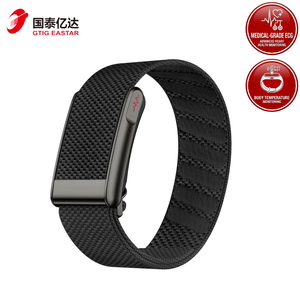
- Continuous ECG & AI Rhythm Analysis
- IP68 Medical Waterproof Rating
- Multi-sport & Sleep Tracking
- Screenless Ultra-Lightweight Form
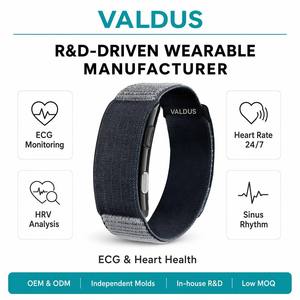
- Single-Lead ECG Electrodes
- Continuous Heart Rate & SpO2
- Designed for 24/7 Clinical Wear
- Custom Firmware & API Support
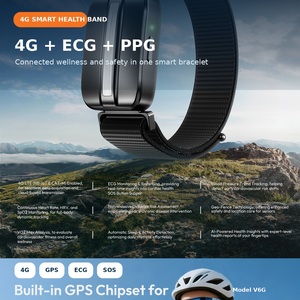
- Standalone 4G LTE Cellular Connectivity
- Real-time GPS Fall & SOS Alert
- Senior & Remote Care Focused
- ECG + PPG Multi-Sensor Array
- Minimalist Metallic Casing
- PPG Optical Monitoring Module
- Magnetic Charging Interface
- B2B Wholesale & Custom Branding
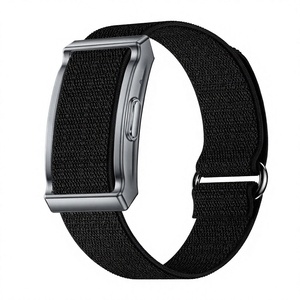
- Continuous Body Temperature Sensing
- ECG + SpO2 + Sleep Monitoring
- Zero-Distraction Screenless Design
- Extended Battery Endurance
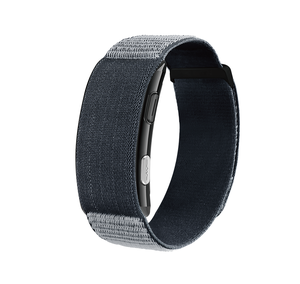
- 1ATM Water Resistance Casing
- Dual Android / iOS SDK Integration
- Remote Camera & Alarm Sync
- High-Precision Heart Rate Sensors
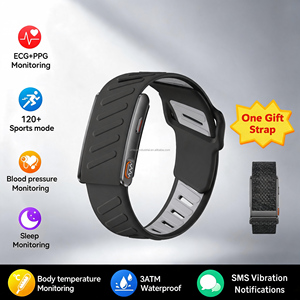
- 3ATM Deep Waterproof Certification
- 180mAh Cell (15 Days Standby)
- Raw PPG & Accelerometer Export
- Biocompatible Silicone Wristband
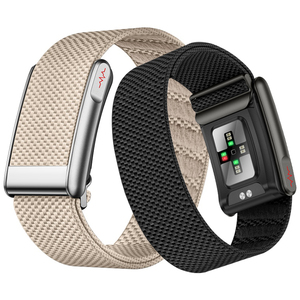
- NFC Access & Identification Chip
- Blood Pressure Trend Monitoring
- Screenless Ergonomic Design
- ISO 13485 Manufacturing Standard
Executive Industry Overview: Sourcing Certified Medical Smartwatches
Bridging the Gap Between Consumer Wearables and Regulatory-Grade Clinical Monitoring
In the rapidly evolving global healthcare ecosystem, the demand for certified medical smartwatches and screenless health bracelets has reached a critical tipping point. Procurement officers, hospital IT directors, CROs (Clinical Research Organizations), and OEM brand owners face an imperative shift: transitioning from consumer-grade fitness trackers to regulatory-compliant, CE Certified Medical Smartwatch Solutions. The fundamental bottleneck in modern ward management and remote patient monitoring (RPM) is the monitoring gap between periodic manual nursing rounds. Discrete spot-checks recorded every 4 to 6 hours inherently miss transient physiological deterioration, early sepsis markers, nocturnal arrhythmias, and sudden cardiac events.
As a premier certified medical smartwatch manufacturer and OEM/ODM engineering factory, our production facilities operate under rigorous quality management frameworks certified to ISO 13485 standards. Our continuous vital sign platforms—typified by continuous multi-sensor screenless bands—are specifically engineered to overcome patient compliance barriers. By removing power-hungry displays and touch panels, our medical smart bracelets achieve continuous multi-day recording of up to 19 vital parameters while maintaining biological safety, IP68 water resistance, and uncompromised raw signal fidelity.
Factory Strengths & Enterprise Technical Advantages
Why leading MedTech distributors, pharmaceutical trial sponsors, and hospital networks partner with our manufacturing ecosystem.
Our products are developed and manufactured in accordance with EU Medical Device Regulation (CE-MDR 2017/745) audited by Kiwa notified bodies and FDA 510(k) cleared criteria, ensuring legal compliance for clinical environments.
We provide IP-free, unrestricted raw data export for PPG (green, red, infrared), single-lead ECG rhythm strips, 3-axis accelerometer, skin temperature, and GSR (Galvanic Skin Response) for advanced AI modeling.
Integrated Early Warning Score (EWS) algorithms deliver real-time risk stratification for ward patients and post-discharge home care, automating clinical escalation before critical adverse events occur.
Future Procurement Trends in Medical Wearables
Strategic insights for enterprise buyers navigating regulatory updates, sensor miniaturization, and software integration.
1. The Shift from Display-Centric to Screenless Sensor Bands
Enterprise buyers are rapidly shifting procurement budgets toward screenless form factors (such as the E500 and G70 series). Touchscreens on medical wearables present several vulnerabilities: increased battery consumption, fragile glass components prone to accidental damage, distraction to elderly patients, and cybersecurity vector points. Screenless medical smart bracelets maximize battery longevity up to 15-30 days, ensure 100% passive patient compliance, and optimize thermal management for continuous optical PPG sensing.
2. IP-Free Raw Data Ownership for AI Biomarker Development
Proprietary closed-loop algorithms are no longer sufficient for pharmaceutical clinical trials and university research hospitals. Procurement requirements now dictate raw sensor waveform access. Modern tenders require uncompressed 128Hz PPG, raw ECG microvolt data, and high-frequency acceleration metrics. This raw data stream empowers pharmaceutical companies to develop custom proprietary digital biomarkers for oncology, hypertension, frailty, and neurological progression without vendor lock-in.
3. EMR/EHR Interoperability via Open APIs & Mobile SDKs
Medical smartwatches can no longer operate as isolated hardware islands. Procurement trends prioritize manufacturers providing certified REST APIs, iOS/Android mobile SDKs, and direct HL7 / FHIR data pipeline connectors. This seamless architecture enables automatic streaming of vital parameters (Heart Rate, SpO2, Respiration Rate, Skin Temperature) straight into hospital EMR systems, feeding central nursing stations and automated telemetry dashboards.
4. Multi-Sensor Fusion & Continuous Blood Pressure Measurement
The convergence of multi-wavelength optical PPG (green, red, infrared), single-lead ECG dry electrodes, and ambient/skin thermal sensors enables real-time cuffless blood pressure trend evaluation and early arrhythmia detection (Atrial Fibrillation, PVCs). Sourcing managers are targeting factories capable of fusing these sensor outputs into unified, calibrated clinical alerts.
Product Development & Technological Roadmap
Engineering innovations shaping the next decade of medical smartwatches and health bands.
Energy Harvesting & NB-IoT Connectivity
Next-generation medical smartwatches are transitioning toward autonomous power management. Innovations such as ambient light energy harvesting integrated into micro-power management ICs drastically reduce charging intervals. Coupled with Narrow-Band IoT (NB-IoT) cellular chips, future medical bracelets will transmit patient vital signs directly to cloud servers without requiring a smartphone gateway.
Continuous Respiration & Cardiac Arrest Early Warning
Derived respiration rate extracted from micro-modulations in PPG amplitude (respiratory-induced variation) is fast becoming a standard safety metric. Advanced research consortia (such as the DETECT project) are deploying single-lead ECG wearables capable of real-time out-of-hospital cardiac arrest recognition, triggering automated emergency dispatch calls immediately upon arrhythmia onset.
Biocompatible Materials & Medical-Grade IP68 Seals
Long-term wear causes dermatological irritation if non-medical plastics or sub-standard metallurgy are used. Factory engineering standards now focus on ISO 10993 compliant biocompatible silicone wristbands, surgical 316L stainless steel electrodes, and hermetically sealed IP68/3ATM waterproof enclosures that tolerate hospital chemical disinfection protocols.
On-Device Edge AI Rhythm Classification
Relying solely on cloud compute for emergency detection introduces latency and network dependencies. Modern medical smartwatch architecture integrates edge-AI microcontrollers capable of running lightweight neural networks locally on the device, identifying ectopic beats and paroxysmal AFib in under 500 milliseconds.
Global Clinical & OEM Partner Network
Collaborating with global medical technology leaders, university hospitals, and research consortia.
Our medical-grade wearables and underlying hardware architecture are trusted across international projects, hospital networks, and pharmaceutical clinical trials. We supply OEM/ODM partners and collaborate with leading institutions, including Medtronic, Roche Diagnostics, Philips, Janssen, Charité Berlin, Radboud UMC, Amsterdam UMC, and Erasmus MC.










Frequently Asked Questions (Sourcing & Manufacturing FAQ)
Essential guidance for medical equipment buyers, hospital procurement teams, and OEM brand partners.
CE-RED (Radio Equipment Directive) only evaluates basic electrical safety, electromagnetic compatibility, and wireless spectrum usage; it does NOT validate medical efficacy. In contrast, CE-MDR (Medical Device Regulation EU 2017/745) requires comprehensive clinical evaluation reports (CER), notified body auditing (such as Kiwa or TÜV), ISO 13485 quality management certification, and proven clinical algorithm accuracy. Our medical smartwatches are manufactured under strict ISO 13485 environments designed for CE-MDR and FDA 510(k) compliance pathways.
Yes. Unlike consumer smartwatch brands that restrict access to proprietary summary scores, our OEM/ODM platform provides completely unrestricted, IP-free raw data access. Researchers can extract uncompressed 128Hz multi-wavelength PPG (green, red, infrared), single-lead microvolt ECG waveforms, skin temperature, GSR, and 3-axis accelerometer values via software APIs and mobile SDKs.
Our advanced multi-sensor hardware architectures continuously derive up to 19 physiological vital parameters, including: Continuous Heart Rate (HR), Heart Rate Variability (HRV / SDNN / RMSSD), Single-lead Electrocardiogram (ECG rhythm strips), Blood Oxygen Saturation (SpO2), Continuous Respiration Rate, Skin & Body Temperature, Blood Pressure Trend Index, Posture & Activity Metrics, Sleep Staging, and Galvanic Skin Response (GSR).
We provide comprehensive developer documentation, RESTful Cloud APIs, and native mobile SDKs (iOS and Android). Data collected by the smart bracelets syncs via encrypted Bluetooth LE to a mobile app or wall gateway, which securely feeds parameters into hospital EMR systems using HL7 or FHIR standards, bypassing manual nursing entry requirements.
We offer end-to-end white-label and ODM customization, including: custom exterior industrial design (CMF), custom casing colors and laser-engraved branding, biocompatible strap materials (silicone, TPU, leather, metallic), custom firmware boot-screens and Bluetooth device names, app white-labeling, and tailored algorithm threshold tuning for specific disease pathways.
For standard stock units or evaluation developer kits, the MOQ starts as low as 10 units. For custom white-label OEM orders (custom logo, packaging, and firmware configuration), the typical MOQ is 500 to 1,000 units. Full ODM custom hardware tooling lead times range from 8 to 12 weeks, including initial prototyping and regulatory pre-testing support.
Data security is embedded at the hardware and cloud architecture layers. All wireless Bluetooth LE transmissions are protected using AES-128 bit encryption. Cloud infrastructure complies fully with GDPR and HIPAA mandates, utilizing role-based access control, anonymized patient identification tokens, and end-to-end data encryption in transit and at rest.
Screenless health bands eliminate interactive features like notifications, apps, and touch screens that cause patient distraction or user error—especially among elderly cohorts. Without energy-draining color displays, battery life extends up to 15-30 days per charge, dramatically reducing wear compliance gaps caused by frequent charging requirements.
Request Product Catalogs & Factory Wholesale Pricing
Connect with our senior engineering team and medical procurement specialists to evaluate raw data specs, sample availability, regulatory documentation, and custom OEM/ODM solutions.
Get Catalog