
CE Certified Smart Health Trackers & Wearable Hardware
Explore our certified range of clinical and commercial health tracking devices engineered for remote patient monitoring, corporate wellness, and digital biomarker research.
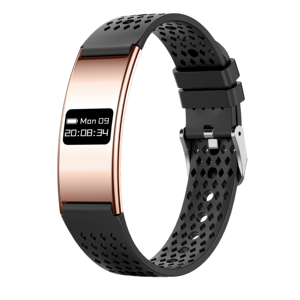
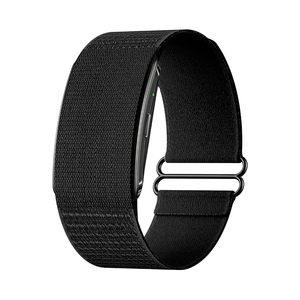
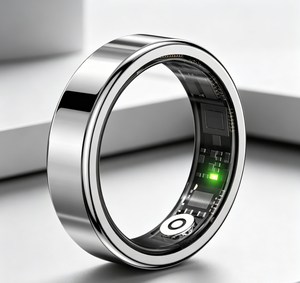
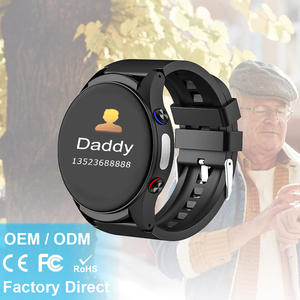
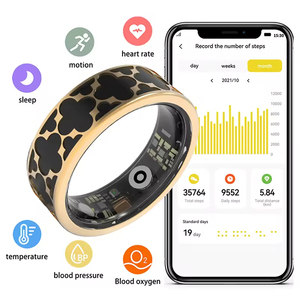
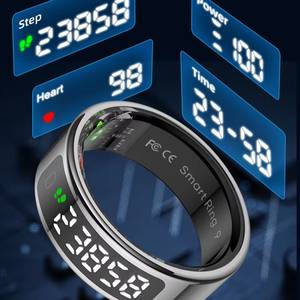
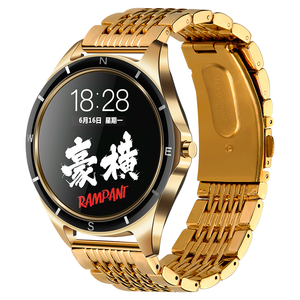
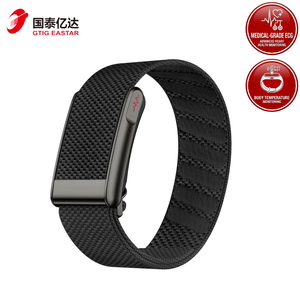
Enterprise Strengths & Medical Regulatory Rigor
As a premiere CE Certified Health Tracker Exporter, our manufacturing ecosystem bridges consumer wearable elegance with regulated medical compliance.
Institutional Baseline & Global Compliance Framework
In the evolving healthcare landscape, sourcing health tracking technology demands strict adherence to global medical frameworks. Unlike standard consumer electronics, certified health trackers exported for clinical trials, remote patient monitoring (RPM), and general ward surveillance require rigorous quality management systems. Our manufacturing facilities operate under strict ISO 13485 quality standards, ensuring that every wristband, smart ring, and continuous monitor delivers validated medical-grade telemetry.
Our exporting infrastructure fulfills the requirements of the European Union Medical Device Regulation (EU CE-MDR) and holds FDA 510(k) clearance. This double-layer certification permits health systems, pharmaceutical companies, and enterprise importers to integrate our hardware straight into regulated clinical workflows without regulatory bottlenecks.
Validated Multi-Sensor Arrays
Equipped with photoplethysmography (PPG green/red/infrared), single-lead ECG, galvanic skin response (GSR), skin temperature sensors, and 3-axis accelerometers for multi-parametric continuous tracking.
128 Hz Raw Signal Export
Unrestricted, IP-free access to raw PPG and ECG waveform data up to 128 Hz. Empowers university biostatisticians, CROs, and digital biomarker developers to train proprietary machine learning models.
EMR & Cloud API Integration
Documented REST APIs and mobile SDKs enable immediate synchronization into hospital Electronic Medical Records (EMR), nurse dashboards, and third-party SaaS management tools (GDPR & HIPAA compliant).
Future Procurement Trends for Wearable Health Exporters
Understanding the macro-shifts in global B2B procurement: How hospital networks, insurers, and distributors select wearable medical hardware.
1. The Shift from Spot-Check Sampling to Continuous Vital Signs Telemetry
Traditional clinical monitoring relies on nursing rounds occurring every 4 to 8 hours. During these intermittent intervals, early indicators of patient deterioration—such as subtle shifts in respiration rate, heart rate variability (HRV), or micro-flashes of cardiac arrhythmia—often go undetected. Procurement departments in leading healthcare networks are transitioning to continuous wearable monitoring. Exporters capable of supplying low-power, lightweight bracelets and smart rings with continuous multi-parameter sampling are gaining market share against traditional legacy monitors.
2. Form Factor Convergence: Smart Rings & Screenless AI Bracelets
Procurement intent is shifting toward ultra-unobtrusive form factors. Patients discharged for remote recovery or subjects participating in 12-month clinical trials suffer from compliance fatigue when burdened with bulky smartwatches. The market is demanding 8.0mm ultra-thin smart rings (IP68 waterproof) and screenless AI health wristbands. Eliminating interactive color touchscreens extends battery longevity from 24 hours to 10–14 days, drastically lowering study drop-out rates and minimizing technical support requests.
3. Algorithm Sovereignty & Open Data Architectures
A critical trend among institutional enterprise buyers is the rejection of "black-box" consumer wearables. Standard consumer fitness brands lock vital signs data behind closed proprietary algorithms, providing only aggregated metrics (e.g., daily sleep scores). B2B buyers now demand raw signal data. Exporters providing open SDKs, raw PPG/ECG CSV outputs, and raw accelerometer streams enable life sciences companies to discover novel digital biomarkers for sepsis, oncology-related frailty, and cardiovascular risk forecasting.
Evolution of Wearable Sensing Architectures
A comprehensive technical comparison between traditional fitness bands and next-generation CE-certified medical health trackers exported for enterprise deployment.
| Vector Metric | Consumer Fitness Trackers | Next-Gen CE-MDR Health Trackers |
|---|---|---|
| Primary Application | General fitness, step tracking, basic heart rate | Hospital general wards, RPM, clinical trials, EWS scoring |
| Optical Sensor Array | Single Green LED PPG (Low sampling rate) | Multi-Wavelength PPG (Green, Red 660nm, IR 940nm) @ 128Hz |
| ECG & Cardiac Tracking | Episodic, manual 30-sec pulse checks | Single-lead continuous ECG rhythm capture with HRV analysis |
| Data Access Model | Restricted app ecosystem; no raw data export | Full API/SDK access; raw waveform export (CSV, JSON, EDF) |
| Regulatory Standing | General wellness device (Uncertified) | CE-MDR Certified, FDA 510(k) Cleared, ISO 13485 audited |
| Early Warning Integration | Basic high/low heart rate alerts | Automated Early Warning Score (EWS) calculation & EMR integration |
| Enclosure & Compliance | Water resistant (IP67) | IP68 Waterproof, medical-grade hypoallergenic TPU/Alloy |
Frequently Asked Questions for Sourcing & Importers
Key technical, regulatory, and commercial answers for enterprise buyers evaluating health tracker suppliers and exporters.
How do CE-MDR and FDA 510(k) certifications impact global customs clearance and commercial distribution?
CE-MDR (Medical Device Regulation EU 2017/745) certification ensures that health trackers are legally classified as medical devices within European Union member states and aligned international markets. Having verified CE-MDR and FDA 510(k) clearance simplifies global import declarations, guarantees compliance with healthcare authority regulations, and protects distributors from product recalls or legal penalties associated with selling uncertified health monitoring hardware.
Can our engineering team access raw PPG, ECG, and accelerometer data streams?
Yes. As a primary exporter for medical and academic research, our health tracker platform provides unrestricted, IP-free raw data extraction. Through our software development kits (SDKs) and RESTful cloud APIs, development teams can directly extract raw optical photoplethysmography (PPG) waveforms, ECG voltage samples at up to 128 Hz, tri-axial acceleration, and skin temperature channels.
What options are available for OEM white-labeling and hardware customization?
We provide full-stack OEM and ODM customization services. Importers can customize physical device branding (laser-engraved logos, custom casing colors, hypoallergenic strap materials), packaging design, firmware boot logos, and custom Bluetooth device naming. Additionally, our mobile companion applications (iOS and Android) can be complete white-labeled with your corporate identity, color schemes, and domain infrastructure.
How do these health trackers calculate Early Warning Scores (EWS) for ward monitoring?
Our algorithms synthesize continuous inputs from continuous heart rate, blood oxygen saturation (SpO2), skin temperature, and calculated respiration rates. The integrated firmware or cloud engine aggregates these physiological metrics into a standardized Early Warning Score (such as NEWS2). When a patient's score crosses clinical baseline thresholds, automated notifications are triggered to alert nursing staff before severe clinical deterioration occurs.
What is the typical battery lifespan and operating cycle of screenless health rings and bracelets?
By optimizing micro-controller power states and removing power-hungry graphic displays, our screenless smart bracelets and IP68 alloy smart rings achieve continuous operational lifespans between 5 to 14 days on a single charge, depending on sampling frequency configurations (e.g., continuous 24/7 PPG vs interval-based sampling). This minimizes maintenance overhead in ward settings and enhances patient adherence in remote studies.
How is patient data privacy guaranteed under GDPR and HIPAA regulations?
All data transmitted from the smart health trackers to local Bluetooth gateways or mobile software is encrypted using AES-128/256 standards. Cloud communications utilize TLS 1.3 encryption. Personal Identifiable Information (PII) is completely decoupled from physiological sensor data, storing health metrics under pseudo-anonymous patient IDs to maintain strict compliance with EU GDPR and US HIPAA mandates.
What minimum order quantities (MOQ) apply for B2B export contracts?
Standard export shipments for stock-certified health trackers begin at low MOQs (50–100 units) to facilitate hospital pilot projects and feasibility studies. Fully customized OEM hardware production runs, custom firmware setups, or bespoke packaging options typically require an MOQ of 1,000 units per production lot.
What post-market surveillance (PMS) and ongoing technical support do you provide?
In adherence to ISO 13485 quality assurance, we offer continuous post-market surveillance, over-the-air (OTA) firmware security updates, comprehensive technical documentation, clinical validation whitepapers, and dedicated engineering consultation for API/EMR integration support.
Partner with a World-Class CE Certified Health Tracker Exporter
Whether you require bulk supply for hospital ward deployments, custom smart rings for commercial brand scaling, or raw-data wearables for pharmaceutical trials—our engineering team is ready to support your technical specifications.
Get a Quote