
Premier CE Certified ECG Monitors & Smart Wearables
Explore our factory-direct portfolio of clinically validated single-lead and multi-parameter continuous ECG monitoring devices. Designed for seamless hospital-to-home monitoring, decentralized clinical trials, and OEM/ODM global exports.
Industry Whitepaper: The Paradigm Shift in Medical Wearable ECG Architecture
In the rapidly evolving landscape of medical technology, continuous physiological tracking has transitioned from a luxury clinical feature to a foundational requirement for acute ward management, remote patient monitoring (RPM), and decentralized pharmaceutical research. Modern healthcare infrastructure faces a dual crisis: a shortage of clinical staff and an increasing volume of complex, chronic conditions. Traditional episodic spot-check measurements—where patient vital signs are recorded manually every 4 to 6 hours—leave dangerous surveillance gaps during which physiological deterioration can progress unnoticed.
As a leading CE certified ECG monitor factory and global exporter, our engineering paradigm addresses these critical gaps by replacing bulky, tethered bedside monitors with ergonomic, wrist-worn multi-sensor platforms. Certified under the stringent European Union Medical Device Regulation (EU-MDR 2017/745) and cleared via FDA 510(k), our smart monitors provide continuous electro-cardiographic and photoplethysmographic tracking across the continuum of care.
Unifying Ward, Remote, and Clinical Data Pipelines
The primary engineering bottleneck in wearable medical monitoring has historically been the compromise between patient compliance and data fidelity. High-precision 12-lead Holter monitors provide rich diagnostic data but severely restrict patient mobility and suffer from poor multi-day compliance. Conversely, consumer fitness bands offer comfort but lack certified signal integrity, raw waveform export, and regulatory clearance for clinical decision-making.
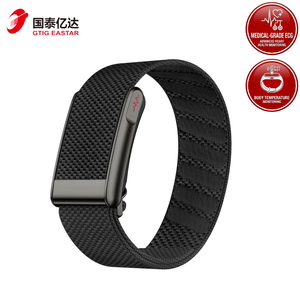
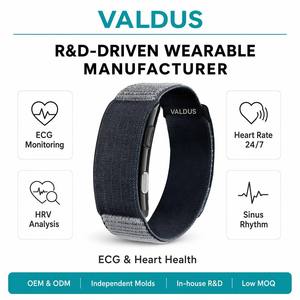
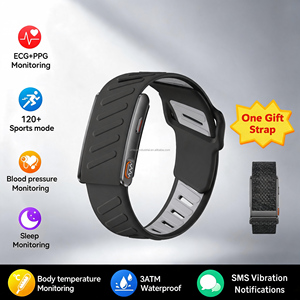
Our screenless and smart-screen ECG wearable architectures bridge this divide. Built upon ISO 13485-certified quality management systems, our hardware integrates high-density dry-contact micro-electrodes with multi-wavelength optical sensors. This enables continuous extraction of up to 19 physiological parameters—including single-lead ECG rhythm strips, heart rate variability (HRV), continuous respiration rate, oxygen saturation (SpO2), and core skin temperature—without imposing friction on the patient's daily activities.
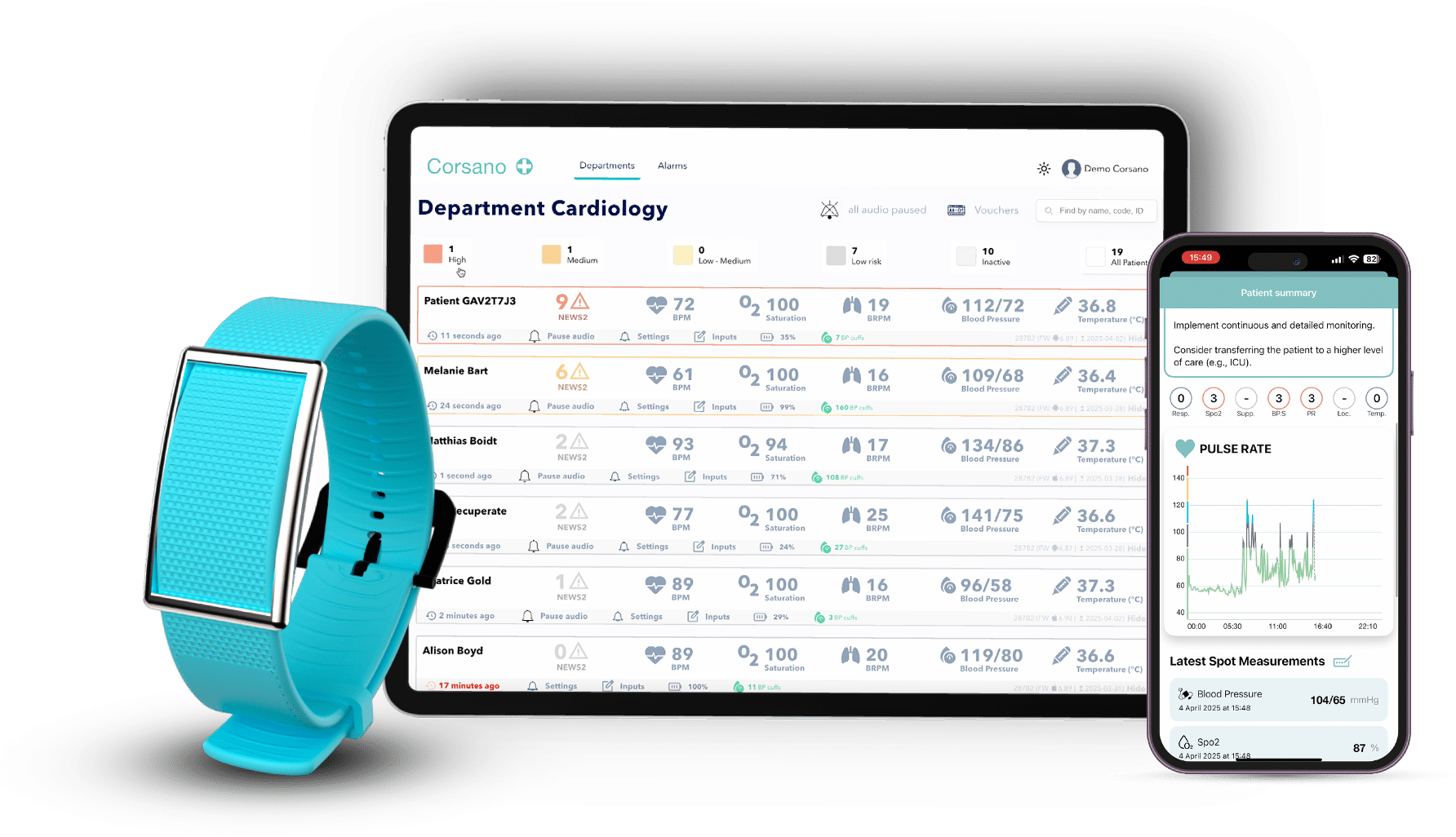
Medical-Grade Electrocardiography
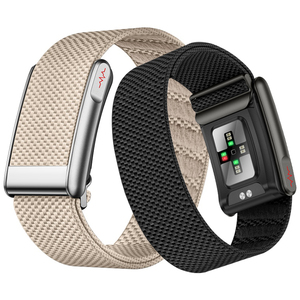
Precision single-lead ECG recording utilizing corrosion-resistant titanium and stainless-steel micro-electrodes. Optimized for low noise floor, high common-mode rejection ratio (CMRR > 100 dB), and immediate detection of arrhythmias such as Atrial Fibrillation (AFib).
Multi-Wavelength PPG & Bio-Sensors
Advanced optical arrays combining Green (525nm), Red (660nm), and Infrared (940nm) LEDs coupled with 3-axis precision accelerometers, skin conductance (GSR) sensors, and high-accuracy thermal NTC thermistors.
Continuous Early Warning Scores (EWS)
Automated telemetry processing that computes baseline physiological trends to calculate National Early Warning Scores (NEWS2) in real-time, providing actionable escalation triggers to nursing staff prior to acute arrest.
Unrestricted Raw Signal Acquisition: Empowering AI Biomarker Development
A frequent limitation encountered by pharmaceutical sponsors, clinical research organizations (CROs), and medical software developers when sourcing commercial wearables is the "black box" algorithm restriction. Most commercial brands restrict access to derived aggregated metrics (such as hourly average heart rate), keeping raw sensor outputs proprietary. This prevents research teams from validating novel digital biomarkers, training custom machine learning (ML) models, or running independent clinical trials.

Interoperability via SDKs and RESTful APIs
To support seamless integration into existing hospital Electronic Medical Record (EMR) software (such as Epic, Cerner, or HL7 FHIR protocols) and proprietary cloud pipelines, our monitors pair with dedicated Android and iOS Software Development Kits (SDKs). Medical device integrators can bypass proprietary consumer clouds entirely, streaming encrypted telemetry directly from the wristband through local gateways straight into hospital databases or secure research repositories.
This open-architecture philosophy has enabled our devices to serve as the core data collection engine across major European research initiatives, including the Horizon 2020 Watch-It validation program, the Eurostars LifeTime autonomous telemetry project, and the landmark DETECT consortium focused on early out-of-hospital cardiac arrest detection.
Technical Specifications & Signal Architecture Matrix
For procurement officers, biomedical engineers, and clinical study leads, detailed hardware parameters determine regulatory viability and operational success. The table below outlines the baseline capabilities of our certified ECG monitor export series.
| Parameter / Feature | Clinical Hospital Series (e.g., CardioWatch 287 Class) | Ambulatory & Screenless OEM Series (e.g., E500 / G70) | Senior Telehealth & 4G Series (e.g., V6G 4G) |
|---|---|---|---|
| ECG Electrodes & Engine | Single-Lead Dry Contact Titanium, CMRR >105 dB | Ag/AgCl Dry Conductive Steel Electrodes | Dual Stainless Steel Touch Electrodes |
| Optical Sensing (PPG) | Triple Wavelength (Green 525nm, Red 660nm, IR 940nm) | Dual Green & IR Optical Photodiode Array | Green LED High-Sensitivity Photodiode |
| Raw Data Sampling Rate | Configurable up to 128 Hz (ECG, PPG, ACC, GSR) | Up to 64 Hz / Processed Endpoint Log | Standard 32 Hz Telemetry Streams |
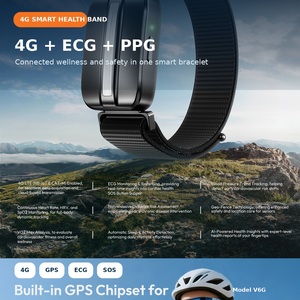
| Connectivity Protocols | Bluetooth Low Energy 5.2, Encrypted Direct Gateway | BLE 5.0, NFC Data Exchange | Standalone 4G LTE-M / NB-IoT / GPS / BLE |
| Regulatory Status | CE-MDR Certified (Class IIa), FDA 510(k) Cleared | CE-EMC / RoHs / Class I Medical Compliance | CE Certified / RED Directives / IP67 |
| Battery & Charging | Magnetic Dock, 7–14 Days Continuous Monitoring | 180mAh Polymer Li-Ion, Up to 15 Days Standby | Magnetic Fast Charge, 3–5 Days Active 4G Telemetry |
| Ingress Protection | IP68 / 1ATM to 3ATM Waterproof | IP68 Full Immersion Resistant | IP67 Splash & Shower Proof |
| Software Integration | iOS & Android Mobile SDKs, RESTful Cloud APIs | White-Label OEM App, Custom Firmware SDK | Central Emergency SOS Telemetry Server API |
Future Global Sourcing Trends in Medical Wearables (2026–2030)
As healthcare systems transition toward proactive, decentralized care models, global procurement managers and MedTech distributors must anticipate key technological and regulatory shifts. Sourcing managers evaluating ECG monitor factories must align their procurement strategies with four emerging macro-trends:
1. The Rise of "Screenless" Clinical Form Factors
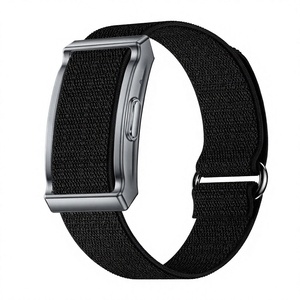
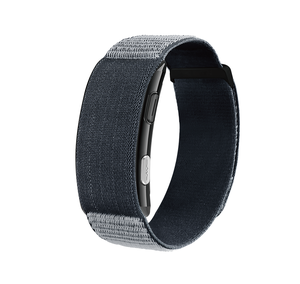
Traditional smartwatches with touchscreens introduce several operational failure points in clinical settings: high battery consumption requiring daily charging, patient distraction, accidental setting modifications, and surface sterilization challenges. Modern hospital purchasing specifications increasingly favor "screenless" smart bracelets. By eliminating the display, power consumption is dramatically reduced (extending battery wear to 14+ days), device durability increases, and data collection remains entirely frictionless for pediatric, senior, or cognitive-decline patients.
2. Stringent EU-MDR and Global Regulatory Compliance
The enforcement of the European Union Medical Device Regulation (EU-MDR 2017/745) has reshaped the global medical hardware market. Regulatory bodies no longer accept consumer-grade wellness trackers re-branded for medical applications. B2B buyers must partner exclusively with manufacturers operating verified ISO 13485 quality management systems, complete with audited Technical Files, clinical validation studies against gold-standard ECG reference monitors (such as Holter ECGs), and verifiable Notified Body certification (e.g., Kiwa CE 1984).
3. Edge-AI and Predictive Deterioration Algorithms
The next generation of wearable ECG monitors moves beyond passive telemetry to active edge-computing diagnostics. Embedded Microcontroller Units (MCUs) are now capable of executing light artificial intelligence algorithms directly on the device. This enables real-time filtering of motion artifacts, instant identification of ectopic beats, and instant generation of multi-parameter arrhythmia risk alerts without relying on constant cloud connectivity.
Factory Manufacturing Infrastructure & OEM/ODM Customization
Our manufacturing complex represents the synthesis of precision biomedical engineering, automated cleanroom assembly, and stringent quality control protocols. As a certified medical ECG exporter, we offer end-to-end original equipment manufacturing (OEM) and original design manufacturing (ODM) services tailored for MedTech brands, hospital chains, pharmaceutical researchers, and tele-health operators worldwide.
Certified Production & Cleanroom Excellence
Operating under audited ISO 13485 quality management standards, our manufacturing facility houses automated surface-mount technology (SMT) lines, ISO Class 7 cleanrooms for optical assembly, and customized biometric calibration testing rigs. Every unit undergoes automated signal-to-noise verification, simulated ECG waveform benchmarking, ultrasonic sealing validation, and IP68 water immersion testing prior to packaging.
B2B Tailoring: Firmware, Branding, and Cloud Portals
We empower our export partners with comprehensive customization options across the entire hardware and software stack:
- Custom Firmware Development: Modification of sensor sampling intervals, power management profiles, BLE advertising rates, and embedded algorithm triggers.
- Industrial Design & Tooling: Custom enclosure colors, strap materials (biocompatible medical silicone, titanium, stainless steel), and private-label laser etching.
- White-Label Applications: Fully branded iOS and Android applications embedded with your corporate identity, telemetry dashboards, and cloud databases.
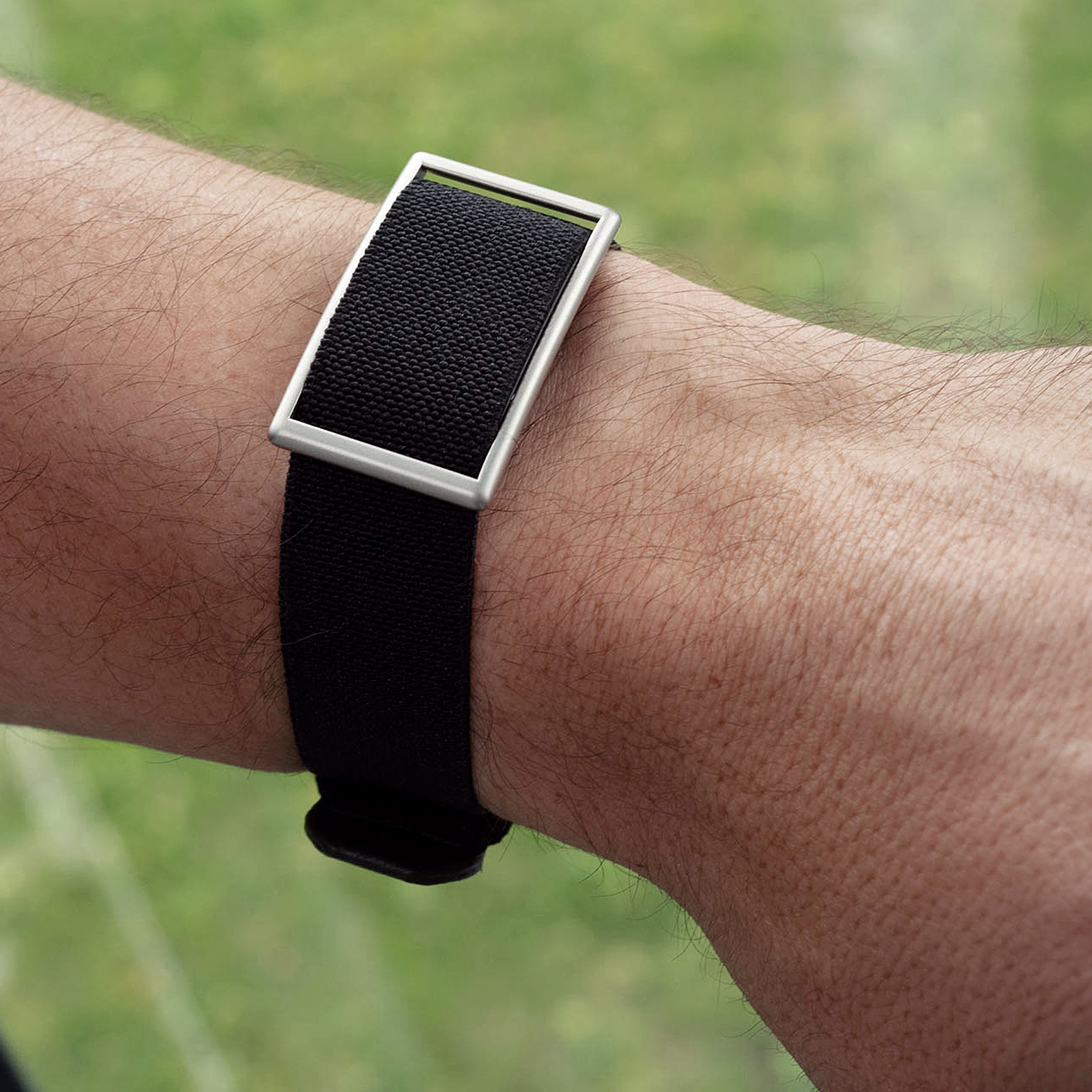
Verified Quality Governance & Academic Validation
Our commitment to rigorous scientific methodology and clinical validation is evidenced by our research collaborations with world-leading medical academic centers, including Charité Berlin, Radboud University Medical Center, Amsterdam UMC, and Erasmus MC. Furthermore, global healthcare leaders such as Medtronic, Netcare, and Roche rely on our wearable infrastructure to power their remote care portfolios.
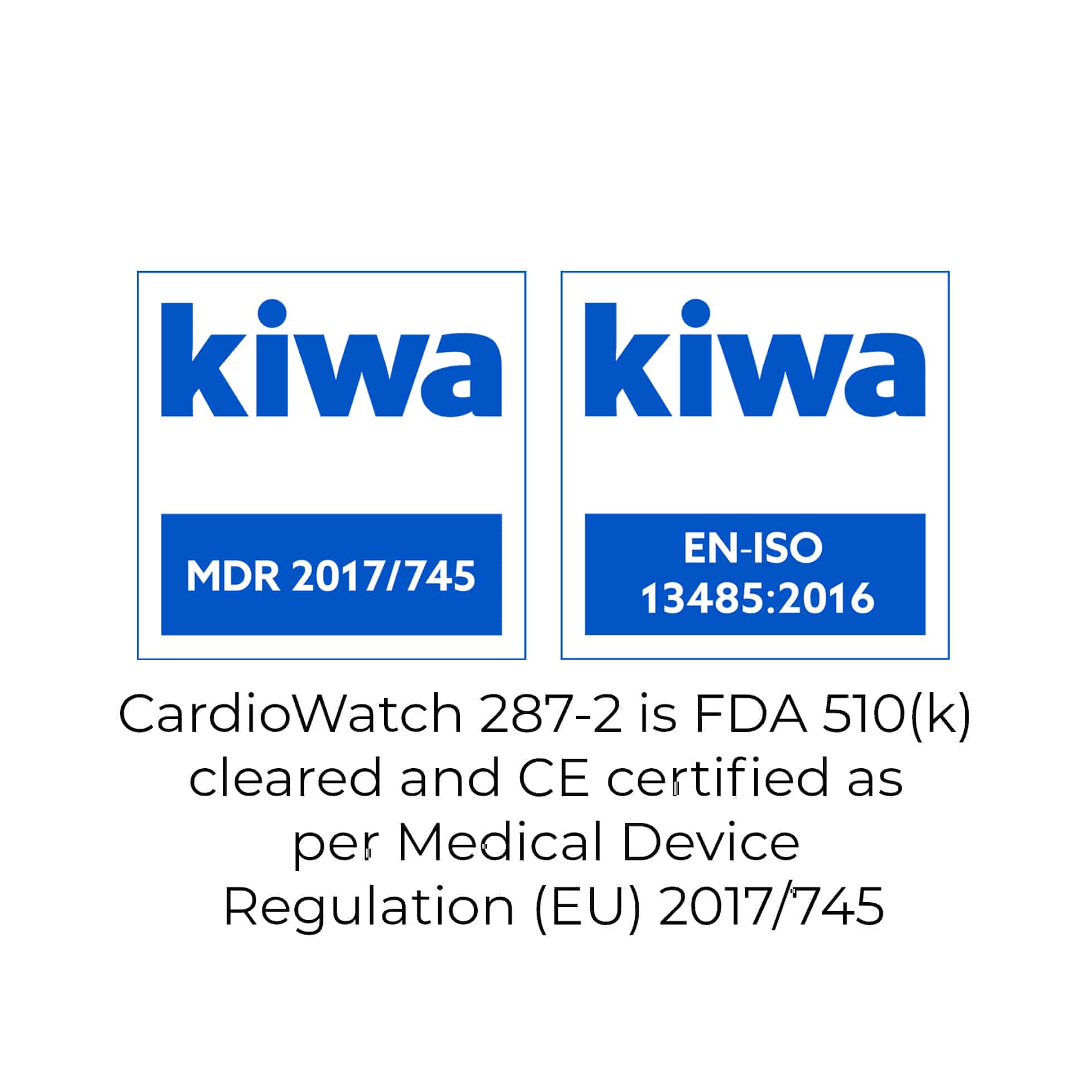
Verifiable Regulatory & Ethical Compliance
Transparency is paramount in B2B medical procurement. All regulatory documentation—including CE-MDR certificates, FDA 510(k) summary notices, ISO 13485 quality audit logs, and GDPR/HIPAA data handling compliance frameworks—is made fully available to prospective distribution and clinical partners during technical due diligence.
When you partner with our manufacturing plant, you are securing a resilient, scalable supply chain backed by verified medical hardware expertise. Whether your requirement is 500 units for a Phase II clinical study or 100,000 units for nationwide general ward continuous monitoring, our production facility delivers uncompromised quality, regulatory compliance, and post-market surveillance support.
Frequently Asked Questions (FAQ) for B2B ECG Monitor Procurement
Find clear, authoritative answers regarding regulatory status, factory customization, sampling specifications, minimum order quantities (MOQ), and system integration.
Which specific physiological parameters are measured by your CE certified ECG monitors?
Depending on the specific configuration selected, our multi-sensor platforms continuously derive up to 19 vital parameters. These include single-lead ECG rhythm strips, continuous heart rate (HR), heart rate variability (HRV / R-R intervals), pulse wave transit time, continuous respiration rate, blood oxygen saturation (SpO2), skin surface temperature, electrodermal activity (GSR), step count, movement intensity, posture classification, and sleep architecture stages.
What is the exact regulatory status of your ECG monitoring wearables for global export?
Our core medical devices are manufactured under ISO 13485 quality management systems and hold full CE-MDR (EU Medical Device Regulation 2017/745) Class IIa certification issued by accredited European Notified Bodies (such as Kiwa CE 1984), as well as FDA 510(k) market clearance in the United States. Furthermore, our products comply with CE-EMC, RoHS, REACH, and radio equipment directives (RED) for international export across North America, Europe, Asia-Pacific, and Latin America.
Can our data science team access uncompressed raw PPG and ECG data streams?
Yes. Unlike consumer smartwatch brands that block access to low-level signal data, our OEM/ODM platforms offer full, unrestricted export of raw sensor outputs. Your research team can receive uncompressed, timestamped raw ECG waveforms, multi-channel PPG optical data (Green/Red/IR), 3-axis accelerometer values, and GSR signals at sampling rates up to 128 Hz through our developer SDKs or direct cloud APIs.
How do your ECG monitors integrate with existing hospital EMR systems and remote patient platforms?
Our solution provides flexible integration pathways. The hardware pairs via Bluetooth Low Energy (BLE 5.2) with customized mobile gateways (Android/iOS) or stationary ward hubs. Data is transferred via secure RESTful APIs and WebSocket connections formatted in HL7 FHIR standards, enabling direct integration into electronic medical records (Epic, Cerner), central nursing station dashboards, or third-party RPM platforms without requiring clinical staff to switch operating systems.
What custom OEM/ODM services does your factory provide for commercial buyers?
We provide full turnkey OEM/ODM solutions. This includes customized outer casing branding, laser-etched logos, bespoke packaging designs, unique strap material selections, firmware modifications (such as altering default telemetry transmission intervals or embedded alert thresholds), white-label companion mobile apps, and dedicated private-cloud server deployments.
What is the minimum order quantity (MOQ) and lead time for factory orders?
For standard stock medical devices, sample evaluations can be dispatched within 3 to 5 business days. Commercial OEM white-label orders typically begin at an MOQ of 500 to 1,000 units depending on customization requirements. Full ODM custom tooling projects carry custom lead times discussed during project scoping. Production lead times for standard batch orders average 4 to 6 weeks from purchase order confirmation.