
Corsano Health Blog & Industry Insights
Stay updated with expert articles, scientific publications, clinical study findings, and digital biomarker innovations in continuous patient monitoring.
How to Choose Remote Patient Monitoring Wearables in 2026?
Table of Contents
- Define Remote Patient Monitoring Wearables and Their Clinical Uses
- Identify Patient Needs, Monitoring Goals, and Required Health Metrics
- Compare Wearable Sensors, Accuracy, Comfort, and Data Quality
- Evaluate Connectivity, Device Compatibility, Security, and Privacy
- Assess Costs, Usability, Support, and Long-Term Reliability
- FAQS
- Conclusion
- Related Posts
Choosing a Remote Patient Monitoring (RPM) Wearable in 2026 will require more than comparing sensors and subscription prices. A small wrist device may track heart rate, oxygen saturation, sleep, or glucose trends. Yet technical sophistication does not guarantee clinical value. The device must produce reliable readings during ordinary life, including walking, bathing, sweating, and interrupted connectivity.
The American Medical Association’s 2022 digital health research found that 93% of physicians saw advantages in digital health tools. Nearly 90% had invested in, or planned to invest in, such technologies. That momentum matters. However, adoption alone proves little. A wearable that creates frequent false alerts can exhaust nurses and worry patients. That is not success.
Dr. Joseph Kvedar, a widely recognized digital-health physician and former American Telemedicine Association president, has said, “The future of health care is in the home.” His point gives RPM a practical direction. The best wearable should fit the patient’s home, habits, and care plan. It should also support secure data transfer, clear escalation rules, long battery life, and accessible design.
Reports from the AMA, the World Health Organization, and the FDA all point toward more connected care. Their evidence also exposes a difficult truth: performance varies across populations and settings. Skin tone, motion, age, and chronic conditions can affect readings. No device is universally best.
This guide examines clinical accuracy, usability, interoperability, privacy, reimbursement readiness, and total ownership cost. Some recommendations may age quickly. That is worth admitting. In 2026, careful selection will depend on evidence, not impressive packaging.
Define Remote Patient Monitoring Wearables and Their Clinical Uses
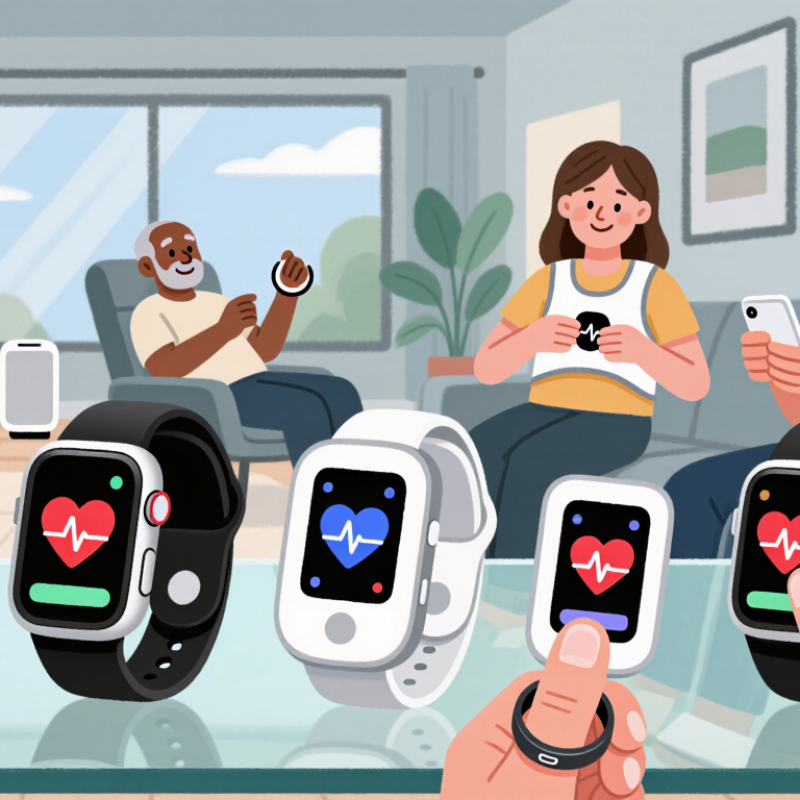
Remote patient monitoring wearables are body-worn devices that collect health data outside traditional clinical settings. They may measure heart rate, rhythm, oxygen saturation, temperature, movement, sleep, or glucose levels. Unlike ordinary fitness trackers, clinical wearables support structured care plans and transmit relevant readings to authorized healthcare teams. Their value depends on accurate sensors, reliable connectivity, clear alerts, and appropriate clinical interpretation.
Clinicians use these devices to follow patients with heart failure, diabetes, respiratory disease, hypertension, and recovery needs after surgery. A patient might wear a sensor at home while a care team reviews changing oxygen levels or unusual heart rhythms. This information can support earlier contact, medication review, or in-person assessment. It does not replace diagnosis. Human judgment remains essential.
Choose devices with published validation data, simple patient instructions, and strong data protection practices. Battery life matters when a patient is tired, elderly, or living alone. Comfort matters too; a loose patch can create misleading readings. No device is perfect. In real use, sensors may detach, phones may lose connection, and patients may forget charging. A responsible selection process tests these problems before wider deployment. It also checks whether clinicians can manage alert volume without missing serious changes. The best wearable is not always the most advanced one. It is the one that produces trustworthy information and fits the patient’s daily routine.
Identify Patient Needs, Monitoring Goals, and Required Health Metrics
Choosing a remote patient monitoring wearable in 2026 should begin with the patient, not the device. An older adult with heart failure may need daily weight, pulse, and oxygen saturation. A patient recovering from surgery may need temperature, movement, and wound observations. These needs differ sharply. They also change over time.
Define the monitoring goal in one clear sentence. For example, “Detect fluid retention before symptoms worsen.” Then select only the metrics that support that goal. Extra measurements can create alerts, confusion, and unnecessary clinical work. Check whether the patient can charge the device, wear it comfortably, and understand its signals. A stiff wrist, weak eyesight, or limited internet access can undermine an otherwise capable system. Keep instructions practical.
Clinical teams should review measurement accuracy, alert thresholds, battery life, data transfer, and interoperability with existing records. A reading is useful only when professionals can interpret it quickly. Compare device performance with a validated clinical measurement during onboarding. Document differences rather than ignoring them. That step can expose poor fit or incorrect placement. A perfect setup is unlikely. Some patients will forget wear time, and some alerts will prove unhelpful. Review adherence and false alarms after the first weeks, then adjust the plan with the patient and care team.
Compare Wearable Sensors, Accuracy, Comfort, and Data Quality
Remote patient monitoring wearables should be chosen by clinical purpose, not impressive specifications. A single-lead sensor may suit rhythm observation, while optical sensors can track pulse and oxygen trends. Motion sensors add context during walking, sleeping, or recovery. Ask how the device performs during sweating, loose straps, darker skin tones, and irregular movement. Laboratory accuracy is useful, but home conditions reveal more.
Comfort determines whether data continues after week two. A device that pinches the wrist, causes heat, or needs nightly charging will create silent gaps. Look for soft contact surfaces, adjustable fastening, low weight, and clear charging alerts. Test it during sleep, stairs, and ordinary work. Small discomfort becomes a reason to remove it. That matters more than a polished demonstration.
Data quality depends on more than sensor precision. Check timestamp consistency, sampling frequency, signal-loss warnings, and export formats. Clinicians need readable trends, not a crowded stream of numbers. Confirm whether readings remain interpretable after Bluetooth interruptions or delayed uploads. Accuracy claims should be supported by independent validation across relevant patient groups. Still, validation may not predict every real-world case. I would record a short pilot, compare wearable readings with accepted clinical measurements, and review missing-data rates before wider use. Perfect data is unlikely. Reliable data is usable, traceable, and honest about uncertainty.
Evaluate Connectivity, Device Compatibility, Security, and Privacy
How to Choose Remote Patient Monitoring Wearables in 2026?
Connectivity should match the patient’s daily environment, not just the clinic’s network. Test Wi-Fi, cellular, and Bluetooth performance inside homes, elevators, and rural areas. A wearable should store readings during outages and upload them when service returns. Alerts must arrive quickly, but false alarms can exhaust clinical staff and worry patients. This trade-off deserves real-world testing.
Device compatibility is equally practical. Check support for current phones, tablets, operating systems, charging accessories, and clinical data systems. Confirm whether readings use standard formats and whether data can move without manual copying. I once treated compatibility as a technical checkbox. That was too narrow. Older phones, limited dexterity, and unreliable internet can change the whole experience. Simple pairing matters.
Security and privacy require evidence, not reassuring language. Look for encryption during transfer and storage, multi-factor authentication, role-based access, audit logs, and timely security updates. Ask how incidents are reported and how long patient data remains stored. Privacy settings should explain consent, data sharing, deletion requests, and location collection in plain language. Collect only necessary measurements. More data is not automatically better. Independent clinical validation, transparent documentation, and responsive support also strengthen trust. Even strong safeguards can fail through poor passwords or confusing instructions, so observe patients using the device before wider deployment.
Assess Costs, Usability, Support, and Long-Term Reliability
How to Choose Remote Patient Monitoring Wearables in 2026?
Cost should include more than the purchase price. Calculate subscriptions, cellular connectivity, replacement units, training, integration, and staff time. A cheaper sensor may create higher costs through false alerts and manual data correction. The American Medical Association’s 2022 digital health survey found that 93% of physicians recognized advantages in digital tools. Yet adoption still depends on practical workflows. Test the device with an older user, weak eyesight, and limited technical confidence. Can they charge it, wear it, and understand an alert without help?
Usability is measurable. Count setup steps, charging frequency, app permissions, and failed readings. Keep it simple. Support also needs clear service levels. Ask who answers urgent technical questions, how quickly replacements ship, and whether training includes caregivers. The 2024 healthcare data breach report placed the average breach cost at about $9.77 million. That figure is not wearable-specific, but it shows why encryption, access controls, and update policies deserve scrutiny.
Long-term reliability requires evidence, not attractive packaging. Request validation against a clinical reference device, battery-cycle data, failure rates, and firmware support timelines. Check performance after sweat, movement, repeated charging, and imperfect placement. I would not trust one accuracy percentage alone. Real patients do not behave like laboratory subjects. Vendor documentation can also age quickly, so review it annually and record every recurring failure.
FAQS
They are body-worn devices that collect health data outside clinics. They may track heart rate, oxygen levels, temperature, movement, sleep, or glucose. The data can reach authorized healthcare teams. Human review remains necessary.
They can support patients with heart failure, diabetes, respiratory disease, or high blood pressure. They may also help during recovery after surgery. A home sensor might show falling oxygen levels. That change could prompt earlier contact.
No. They provide useful measurements, not final diagnoses. Clinicians must interpret symptoms, history, and device readings together. A strange result may reflect poor placement. It may also signal a serious change.
Look for published validation data and comparison with a clinical reference device. Check data protection, battery life, comfort, and connection reliability. Clear instructions matter. An advanced device may still fail in daily life.
Test the device with older adults and people with weak eyesight. Count setup steps, charging needs, permissions, and failed readings. Ask whether users can wear and charge it alone. The plan may fail.
Include the device, subscriptions, connectivity, replacements, training, integration, and staff time. False alerts may create hidden costs. Manual data correction can consume valuable hours. The cheapest option is not always cheaper.
Set clear alert rules and response responsibilities. Confirm that staff can review alerts without missing serious changes. Ask who handles urgent technical problems. Too many alerts can weaken attention.
Ask about encryption, access controls, software updates, and data storage. Confirm how quickly security problems are addressed. Limit access to authorized staff. Security deserves repeated review, not one approval.
Request battery-cycle data, failure rates, and software support timelines. Test the sensor after sweat, movement, repeated charging, and imperfect placement. Record recurring failures. One accuracy percentage is not enough.
Conclusion
Choosing the right Remote Patient Monitoring (RPM) Wearable in 2026 requires more than comparing features or appearance. Healthcare providers should first define the device’s clinical purpose, such as tracking heart rate, blood oxygen, blood pressure, glucose trends, sleep, activity, or other relevant metrics. Patient needs, health conditions, monitoring frequency, and care objectives should guide the selection. Sensor accuracy, measurement consistency, comfort, battery life, and data quality are also essential, since a device must be practical enough for patients to use regularly and reliable enough to support informed clinical decisions.
Connectivity and compatibility should be evaluated to ensure smooth communication with smartphones, tablets, clinical platforms, and existing care systems. Strong security and privacy controls are necessary to protect sensitive health information. Organizations should also consider total costs, ease of setup, accessibility, technical support, software updates, durability, and long-term reliability. A well-chosen wearable should balance clinical value, patient comfort, dependable data, and sustainable support rather than focusing on a single specification.

Blog Tags: