
Corsano Health Blog & Industry Insights
Stay updated with expert articles, scientific publications, clinical study findings, and digital biomarker innovations in continuous patient monitoring.
China Top Continuous Vital Signs Wearable Monitor Supplier
Table of Contents
- Definition and Core Functions of Continuous Vital Signs Wearable Monitors
- Key Technologies Used in Wearable Vital Signs Monitoring
- China’s Leading Supplier Selection Criteria and Market Position
- Product Applications Across Healthcare and Remote Patient Monitoring
- Quality Standards, Customization, and After-Sales Supportiyanas
- FAQS
- Conclusion
- Related Posts
China has become a significant source of wearable healthcare technology for hospitals, clinics, and home-care providers. This article introduces how to evaluate a China Top Continuous Vital Signs Wearable Monitor Supplier through practical, evidence-based criteria.
A reliable Continuous Vital Signs Wearable Monitor should track key measurements, such as heart rate, respiratory rate, skin temperature, and blood oxygen levels. Accuracy matters most during movement, sleep, and daily clinical routines. A strong supplier should explain sensor performance clearly. It should also provide test records, quality-control procedures, product specifications, and responsive technical support.
Real manufacturing experience is valuable. Experienced teams understand sensor placement, battery limitations, waterproof design, and wireless data stability. These details affect whether a monitor remains comfortable after eight hours of use. They also influence how nurses review alerts at a busy bedside. However, no supplier is perfect. A promising product may still need field testing, software improvements, or better user training.
Trust should come from documented performance, transparent communication, and responsible product development. Buyers should review relevant certifications and verify whether testing applies to the exact model. Marketing language alone is not enough. Independent evaluation can reveal weaknesses that brochures often miss.
This guide focuses on practical selection.
It considers product design, manufacturing capability, customization, after-sales service, and supply consistency. It also encourages buyers to ask difficult questions before placing an order. A dependable partnership requires more than competitive pricing. It requires measurable quality, clear documentation, and a willingness to correct problems when real-world results differ from expectations.
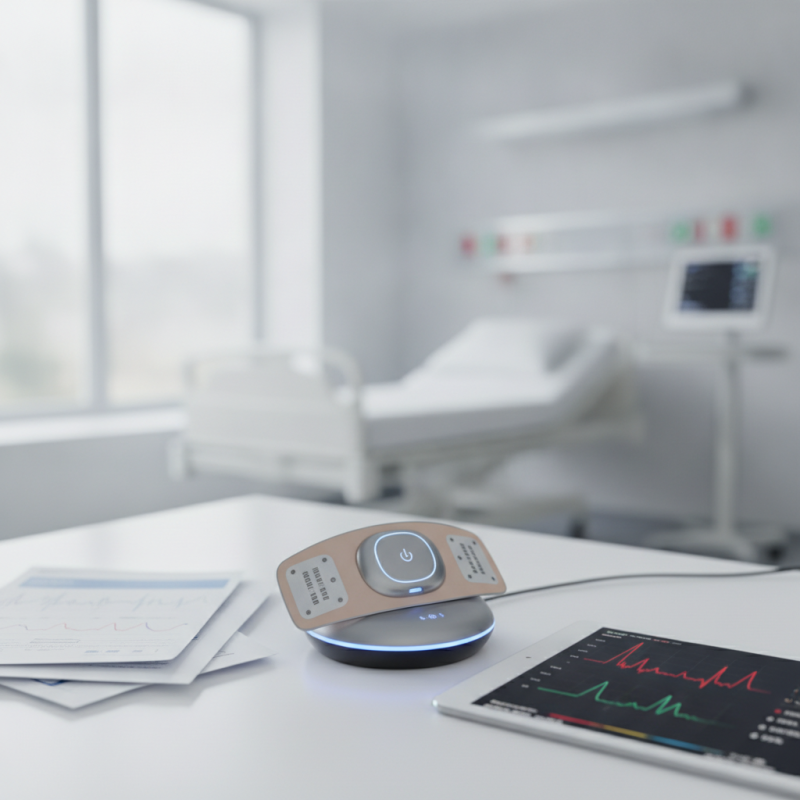
Definition and Core Functions of Continuous Vital Signs Wearable Monitors
China Top Continuous Vital Signs Wearable Monitor Supplier
Definition and Core Functions of Continuous Vital Signs Wearable Monitors
Continuous vital signs wearable monitors are compact devices that track physiological signals over time. They commonly measure heart rate, skin temperature, blood oxygen saturation, and respiratory rate. Some advanced systems also estimate blood pressure or detect irregular rhythms. Unlike a single clinical reading, continuous monitoring shows changes during sleep, movement, and daily activity.
The core function is steady data collection through sensors touching the skin. Algorithms then filter motion noise and display trends on a phone, workstation, or clinical platform. Alerts may identify unusual readings, but they should support professional assessment, not replace it. In practical use, a secure dashboard helps caregivers compare current values with a person’s usual baseline.
Accuracy depends on sensor placement, skin contact, body movement, and device calibration. No device is perfect. A loose strap can distort oxygen readings, while cold hands may affect signal quality. I have found that simple fitting instructions often matter as much as advanced software. Reliable systems should document validation methods, sampling limits, battery performance, and data protection practices. Users also need clear guidance about when to confirm an alert with approved medical equipment and qualified healthcare personnel.
Key Technologies Used in Wearable Vital Signs Monitoring
China’s Leading Supplier Selection Criteria and Market Position
China Top Continuous Vital Signs Wearable Monitor Supplier
China’s Leading Supplier Selection Criteria and Market Position
Selecting a leading Chinese supplier requires more than checking production capacity. The strongest candidates show verified experience with hospitals, clinics, and remote-care programs. Ask for documented deployment results, not attractive claims. A supplier should explain sensor accuracy across movement, skin tones, and different patient conditions. These details reveal practical engineering experience.
Quality systems matter equally. Review ISO 13485 certification, traceability records, calibration procedures, and software change controls. Request independent validation reports for heart rate, oxygen saturation, temperature, and respiratory rate. Clear cybersecurity policies are essential when devices transmit patient data. Reliable suppliers also provide training, maintenance plans, and responsive technical support. Test the support process before signing a contract.
Market position should reflect stable delivery, not only export volume. Check production scalability, component sourcing, inspection capacity, and average lead times. A small pilot can expose weaknesses early. It may reveal pairing failures, uncomfortable straps, or confusing alerts. That is useful. No supplier performs perfectly in every clinical setting, and local workflows can change results. Selection teams should compare trial data, service evidence, and total ownership costs. Transparent communication often signals stronger long-term reliability than aggressive pricing.
China Top Continuous Vital Signs Wearable Monitor Supplier - China’s Leading Supplier Selection Criteria and Market Position
This illustrative procurement scorecard highlights the factors commonly used when evaluating continuous vital-sign wearable monitor suppliers. Clinical measurement performance and regulatory evidence receive the highest priority, followed by interoperability, wearability, manufacturing capability, and after-sales support. The percentages represent an evaluation framework, not company-specific data or market share.
Product Applications Across Healthcare and Remote Patient Monitoring
Continuous vital signs wearable monitors are reshaping healthcare beyond hospital walls. In remote patient monitoring, lightweight sensors collect heart rate, oxygen saturation, skin temperature, respiratory rate, and selected ECG data. Clinicians can review trends instead of relying on occasional readings. Small signals matter. A gradual oxygen decline may support earlier contact with a patient recovering at home. A rising heart rate can prompt questions about pain, dehydration, infection, or medication response. Interpretation still requires clinical judgment.
These systems support post-surgical follow-up, chronic disease management, elder care, rehabilitation, and virtual wards. Nurses may receive threshold alerts through a secure dashboard, then confirm symptoms by phone or video. Patients avoid unnecessary travel while care teams gain a clearer view of daily changes. In practical deployment, comfort is essential. Flexible materials, reliable connectivity, long battery life, and simple charging routines improve adherence. Data should be encrypted, access controlled, and handled under applicable privacy requirements.
No device is perfect. Motion, loose placement, poor circulation, and inconsistent wear can distort readings. Alert fatigue is another concern; excessive notifications may hide meaningful events. A responsible China-based supplier should document accuracy testing, operating limits, calibration needs, and service support. Healthcare teams should compare wearable data with symptoms and validated clinical instruments. That process builds trust, though it requires training and regular review. Remote monitoring works best when technology supports, rather than replaces, professional care.
China Top Continuous Vital Signs Wearable Monitor Supplier - Product Applications Across Healthcare and Remote Patient Monitoring
| Vital Sign or Parameter | Common Wearable Measurement Method | Typical Data Availability | Healthcare Applications | Remote Patient Monitoring Applications | Key Clinical Considerations |
|---|---|---|---|---|---|
| Heart Rate | Optical photoplethysmography (PPG) or electrical cardiac sensing | Continuous or near-continuous, depending on device configuration and activity level | Post-operative observation, cardiology support, rehabilitation, inpatient early-warning workflows | Heart-failure follow-up, post-discharge observation, chronic disease management, wellness trend review | Motion, poor skin contact, low perfusion, and skin pigmentation can affect optical readings; abnormal values require clinical assessment |
| Blood Oxygen Saturation (SpO2) | Reflectance or transmission pulse oximetry using red and infrared light | Intermittent spot checks or continuous sampling when stable contact is maintained | Respiratory care, sleep assessment support, post-anesthesia monitoring, acute-care observation | Chronic respiratory disease, post-COVID recovery follow-up, sleep-related monitoring, home oxygen review | Nail products, motion, cold extremities, poor circulation, and skin-contact conditions may reduce accuracy; supplemental oxygen decisions require clinical protocols |
| Respiratory Rate | Derived from impedance, accelerometry, PPG waveform, or chest-motion sensing | Periodic estimation or continuous trend monitoring | Early deterioration surveillance, respiratory wards, recovery monitoring, clinical research | COPD and asthma follow-up, respiratory infection monitoring, home recovery programs | Algorithms may be affected by talking, movement, coughing, posture, and irregular breathing; trends are generally more useful than isolated values |
| Skin or Body Temperature | Skin-contact thermistor, thermocouple, or other temperature sensor | Continuous trend data; skin temperature is not equivalent to core temperature | Post-operative trend observation, infection surveillance support, thermal comfort and research studies | Fever-trend screening, recovery monitoring, maternal health support, chronic-care observation | Ambient temperature, placement, sweat, clothing, and local skin perfusion influence results; confirm suspected fever with a validated clinical thermometer |
| Single-Lead ECG | Electrical electrodes integrated into a patch, chest strap, or handheld-contact wearable | Continuous recording with selected devices, or user-initiated recordings | Arrhythmia assessment, rhythm documentation, cardiology research, post-procedure follow-up | Palpitation review, atrial-fibrillation screening support, medication follow-up, outpatient cardiology programs | Single-lead recordings do not replace a diagnostic 12-lead ECG; interpretation should be performed by qualified healthcare professionals |
| Blood Pressure | Typically oscillometric cuff measurement; cuffless estimation requires calibration and validation | Usually intermittent rather than truly continuous | Hypertension management, perioperative observation, clinical studies, medication titration support | Home hypertension programs, post-discharge follow-up, pregnancy-related blood-pressure monitoring | Position, cuff size, movement, arrhythmia, and calibration affect accuracy; cuffless readings should not be treated as equivalent to validated cuff measurements without evidence |
| Activity and Mobility | Accelerometer, gyroscope, step detection, and posture algorithms | Continuous motion data summarized into activity, posture, and mobility trends | Fall-risk assessment, rehabilitation, mobility scoring, physical-therapy adherence | Recovery progress, frailty observation, fall alerts, mobility support for older adults | Algorithms should be assessed for the intended population; device placement and walking aids can influence classification |
| Sleep-Related Measures | Combination of movement, heart rate, PPG, oxygen saturation, and sometimes respiratory signals | Overnight trend summaries and event indicators | Sleep research, screening support, sleep-clinic triage, treatment-response observation | Sleep-disordered breathing follow-up, chronic disease self-management, home recovery assessment | Wearable sleep metrics are screening or monitoring tools and generally do not replace formal polysomnography when diagnosis is required |
| Multi-Parameter Early Warning | Integrated patch or wearable combining heart rate, SpO2, respiratory rate, temperature, and motion | Near-real-time streams with trend dashboards and configurable alerts | General wards, observation units, step-down care, post-operative monitoring, clinical trials | Hospital-at-home programs, transitional care, high-risk chronic disease pathways, nurse-led virtual wards | Alert thresholds must be clinically governed to reduce alarm fatigue; connectivity, battery life, adherence, and escalation workflows are essential |
| Remote Patient Monitoring Workflow | Wearable sensor connected to a mobile gateway, secure cloud platform, and clinician dashboard | Scheduled uploads or live transmission, subject to network coverage and device battery | Care coordination, discharge planning, virtual ward management, population-health analytics | At-home vital-sign collection, symptom escalation, adherence tracking, clinician review, documented interventions | Requires informed consent, secure data handling, patient training, defined response times, data-quality checks, and integration with clinical records |
Quality Standards, Customization, and After-Sales Supportiyanas
China Top Continuous Vital Signs Wearable Monitor Supplier
A dependable supplier must treat quality as a clinical responsibility, not a marketing phrase. Continuous monitors should follow ISO 13485 quality management principles and relevant IEC 60601 safety requirements. Risk controls should cover skin contact, battery charging, wireless transmission, and alarm accuracy. The World Health Organization’s Global Health Estimates 2021 reports that noncommunicable diseases caused about 74% of global deaths. This strengthens the need for reliable long-term monitoring, especially outside hospitals. However, no device is flawless. Motion, sweat, loose straps, and poor skin contact can reduce readings.
Customization should begin with the user’s workflow. Suppliers can adjust sensor placement, display language, alarm thresholds, data formats, and dashboard functions. They should also explain validation limits clearly. A hospital may need integration with existing records, while home-care teams may prefer simple alerts. After-sales support matters just as much. Response times, replacement procedures, software updates, training, and traceable service records should be written into the agreement. The WHO Global Strategy on Digital Health 2020–2025 emphasizes interoperability, usability, and trustworthy data. That sounds straightforward, but many projects fail during deployment.
Tips: Request sample reports. Test movement conditions. Ask for calibration records. Confirm repair timelines. Review cybersecurity controls. Keep user feedback visible. A supplier willing to document weaknesses may prove more reliable than one promising perfect performance.
FAQS
Optical sensors track blood volume beneath the skin using green or infrared light. A compact ECG circuit records electrical heart activity. Temperature sensors add context during sleep, exercise, and rest.
Accelerometers and gyroscopes detect movement, vibration, and posture changes. Signal-processing software reduces motion artifacts. It cannot remove every error. Loose straps, sweat, and rapid movement may still distort readings.
It can support home recovery, chronic disease management, elder care, rehabilitation, and virtual wards. Clinicians can review trends instead of isolated measurements. A gradual oxygen decline may encourage earlier patient contact.
No. Wearable data should be compared with symptoms and validated clinical instruments. A rising heart rate may reflect pain, dehydration, infection, or simple movement. Context matters.
Skin contact, circulation, temperature, movement, and calibration can affect results. Accuracy testing should include walking, resting, sweating, and different skin conditions. Some uncertainty remains.
Flexible materials can reduce pressure while maintaining sensor contact. Long battery life and simple charging routines also help. A device left in a drawer provides no useful data.
Data should use encryption, controlled access, and secure wireless transfer. Service teams should document privacy practices and software updates. Security is not a finishing touch.
Suppliers may adjust sensor placement, alarm thresholds, display language, data formats, and dashboard functions. A hospital may need record integration. Home-care staff may prefer simple alerts.
Ask for accuracy reports, calibration records, operating limits, and failed-reading reviews. Testing should use reference equipment under controlled and real-life conditions. Perfect performance claims deserve careful questioning.
Agreements should define training, response times, replacement procedures, repair timelines, and software updates. Keep service records traceable. Real deployment often reveals problems that demonstrations miss.
Conclusion
A Continuous Vital Signs Wearable Monitor is a compact medical device designed to track key health indicators such as heart rate, blood oxygen saturation, respiratory rate, body temperature, and other vital parameters in real time. By combining advanced sensors, wireless connectivity, data processing, and secure cloud platforms, it supports continuous observation, early warning, and efficient clinical decision-making. These technologies make wearable monitoring valuable in hospitals, nursing facilities, home healthcare, rehabilitation, eldercare, and remote patient monitoring.
When selecting a leading supplier in China, buyers should evaluate measurement accuracy, product reliability, certification compliance, production capacity, software compatibility, and data security. A qualified supplier should also provide flexible customization, stable quality control, comprehensive technical documentation, and responsive after-sales support. Solutions tailored to different medical environments can improve workflow efficiency while helping healthcare providers deliver more timely and personalized care.

Blog Tags: