
Insights & News

Corsano Health Blog & Industry Insights

Stay updated with expert articles, scientific publications, clinical study findings, and digital biomarker innovations in continuous patient monitoring.

0%

Continuous monitoring produces a steady flow of heart rate, oxygen saturation, respiratory rate, and device alerts. An EMR Integrated Continuous Monitoring Platform brings these signals into the electronic medical record, where clinicians can review them alongside notes, medication lists, and vital-sign trends. The connection should do more than move numbers. It should preserve timestamps, identify the source device, and present changes clearly enough to support timely review.

Small details matter. A bedside nurse may need to distinguish a new alert from a repeated one while caring for several patients. A physician may need to see whether a brief oxygen drop matches a documented event. Poorly designed workflows can add noise instead of clarity. That is easy to overlook. No platform removes the need for clinical judgment, and integration quality can vary across devices, departments, and existing records systems.

This guide examines ten platforms through practical criteria: device connectivity, alert handling, data accuracy, interoperability, security controls, and usability in real clinical settings. It also considers implementation demands, staff training, and the support available after deployment. Feature lists can look impressive, but they do not always reveal how a system behaves during a busy shift. Some trade-offs remain. Readers should verify current capabilities with vendors and assess each option against local workflows, infrastructure, and clinical requirements before making a decision.
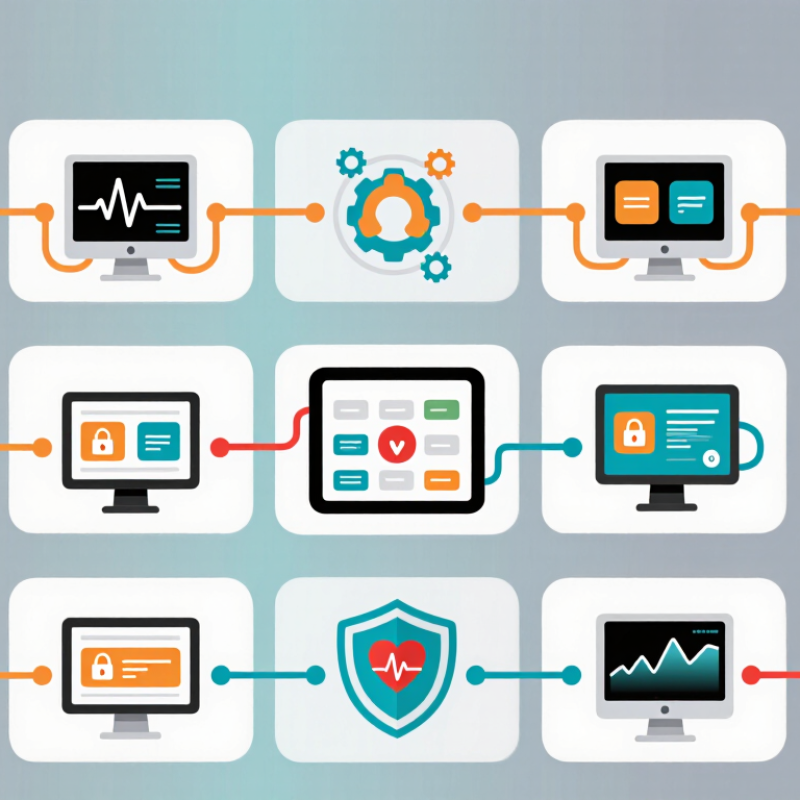
10 Best EMR Integrated Continuous Monitoring Platforms

What EMR-Integrated Continuous Monitoring Platforms Do

An EMR-integrated continuous monitoring platform brings live patient measurements into the electronic medical record. It may receive data from bedside monitors, wearable sensors, or other connected equipment. Heart rate, oxygen saturation, and blood pressure can appear alongside medication lists, notes, and prior readings. This gives clinicians more context than a separate monitor screen alone. Small details matter.

The platform can record measurements over time, flag changes, and route alerts to the appropriate care team. For example, a sustained drop in oxygen saturation might prompt a nurse to review the patient and check the sensor. Trend views can help distinguish a brief fluctuation from a continuing change. But alerts are not diagnoses. Device placement, motion, and signal quality can affect readings, so staff need clear ways to verify them.

Good integration also depends on workflow. Data should reach the correct patient record, display with useful timestamps, and avoid creating duplicate documentation. Hospitals should test how alerts behave during busy shifts and define who responds when a message is missed. The technology can support observation, but it cannot replace clinical judgment or bedside assessment. Even a well-designed system may generate noise; teams should review that friction rather than assume every alert is useful.

What EMR-Integrated Continuous Monitoring Platforms Do

A typical workflow connects bedside monitoring with the electronic medical record (EMR), carrying observations and alerts into clinical documentation and review.

The numbered bars show workflow order, not measured performance or a ranking. Exact devices, data, and workflows vary by care setting and implementation.

How Continuous Monitoring Data Connects With EMR Systems

Continuous monitoring systems can send bedside measurements into an electronic medical record (EMR), where clinicians already review a patient’s history, medications, and care plan. A pulse oximeter reading, for example, is more useful when it appears beside the correct patient and includes its measurement time. That context matters. Without it, a number can be misread or overlooked.

The connection usually depends on shared data standards, secure interfaces, and careful identity matching. Measurements may arrive through an integration engine, then appear in the EMR as observations, flowsheet entries, or alerts. Staff need to know whether values are live, delayed, or manually entered. A clear timestamp and device source help them judge the difference. Small interface choices can change how quickly a signal gets noticed.

Integration is not a set-and-forget task. Teams should test how missing readings, duplicate records, and temporary network outages appear in real workflows. They should also check that alerts reach the right role without creating constant noise. That is harder than it sounds. A clean dashboard can still hide gaps in data quality, and clinicians may need to verify an unexpected value at the bedside. Ongoing review helps reveal where the connection supports care—and where it needs adjustment.

Key Criteria for Evaluating Monitoring Platforms

An EMR-integrated continuous monitoring platform should fit clinical workflows, not simply display more numbers. Check whether patient identity, bed location, and observation timestamps stay aligned when someone moves between units.

During a test, trace one reading from bedside monitor to chart, checking units, missing intervals, and correction history. Small details matter. Ask how the system handles delayed feeds, device disconnections, and duplicate readings; these can resemble real clinical changes. Connectivity claims alone are not enough.

Assess alert quality by reviewing how thresholds are configured, escalated, and acknowledged. Ask clinicians to test realistic scenarios, such as a rising pulse during a shift change, and note whether alerts arrive with useful context. Too many low-value notifications can encourage staff to overlook important signals.

Not always. Review role-based access, audit trails, encryption, downtime procedures, and data retention. Request evidence from validation in settings similar to yours, including how performance was measured and limitations were documented.

Compare uptime commitments with actual support response times. No scorecard catches every local oddity, so include bedside staff and IT teams in a pilot, then revisit assumptions after observing real use.

10 Leading EMR-Integrated Continuous Monitoring Platforms

Leading EMR-integrated continuous monitoring platforms connect bedside measurements with the patient record, helping care teams notice changes sooner. They can capture oxygen saturation, heart rate, and blood pressure from connected devices, then display readings alongside relevant clinical notes. A nurse reviewing a patient’s chart may see a rising pulse without switching between separate screens. That matters. The best systems also make it clear when data was collected and whether a reading needs verification.

Platform choice depends on more than the number of supported devices. Look for dependable EMR connectivity, configurable alert thresholds, and workflows that fit how staff actually document care. Alerts should be timely but not so frequent that important warnings disappear in the noise. Data security, access controls, and transparent downtime procedures also deserve careful review. Even a well-designed platform can produce confusing gaps if a device disconnects or readings arrive late. Pilot testing on a real unit can reveal those problems; it may also expose workflow assumptions nobody thought to question.

Clinical Use Cases and Implementation Considerations

10 Best EMR Integrated Continuous Monitoring Platforms

Continuous monitoring can help clinicians notice patient changes between scheduled observations. In a step-down unit, a rising respiratory rate paired with falling oxygen saturation may prompt an earlier bedside assessment. After surgery, trends can help staff distinguish a brief fluctuation from a pattern that needs review. These systems support clinical judgment; they do not replace it. A monitor can be technically accurate yet clinically unhelpful if its data arrives late or lacks context.

Implementation starts with workflow mapping. Identify who receives alerts, who responds, and how actions are recorded in the EMR. Test data flow using realistic scenarios, including sensor disconnection and brief signal loss. Set alert thresholds with clinicians, then review alarm volume after deployment. Excessive alerts can distract teams; overly quiet settings can hide meaningful changes. Training should cover escalation steps, not just device operation. This detail is easy to overlook.

Tips: Pilot one ward before expanding. Check timestamps, patient-device matching, and chart visibility during busy shifts. Ask nurses what feels confusing. Their feedback may expose gaps that technical testing misses. Revisit thresholds as patient populations and workflows change.

10 Best EMR Integrated Continuous Monitoring Platforms - Clinical Use Cases and Implementation Considerations

This vendor-neutral comparison ranks platform types by clinical fit rather than by manufacturer. Actual capabilities depend on the selected devices, EMR configuration, interface design, clinical workflow, and local validation.

Rank Platform Type Continuous Data Commonly Captured Typical Clinical Use Cases Common EMR Integration Approach Key Implementation Considerations Best-Fit Settings
1 Bedside Multiparameter Monitoring ECG-derived heart rate, oxygen saturation, respiratory rate, non-invasive or invasive blood pressure, and temperature when supported. Continuous observation of patients at risk of acute deterioration; trending vital signs and supporting bedside assessment. Device gateways or clinical integration engines commonly send observations to the EMR using HL7 v2 messages. FHIR-based exchange may be available depending on the system. Confirm patient and bed association, measurement units, timestamps, sampling frequency, alarm workflow, and rules for storing or displaying high-frequency data. Validate that device readings are not mistaken for manually entered observations. Acute-care wards, step-down units, emergency departments, and intensive care.
2 Central Monitoring and Telemetry Continuous ECG waveforms or derived heart-rate and rhythm data; telemetry systems may also receive selected oxygen-saturation or blood-pressure values. Remote observation of cardiac rhythms, monitoring of patients away from the bedside, and review of selected alarms and trends. Usually requires a telemetry or central-station interface, with discrete observations and selected events routed to the EMR through an integration engine. Define which rhythm events become part of the legal medical record, how alarm acknowledgment is documented, and how patient transfers or telemetry discontinuation are reflected. Avoid flooding the chart with non-actionable events. Cardiac units, step-down units, and hospitals with centralized monitoring teams.
3 Continuous Pulse-Oximetry Monitoring Oxygen saturation and pulse rate, with signal-quality indicators where supported. Monitoring for hypoxemia, assessing oxygen therapy, and observing patients at increased respiratory risk. Typically integrated as periodic or event-driven observations through a device interface; waveform storage is separate and not universally supported in the EMR. Specify averaging intervals, artifact handling, alarm limits, sensor placement guidance, and how oxygen delivery settings are documented alongside readings. Establish escalation steps for persistent desaturation. General wards, post-anesthesia care, respiratory units, and selected home-monitoring programs.
4 Capnography and Respiratory Monitoring End-tidal carbon dioxide, respiratory rate, and, where available, capnogram waveform and signal quality. Respiratory surveillance during procedural sedation, post-operative care, and selected opioid-safety workflows. Discrete values and events may be sent to the EMR through a device gateway; waveform access and documentation can require a separate integration path. Align device sampling and alarm thresholds with clinical policy. Train staff on waveform interpretation, document oxygen delivery and sedation context, and test the interface under low-signal and disconnected-sensor conditions. Procedural areas, recovery units, and locations caring for patients at risk of respiratory depression.
5 Ventilator and Respiratory-Device Integration Selected ventilator settings, measured respiratory parameters, oxygen concentration, and alarm or event information, depending on device and interface. Supporting respiratory assessment, documenting ventilatory support, and reviewing changes in respiratory status. Device interfaces commonly map selected measurements and settings to EMR flowsheets. The availability of waveforms and detailed event logs varies by implementation. Distinguish prescribed settings from measured values; define units and update frequency; retain provenance and device identifiers; and reconcile interface data with respiratory-therapy documentation. Intensive care, neonatal care, and other units providing invasive or non-invasive ventilation.
6 Infusion-Pump and Medication-Delivery Integration Infusion status, programmed rate, volume infused, and selected pump alerts, subject to device and interface capabilities. Verifying infusion activity, supporting medication-administration documentation, and identifying selected delivery interruptions. Interfaces may exchange device and medication-administration data with the EMR. Bidirectional workflows require careful control of orders, library settings, and user confirmation. Do not treat pump status alone as proof that a medication was administered. Validate drug-library mapping, patient and channel association, rate units, duplicate documentation prevention, and downtime procedures. Acute-care units, intensive care, oncology, and perioperative services.
7 Continuous Temperature Monitoring Temperature measurements and trends from supported continuous or wearable sensors. Observing temperature trends in patients where intermittent measurement may miss clinically relevant changes. Values can be sent as observations through a device interface, with the measurement site, method, units, and timestamp preserved where available. Standardize measurement site and method, verify device accuracy and sensor placement, and avoid comparing readings from different sites as if they were equivalent. Selected inpatient units, perioperative care, and monitored care programs.
8 Remote Patient Monitoring Home-collected readings may include blood pressure, pulse, oxygen saturation, weight, temperature, or glucose, depending on the program. Supporting follow-up for chronic disease, post-discharge monitoring, and care-management outreach. Patient-generated data may enter through a remote-monitoring service or FHIR-based workflow and be presented in the EMR as observations, reports, or inbox tasks. Define patient eligibility, device onboarding, measurement schedules, data review ownership, alert thresholds, response times, consent, and escalation coverage outside clinic hours. Ambulatory care, chronic-disease programs, and transitional care.
9 Continuous EEG Monitoring EEG waveforms and reviewed findings; summarized events or reports may be linked to the EMR. Evaluating suspected non-convulsive seizures, seizure burden, and selected neurologic changes in monitored patients. Waveforms are generally handled by specialized acquisition and review systems; the EMR may receive orders, reports, results, and links to recordings. Plan for waveform storage and access, specialist review coverage, event annotation, report sign-off, and retention requirements. A summarized EMR result is not a substitute for access to the original recording when needed. Neurology services, intensive care, and epilepsy-monitoring units.
10 Deterioration Detection and Monitoring Analytics Derived scores or alerts calculated from available observations, clinical documentation, and—in some systems—device feeds. Supporting review of worsening trends, prioritizing clinical assessment, and coordinating escalation workflows. May use EMR data, device observations, or both; results can appear as alerts, work queues, or documented scores within the EMR. Validate performance in the intended population and workflow; assess alert burden and missing-data effects; identify who owns each alert; and monitor for unintended differences across patient groups. Hospitals implementing rapid-response, early-warning, or population-surveillance workflows.

FAQS

What does an EMR-integrated continuous monitoring platform do?

It sends live measurements, such as heart rate and oxygen saturation, into a patient’s electronic medical record. One chart, more context.

Which measurements can these platforms display?

They may show heart rate, oxygen saturation, and blood pressure from connected bedside monitors or wearable sensors. Device types vary.

Why do timestamps and device details matter?

A reading needs a collection time and source. These details help staff distinguish live data from delayed or manually entered values.

Can an alert confirm a patient’s condition?

No. An alert signals a change, not a diagnosis. Staff may need to check the patient and sensor placement.

What can affect the accuracy of a reading?

Motion, poor sensor placement, and weak signal quality can affect measurements. A number may look precise and still need checking.

What should teams test before using a platform?

They should test patient matching, duplicate entries, missing readings, and network interruptions. Busy-shift testing can reveal overlooked problems.

How can teams reduce alert fatigue?

Set useful thresholds and route alerts to the right care roles. Review repeated warnings; some may add noise rather than clarity.

Can monitoring platforms replace bedside assessment?

No. They support observation, but clinicians still need judgment and direct assessment. Screens cannot tell the whole story.

Conclusion

An EMR Integrated Continuous Monitoring Platform brings patient monitoring data together with electronic medical records, helping care teams view vital signs and clinical information in one connected workflow. These platforms can collect measurements from bedside devices or remote monitoring tools, transfer relevant data into the EMR, and present it in ways that support timely review and documentation. Reliable integration depends on secure data exchange, accurate patient matching, consistent timestamps, and clear handling of alerts and records.

When comparing the 10 leading platform types, healthcare organizations can consider device compatibility, data accuracy, usability, interoperability, security, scalability, and the quality of implementation support. Clinical uses may include monitoring patients in hospitals, supporting care transitions, and following patients remotely when appropriate. Successful adoption also requires workflow planning, staff training, alert management, and ongoing evaluation so that monitoring information is useful without creating unnecessary interruptions.

Nathaniel Hayes

Nathaniel Hayes

Nathaniel Hayes is a seasoned marketing professional dedicated to helping businesses understand complex products and make confident, informed decisions. With a strong background in market research, content strategy, customer communication, and digital marketing, he brings clarity, accuracy, and......